


12 Best Remote Work Tools in 2026

Remote work tools help distributed teams communicate, manage projects, share files, track time, meet online, and keep company information secure. The best setup usually combines several tools rather than relying on one platform for everything.
In this guide, we compare the best remote work tools by category, including team communication, project management, file sharing, time tracking, video conferencing, and password management. Whether you’re building a remote team from scratch or replacing part of your existing tech stack, you’ll find options for different team sizes, workflows, and budgets.
Best Remote Work Tools at a Glance
| Category | Best tool | Best for |
|---|---|---|
| Team communication | Slack | Team messaging and channels |
| Project management | Asana | Managing projects and tasks |
| File sharing | Google Drive | Documents and collaborative files |
| Time tracking | Everhour | Project-based teams |
| Video conferencing | Zoom | Remote meetings |
| Password management | 1Password | Team credentials |
| Async communication | Loom | Video updates without meetings |
| Whiteboarding | Miro | Visual collaboration |
| Team knowledge | Notion | Documentation and wikis |
How We Selected These Tools
We selected tools based on how widely they are used by distributed and remote teams, how well they perform their core function, and whether they offer a meaningful free plan or trial. Pricing was verified directly on each vendor’s website as of July 2026. We also reviewed user feedback on G2 and Capterra to make sure our assessments reflect real-world experience rather than just feature lists.
Most remote teams will use a combination of these rather than one platform for everything — the goal is to help you identify the strongest option in each category for your team’s specific needs.
Disclosure: Everhour is our product and appears in the time tracking category. We’ve aimed to give every other tool here an honest writeup including real limitations.
How to Choose Remote Work Tools
Start with the problems your team is actually experiencing rather than building a full stack from scratch.
- Communication is broken → Start with Slack before adding anything else
- Projects are falling through the cracks → Add Asana or ClickUp
- Files are scattered across email and chat → Centralize with Google Drive
- You need reliable video meetings → Add Zoom
- You don’t know where time is going → Add Everhour
- Too many meetings → Replace some with Loom async updates
- Team members can’t remember crucial things → Build a team wiki in Notion
- Visual collaboration is hard remotely → Add Miro for whiteboarding
- Passwords are being shared insecurely → Add 1Password immediately
Most teams need communication, project management, and file sharing as a foundation. Everything else builds on top of that.
Team Communication
Slack
Slack organizes team conversations into channels by project, topic, or team rather than letting everything pile up in one inbox or group chat. For remote teams, that structure makes a real difference — you can follow what matters, ignore what doesn’t, and find past conversations without scrolling through an endless thread.
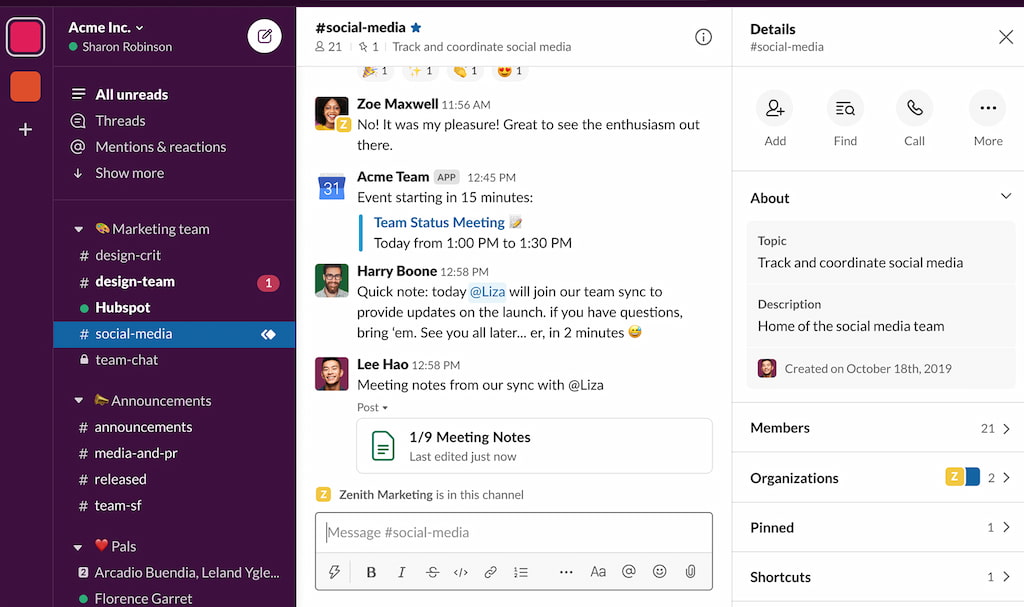
The main thing to watch out for is notification overload. Slack works well when teams set clear norms about which channels to use, when to use direct messages versus channels, and when not to use Slack at all. Without those norms, it can become as noisy as the email inbox it was supposed to replace.
It integrates with pretty much everything — Asana, Jira, Google Workspace, Zoom, and thousands of other tools — so notifications and updates from other platforms can flow into Slack rather than requiring constant tab-switching.
💰 Free plan with 90-day message history. Pro €8.25/user/month. Business+ €18/user/month.
Project Management
Asana
Asana gives distributed teams a shared view of what’s being worked on, who’s responsible, and when things are due — without relying on status update meetings to find out. Tasks, projects, timelines, and workloads are visible to anyone with access, which is especially valuable when your team is spread across locations and time zones.
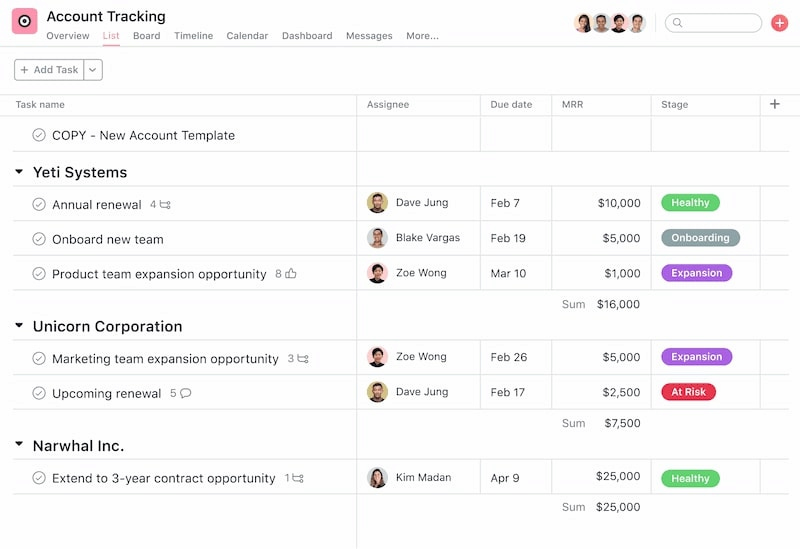
It’s more structured than tools like Trello or Notion for project management, which is a strength if your team wants clear ownership and deadlines, and a limitation if you prefer something more flexible. The learning curve is manageable for most teams, and the free plan covers the basics well enough to evaluate it properly before committing.
💰 Basic free. Premium $10.99/user/month. Business $24.99/user/month.
File Sharing
Google Drive
Google Drive is the default for most remote teams and it’s earned that position. Documents, spreadsheets, and presentations all live in one place, multiple people can edit simultaneously without version conflicts, and everything is accessible from any device without installing software. For teams that need to share and collaborate on files without a complicated setup, it covers the basics better than anything else at its price point.
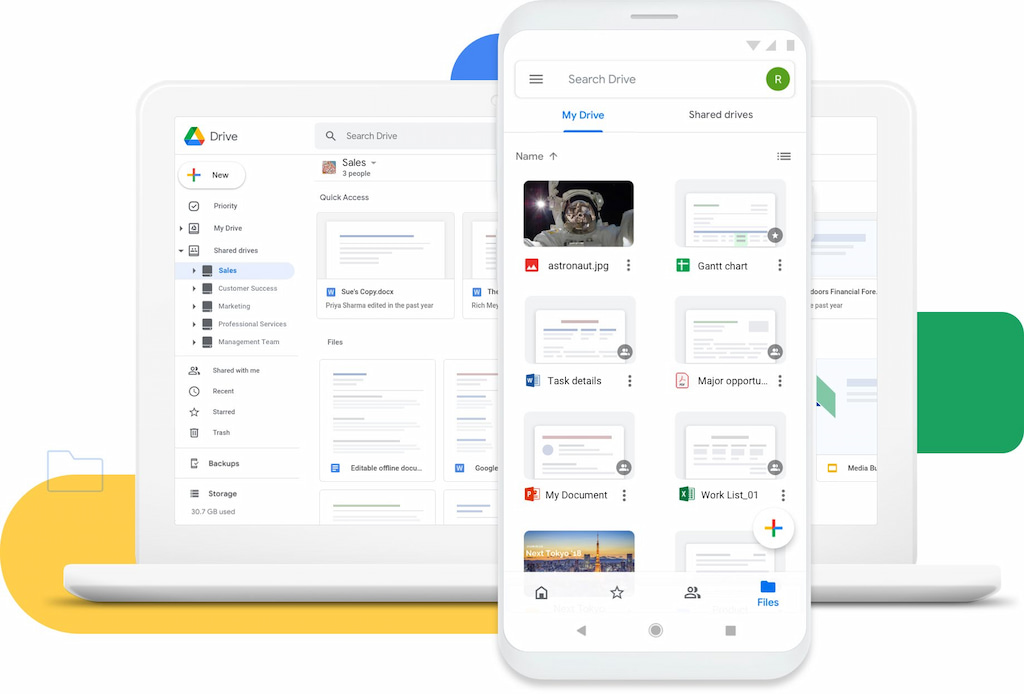
The main limitation worth knowing about: Google’s terms of service include rights to content stored on their platform, which matters for teams handling sensitive client or legal documents. For most teams this isn’t a dealbreaker, but it’s worth being aware of.
💰 Free with 15GB storage per user. Google Workspace from $6.80/user/month.
Dropbox
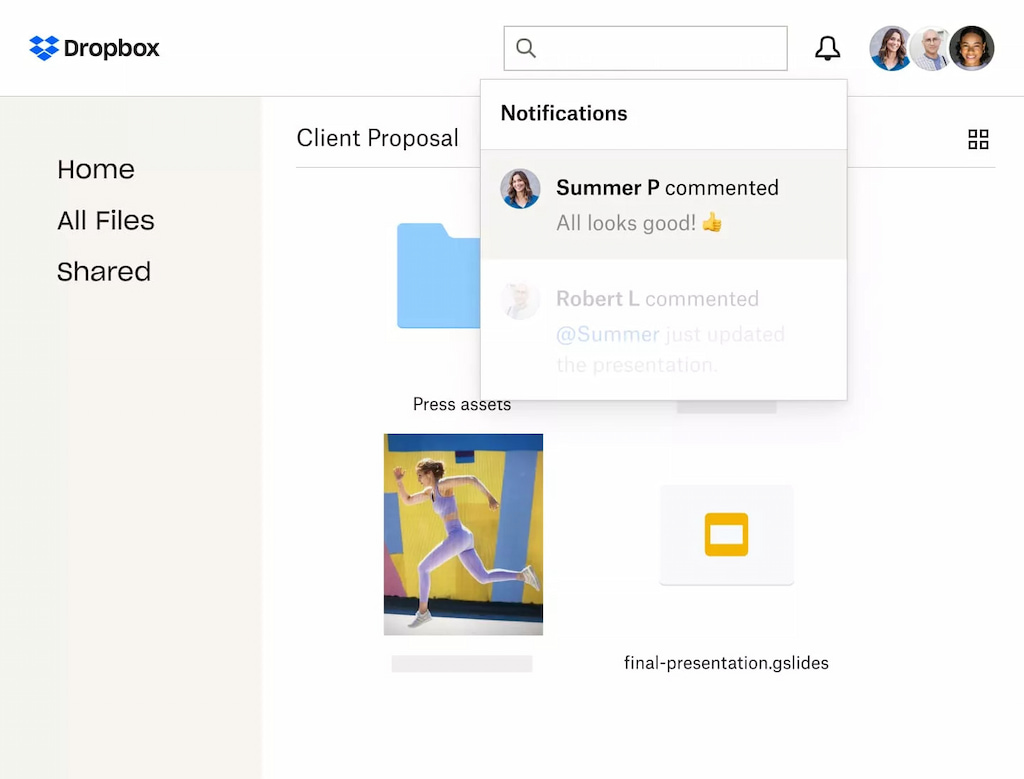
Dropbox is worth mentioning alongside Google Drive because it solves a slightly different problem. Where Google Drive is built around collaborative editing, Dropbox is better suited for storing and syncing files that aren’t being actively edited — large media files, project archives, HR and legal documents, third-party deliverables. It’s simpler to navigate than Google Drive and works well as a long-term file storage layer alongside Google’s collaborative tools.
💰 Free with 2GB storage. Plus $9.99/month for individuals. Business plans from $12/user/month.
Video Conferencing
Zoom
Zoom became the default video conferencing tool for remote teams and has stayed there because it works reliably. Call quality is consistently strong, the interface is familiar enough that most people can join without training, and it handles everything from a two-person check-in to a company-wide all-hands without meaningful problems. For remote teams that need a dependable video meeting tool, it’s the lowest-risk choice.
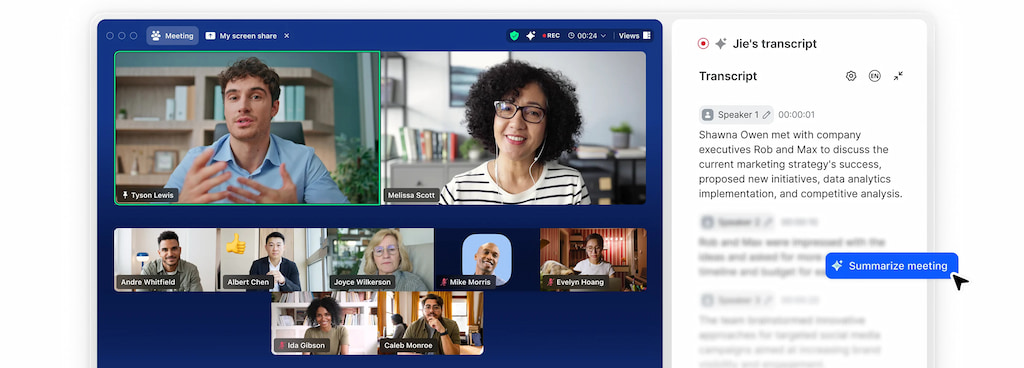
💰 Free: 40-minute meetings, up to 100 participants. Pro $14.16/user/month. Business $18.33/user/month.
Google Meet
Worth mentioning as a strong free alternative for teams already using Google Workspace. Meet is built into Gmail and Google Calendar, which means scheduling and joining meetings requires almost no extra steps. For small to medium remote teams that don’t need Zoom’s advanced features like webinars or large-scale events, Meet covers the basics without an additional subscription.

💰 Free with a Google account. Included in Google Workspace plans from $6.80/user/month.
Time Tracking
Everhour
For remote teams doing project-based work, the biggest time tracking problem isn’t the tool — it’s getting people to actually use it consistently. Everhour addresses that by putting a time tracker inside the tools teams already use: Asana, ClickUp, Trello, Jira, Notion, and GitHub. Time gets logged against actual tasks rather than reconstructed at the end of the week, which means the data is more accurate and the habit is easier to maintain.
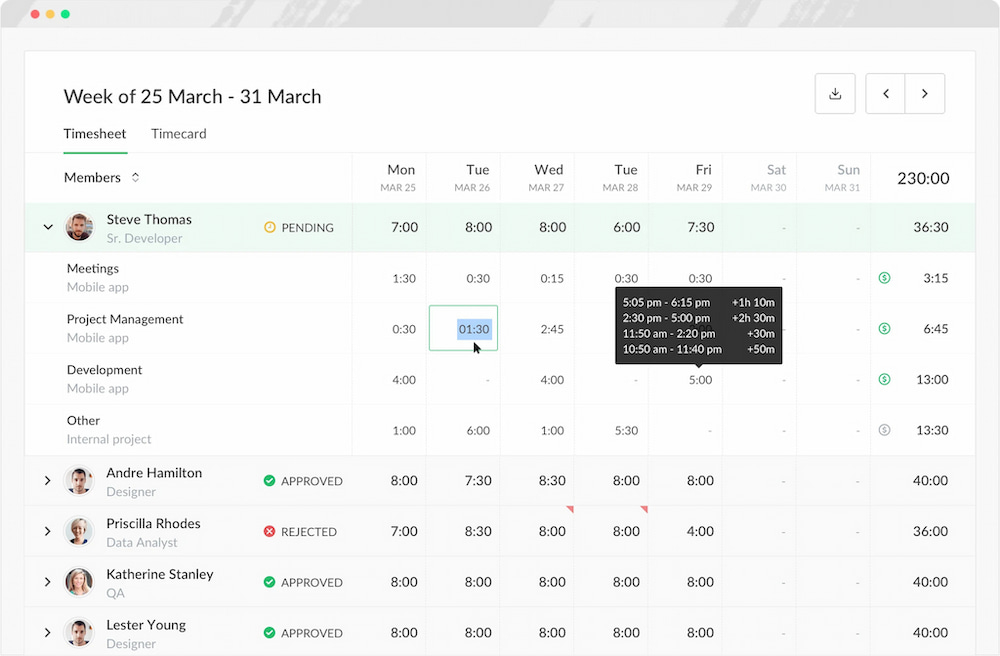
Beyond basic tracking, it covers project budgets, billable hours, invoicing, timesheet approvals, and profitability reporting — useful for agencies, consultancies, and any remote team that bills clients or needs visibility into project costs.
💰 Free for up to five users. Team plan $8.50/user/month (minimum five users).
Async Communication
Loom
Some things are genuinely hard to explain in text. Loom lets you record your screen with your face and voice, share a link, and let the recipient watch when they have time. No scheduling, no time zone negotiation, no waiting for everyone to be online at once.
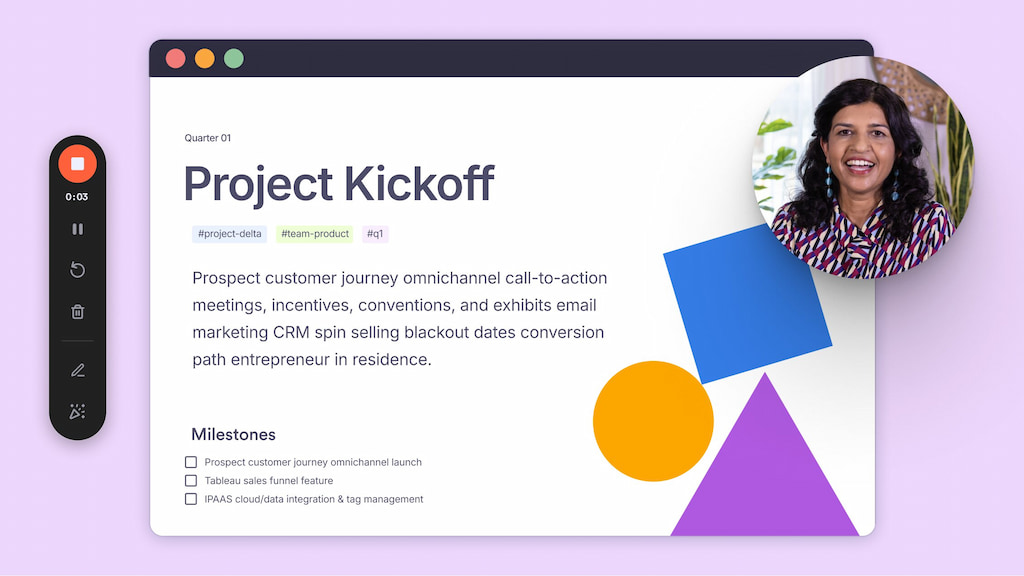
It’s particularly useful for walkthroughs, feedback on design or code, status updates that need context, and onboarding new team members. A two-minute Loom often replaces a 30-minute meeting — and unlike the meeting, it can be watched again, shared with others, and referenced later.
The free plan limits you to 25 videos and five-minute recordings, which is enough to try it out but not enough for regular team use.
💰 Free plan: 25 videos, 5-minute limit. Business $18/user/month with no limits.
Team Knowledge
Notion
Remote teams lose institutional knowledge faster than co-located ones — there’s no physical equivalent of asking the person next to you, and information that lives in someone’s head or gets buried in Slack threads is effectively inaccessible to everyone else. Notion gives that knowledge a permanent, searchable home: process documentation, meeting notes, onboarding guides, team wikis, project references.
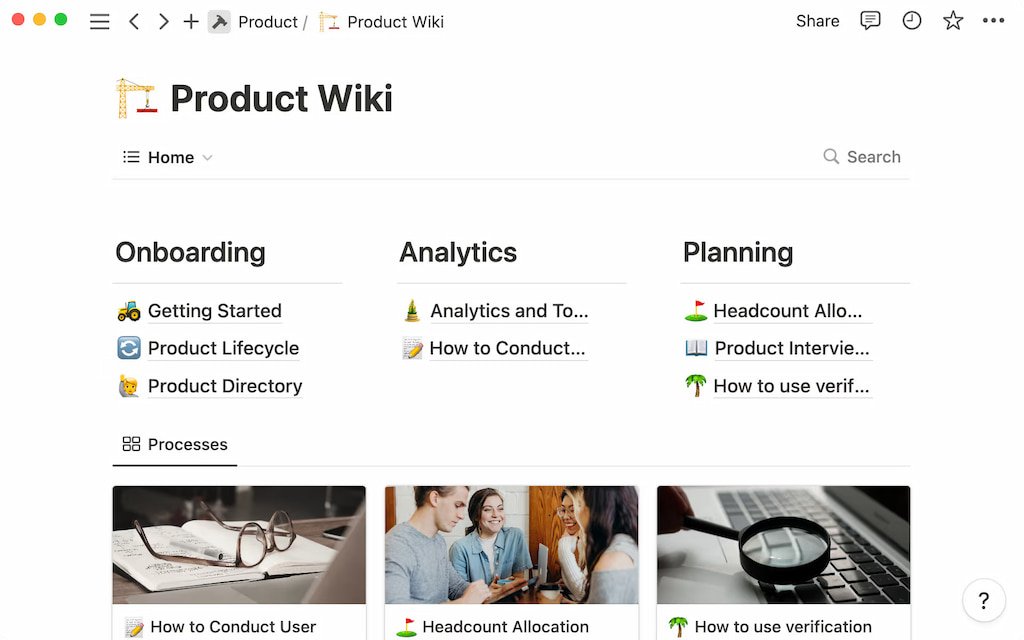
It can also handle lightweight project management, but that’s secondary to its strength as a flexible documentation platform. Teams that need structured task tracking with deadlines and assignments are better served by a dedicated PM tool alongside Notion rather than trying to use Notion for both.
💰 Free for individuals. Plus $10/user/month. Business $20/user/month.
Whiteboarding
Miro
Remote brainstorming on a video call with screen share is a pale imitation of standing around a physical whiteboard. Miro gets closer than anything else — it’s an infinite canvas where the whole team can add sticky notes, draw connections, sketch flows, and build diagrams simultaneously, regardless of where they are.
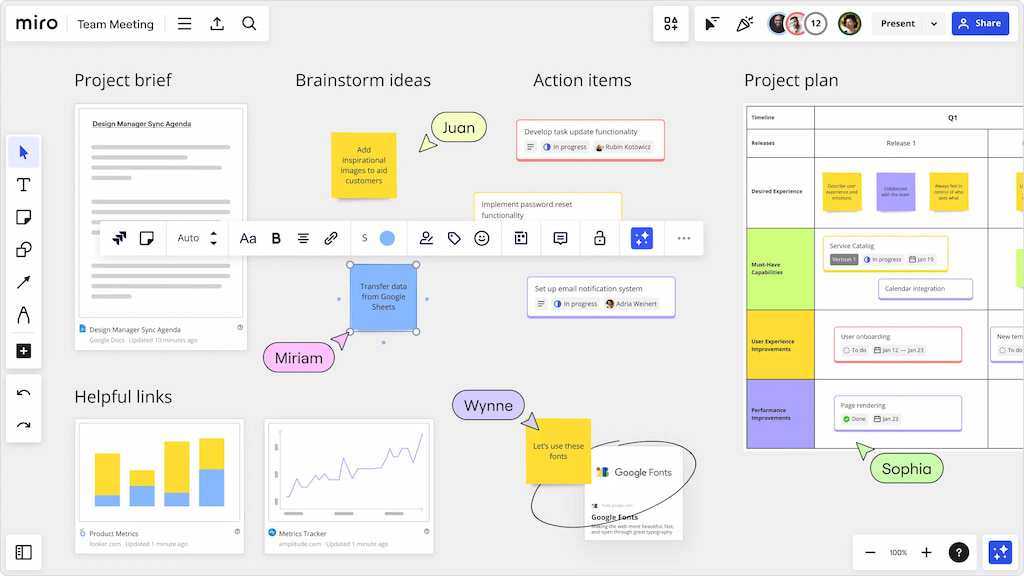
It’s particularly useful for workshops, retrospectives, user journey mapping, and any kind of visual thinking that doesn’t translate well to a linear document. Templates for common frameworks (sprint planning, affinity mapping, journey maps) mean you don’t have to build everything from scratch.
The free plan gives you three editable boards, which is enough for occasional use but limiting for teams that want to make it a regular part of their workflow.
💰 Free: 3 editable boards. Starter $8/user/month. Business $20/user/month.
Password Management
1Password
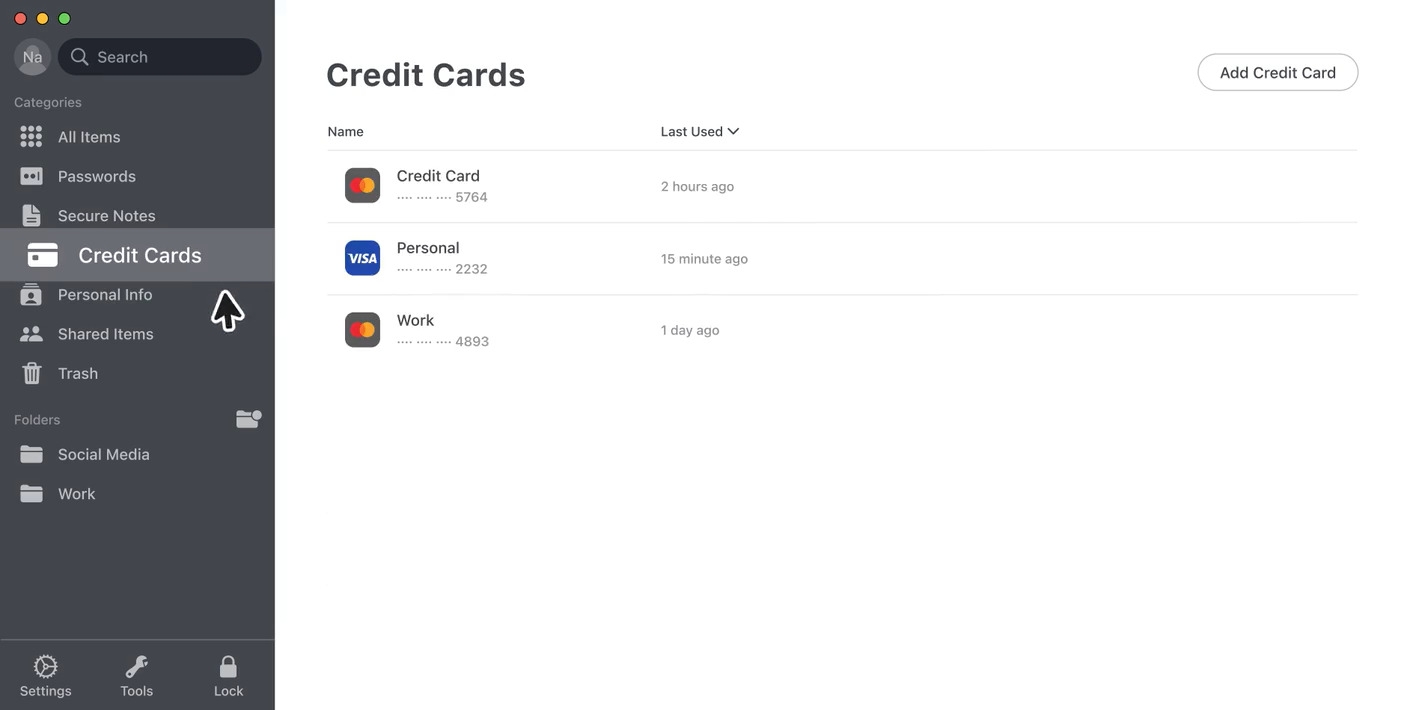
Sharing passwords over Slack or email is a security problem that’s easy to ignore until something goes wrong. 1Password gives teams a shared vault where credentials are stored securely, access is controlled by role, and new team members can be onboarded without anyone sending a password in plain text. When someone leaves the team, their access is revoked instantly without needing to change every password they had access to.
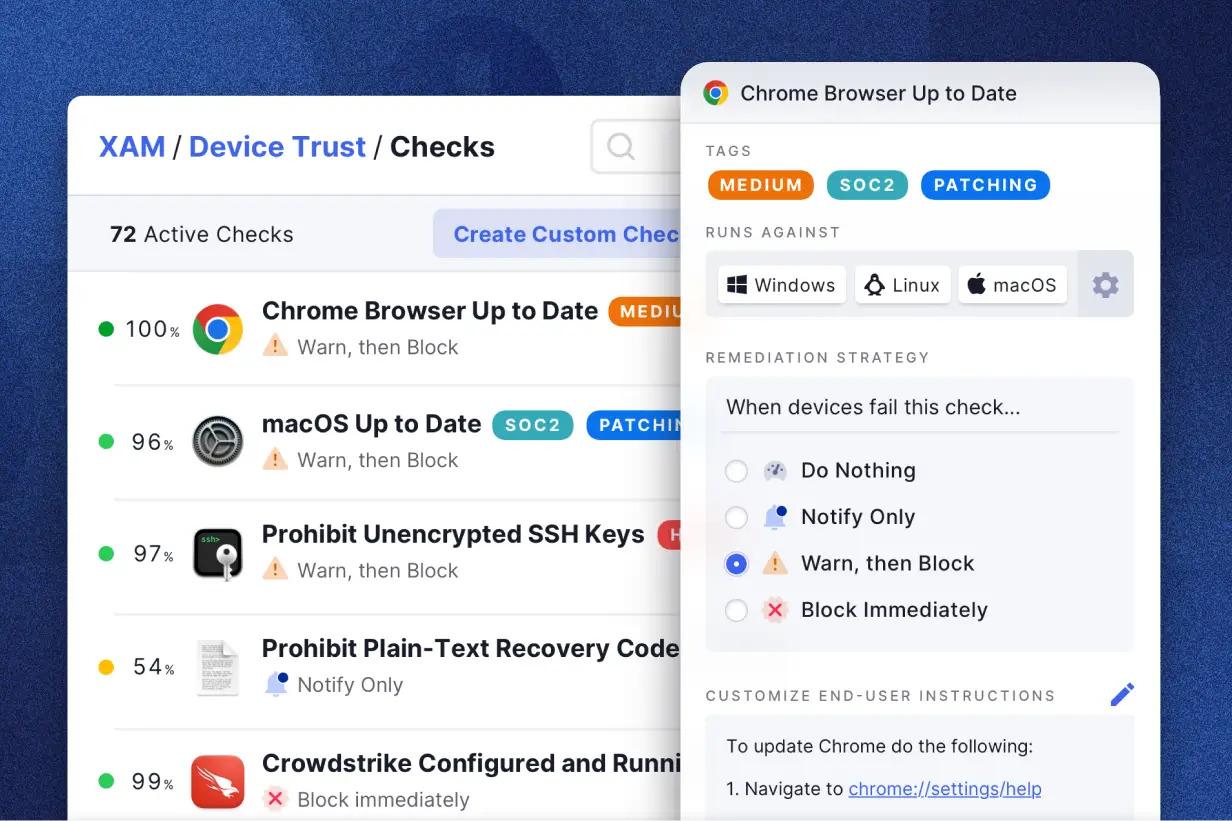
It’s the most widely trusted password manager for business use and has a strong track record for security. The main downside is cost — there’s no meaningful free tier for teams.
💰 Teams plan $24.95/month for up to 10 users. Business $8.99/user/month.
NordPass
A solid alternative to 1Password, particularly for teams that are already using other Nord Security products like NordVPN. It uses zero-knowledge architecture — Nord can’t see your passwords even if they wanted to — and covers the core team credential management workflow at a slightly lower price point than 1Password.
💰 Teams plan from $1.99/user/month. Business plan from $3.99/user/month.
FAQ
Most remote teams need at minimum: a communication tool (Slack), a project management tool (Asana or ClickUp), and a file sharing platform (Google Drive). Time tracking, video conferencing, async communication, whiteboarding, knowledge management, and password management tools build on top of that foundation depending on your team’s specific needs.
Google Drive, Slack, Asana, and Notion all offer genuinely useful free plans. Everhour has a free plan for up to five users. Zoom’s free plan covers 40-minute meetings. A combination of these free tiers covers most remote work needs without paying for anything upfront.
Remote teams typically use either manual time tracking tools like Everhour, which integrates into project management tools, or automatic tracking tools like TimeCamp or Timely, which record activity in the background. Manual tracking gives more control and accuracy for billing; automatic tracking reduces the burden on team members to remember to log hours.
Synchronous tools require everyone to be present at the same time — video calls (Zoom), live chat (Slack). Asynchronous tools allow people to communicate and collaborate without being online simultaneously — recorded video (Loom), documentation (Notion), project management (Asana). Effective remote teams use both, but teams working across multiple time zones typically lean more heavily on async tools.
The most secure approach is a dedicated password manager like 1Password or NordPass that stores credentials in encrypted vaults with role-based access. This prevents passwords from being shared via email or chat, allows access to be revoked instantly when team members leave, and generates strong unique passwords for every tool automatically.
In Summary
Choose Slack for team communication organized by channel rather than email
Choose Asana for structured project and task management across distributed teams
Choose Google Drive for document collaboration and file sharing
Choose Zoom for reliable video conferencing at any team size
Choose Everhour for time tracking and project billing inside your existing PM tools
Choose Loom for async video updates that replace unnecessary meetings
Choose Notion for team documentation, wikis, and knowledge management
Choose Miro for visual collaboration, brainstorming, and remote workshops
Choose 1Password for secure credential sharing and team password management

Mike
An IT entrepreneur, executive, and former engineer with a passion for innovation and leadership. Mike focuses on driving company growth while keeping the team inspired. Outside of work, he enjoys tennis, snowboarding, traveling, reading, and, of course, putting his heart and soul into Everhour.