


12 Best Time and Attendance Software for 2026

Time and attendance software replaces paper timesheets, punch cards, and spreadsheets with a digital system for recording when employees work, how long they work, and whether they showed up at all. The right tool depends heavily on how your team works — a field service company needs GPS and geofencing, a remote agency needs project-based time tracking, and a retail business needs shift scheduling and mobile clock-in. This comparison covers 12 time and attendance platforms across those use cases to help you find the right fit.
How We Chose the Best Time and Attendance Software
We evaluated each time and attendance platform based on how well it helps businesses track employee hours, manage attendance, and simplify payroll and reporting. We considered time tracking and clock-in options, scheduling, overtime and PTO management, payroll integrations, reporting, mobile access, GPS or geofencing, ease of use, pricing, and scalability.
Also, we looked at which types of teams each tool is best suited for, including small businesses, remote teams, project-based companies, and field workers. Pricing and feature availability were verified on each vendor’s website in July 2026, alongside user reviews from G2 and Capterra and our own product research.
Disclosure: Everhour is our product and appears first on this list. We’ve aimed to evaluate each platform fairly and highlight where another solution may be a better fit for specific attendance, monitoring, or workforce needs.
What Is Time and Attendance Management Software?
Time and attendance software replaces paper timesheets, spreadsheets, and manual punch cards with a digital way to record when employees work. Employees can usually clock in and out from a computer, phone, tablet, kiosk, or dedicated time clock.
Depending on the tool, you may also get:
- Time clocks for clocking in and out
- Attendance tracking for absences, lateness, and breaks
- Overtime and PTO tracking
- Scheduling and shift management
- GPS and geofencing for mobile teams
- Payroll integrations for easier payroll processing
- Reports on hours, attendance, and labor costs
The terms time tracking and attendance tracking are often used interchangeably, but they aren’t quite the same. Time tracking records hours worked, often against projects or tasks. Attendance tracking focuses on when employees are at work, including clock-ins, breaks, absences, and late arrivals. Many tools combine both.
Time tracking vs. attendance tracking vs. employee monitoring
| Type | What it tracks | Best for |
|---|---|---|
| Time tracking | Hours spent working or on tasks | Projects and billing |
| Attendance tracking | Clock-ins, absences, breaks | Payroll and workforce management |
| Employee monitoring | Apps, websites, activity, screenshots | Activity oversight |
| GPS tracking | Employee location | Field and mobile teams |
Best Time and Attendance Software at a Glance
| Software | Best for | Time & attendance | Scheduling | GPS / location | Payroll | Standout feature |
|---|---|---|---|---|---|---|
| Everhour | Project-based teams | ✅ | — (for that purpose, you can use Shifts by Everhour) | — | Integrations | Task-based time tracking and project reporting |
| Buddy Punch | Small businesses | ✅ | ✅ | ✅ | ✅ | Simple employee time tracking |
| Findmyshift | Shift-based teams | ✅ | ✅ | — | Integrations | Flexible shift scheduling |
| Connecteam | Deskless teams | ✅ | ✅ | ✅ | Integrations | Mobile workforce management |
| Hubstaff | Remote and field teams | ✅ | ✅ | ✅ | Integrations | GPS and productivity tracking |
| OnTheClock | Small businesses | ✅ | ✅ | ✅ | Integrations | Affordable time clock and attendance tracking |
| Timely | Automated time tracking | ✅ | — | — | Integrations | Automatic activity-based tracking |
| TimeCamp | Productivity and project tracking | ✅ | — | — | Integrations | Automatic tracking and reporting |
| Jibble | Attendance and workforce management | ✅ | ✅ | ✅ | Integrations | Free plan and biometric verification |
| QuickBooks Time | Payroll and accounting | ✅ | ✅ | ✅ | QuickBooks | Payroll and accounting integration |
| DeskTime | Employee productivity monitoring | ✅ | — | — | Integrations | App, website, and productivity tracking |
| Time Doctor | Remote workforce monitoring | ✅ | — | — | Integrations | Screenshots and productivity monitoring |
12 Time and Attendance Management Software
Everhour
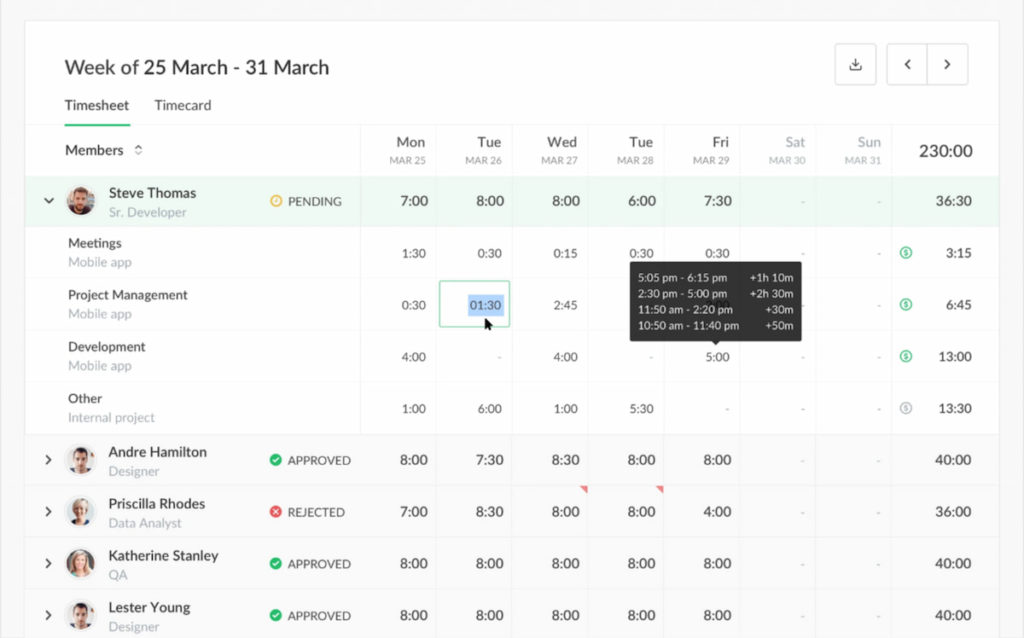
Everhour is a time tracking and project management platform built for teams that bill clients or manage project budgets alongside tracking attendance. Unlike most tools on this list, it works inside Asana, ClickUp, Trello, Jira, Notion, and GitHub rather than as a standalone app — so employees log time against actual tasks without switching tools. For attendance specifically, it handles timesheets, approvals, time off, and payroll exports, but it doesn’t offer GPS tracking or shift scheduling natively.
Key features
- Task-based time tracking inside Asana, ClickUp, Trello, Jira, Notion, Basecamp, and many others
- Digital timesheets with approvals and payroll export
- Billable and non-billable hour tracking
- Project budgeting and profitability reporting
- Time off and overtime tracking
- Reporting by employee, project, client, or task
Pricing
- Free plan: Includes basic time tracking features for individuals or small teams.
- Team plan: Starts at $8.50 per user per month and includes advanced time tracking and project management features.
✅ When it works best
- You manage project-based teams that need time tracking tied to tasks and budgets
- You need timesheet approvals and payroll exports alongside project reporting
- You already work inside Asana, ClickUp, Trello, Jira, or Notion
- You bill clients and need billable hour tracking and invoicing
❌ When to avoid it
- You need GPS tracking or geofencing for field workers
- You want automatic background tracking rather than manual time entry
Buddy Punch
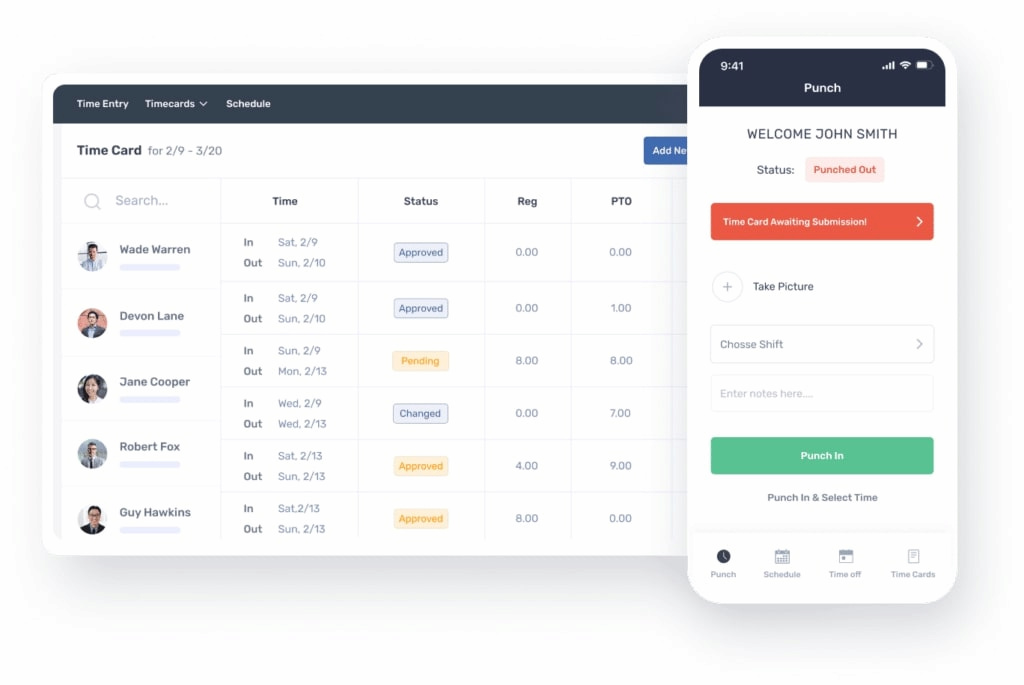
Buddy Punch is built for small and medium businesses that need time tracking, scheduling, and payroll in one place without a complicated setup. It covers the full employee time management cycle — clock-in via mobile, PIN, QR code, or facial recognition, shift scheduling, PTO management, and direct payroll integrations with QuickBooks, Gusto, and ADP. GPS tracking and geofencing add location verification for teams that work across multiple sites.
Key features
- Clock-in via mobile app, PIN, QR code, group punch, or facial recognition
- GPS tracking and geofencing for location verification
- Shift scheduling with drag-and-drop planner
- PTO management with automatic accruals and approval workflows
- Payroll integrations with QuickBooks, Gusto, and ADP
- Overtime calculations and timesheet approvals
Pricing
Starter plan is $4.49 per user per month and covers basic time tracking and scheduling. Free trial available.
✅ When it works best
- You run a small or medium business with hourly employees
- You need time tracking connected directly to payroll
- You manage shift workers or field teams who need location verification
- You already use QuickBooks, Gusto, or ADP for payroll
❌ When to avoid it
- You only need personal or freelancer time tracking
- You manage salaried knowledge workers with fixed schedules
- You need deep project budgeting or client billing features
Findmyshift
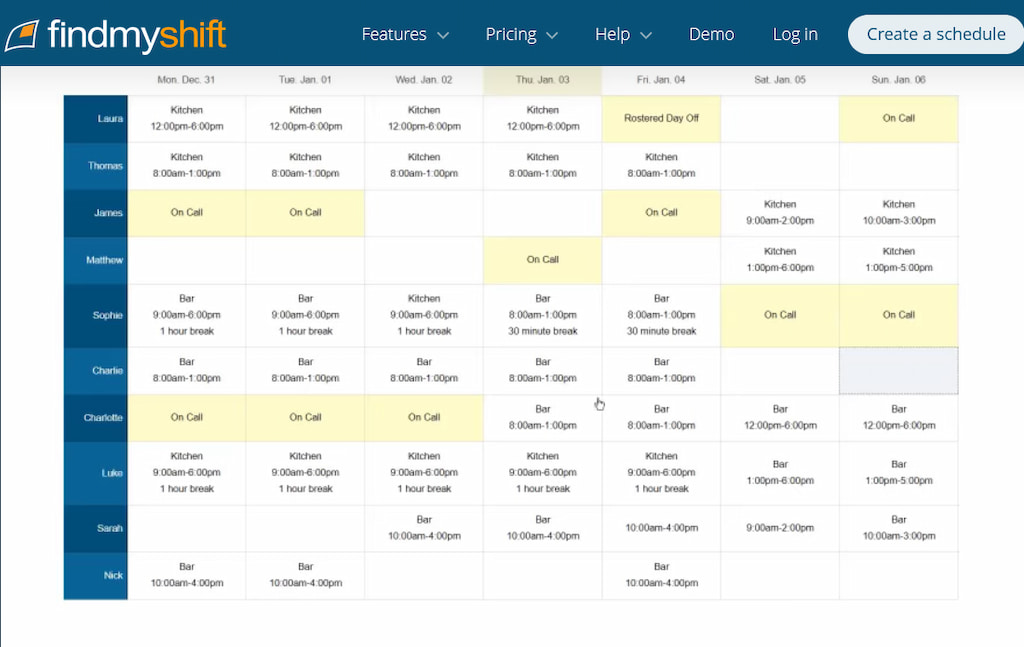
Findmyshift is a scheduling-first workforce management tool built for businesses that need to coordinate shifts, track attendance, and manage time off without a complicated setup. Its core strength is scheduling — creating rosters, managing shift requests, and giving employees visibility into their own schedules — with attendance tracking and payroll reporting built around that foundation.
Key features
- Drag-and-drop shift scheduling and roster management
- Employee self-service for availability, shift swaps, and time-off requests
- Attendance tracking with clock-in and clock-out
- Time-off management with accruals and approvals
- Payroll reporting and labor cost tracking
- Automated shift reminders and notifications
Pricing
Free plan available for up to five team members. Starter plan is $27 per team per month and covers up to 20 team members and one manager.
✅ When it works best
- You manage shift-based employees in hospitality, retail, or healthcare
- You want employees to self-manage availability and shift swap requests
- You need affordable scheduling with attendance tracking and payroll reporting
- You want a free starting point for a small team of up to five people
❌ When to avoid it
- You need GPS tracking or geofencing for field workers
- You need project-based time tracking or client billing
- You manage salaried knowledge workers with fixed schedules
Connecteam
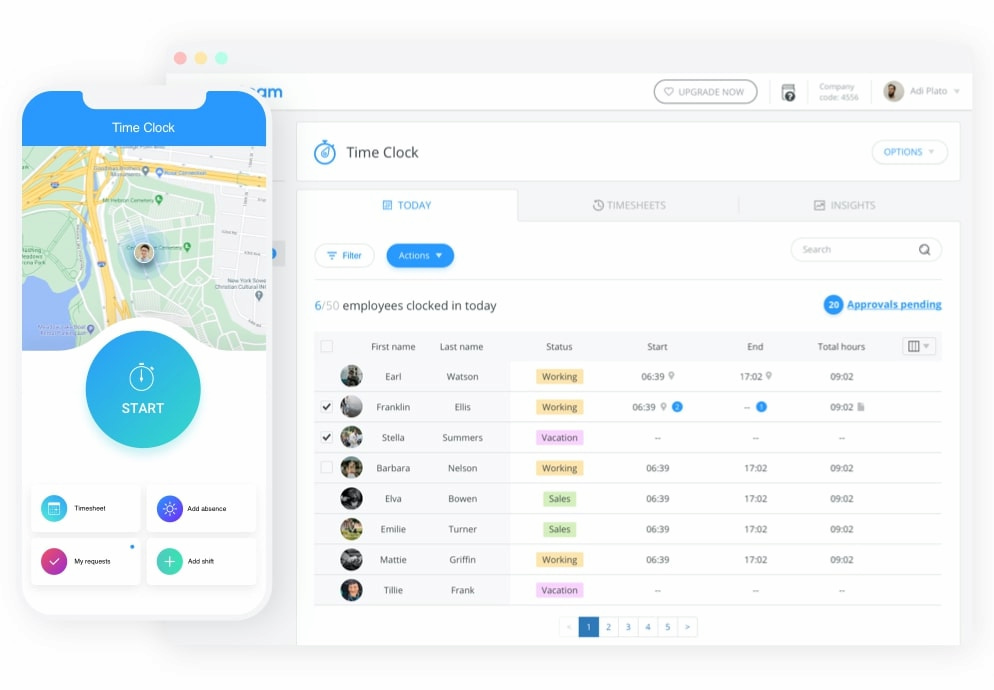
Connecteam is a mobile-first workforce management platform built specifically for deskless and frontline workers — construction crews, retail staff, restaurant teams, field technicians, and anyone else whose work doesn’t happen at a desk. It consolidates scheduling, time tracking, team communication, task management, and training into one app that employees use on their phones rather than a desktop interface most frontline workers will ignore.
Key features
- Time tracking with GPS and geofencing for field teams
- Shift scheduling with employee self-service
- Team communication with group chats and announcements
- Task management and checklists for field operations
- Training and onboarding materials built into the platform
- HR tools including time off management and document storage
Pricing
Basic plan starts at $35 per month (or $29 billed annually) for the first 30 users.
✅ When it works best
- You manage frontline or deskless workers in retail, hospitality, construction, or field services
- You want scheduling, time tracking, and team communication in one mobile app
- You need GPS tracking and geofencing for teams working across multiple locations
- You want training and onboarding tools built into the same platform
❌ When to avoid it
- You manage desk-based knowledge workers who primarily need project tracking
- You want a simple, lightweight scheduling tool without the full feature suite
- You need deep integrations with project management platforms like Asana or Jira
Hubstaff
Hubstaff sits at the more monitoring-heavy end of the time and attendance spectrum. It tracks hours worked but also goes further — GPS confirms where field employees are clocking in from, activity monitoring measures keyboard and mouse usage during work sessions, and optional screenshots capture what’s on screen at intervals. For businesses managing large distributed workforces or contractors where that level of visibility is a genuine operational need, it provides data most other tools don’t. For teams built on trust, it may create more friction than value.
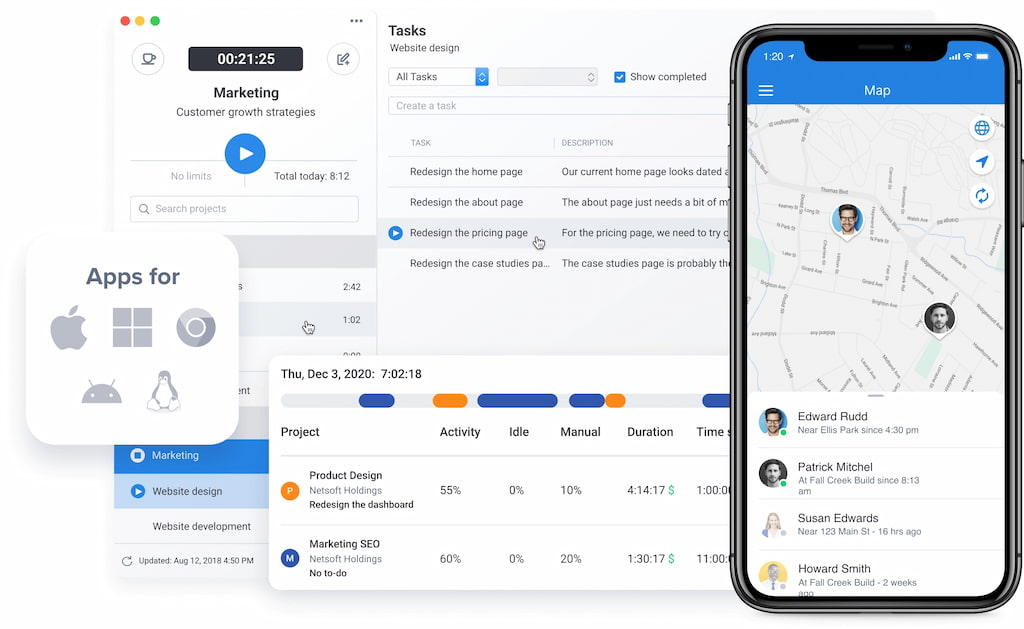
Key features
- Time tracking via desktop, mobile, or browser
- GPS tracking and geofencing for field teams
- Activity monitoring with optional screenshot capture
- Shift scheduling and overtime management
- Payroll processing and integrations
- Project management integrations
- Detailed productivity and attendance reports
Pricing
- Starter: $4.99 per user per month
- Grow: $7.50 per user per month
- Team: $10 per user per month
- Enterprise: $25 per user per month
✅ When it works best
- You manage remote or field teams and need GPS location verification
- You need payroll tied directly to tracked hours
- You want detailed activity reporting across distributed contractors
- You manage large shift-based or remote workforces where accountability is difficult to maintain otherwise
❌ When to avoid it
- You are concerned about employee privacy or the implications of screenshot monitoring
- You manage a project-based team that doesn’t need activity tracking
- You want a lightweight attendance tool without workforce monitoring complexity
OnTheClock
OnTheClock is a straightforward time clock and attendance platform designed specifically for small businesses that need accurate employee time tracking without a complicated or expensive setup. It’s been around since 2004 and focuses on doing the basics well — clocking in and out, tracking PTO, calculating overtime, and integrating with payroll — rather than trying to be an all-in-one workforce management platform. For small businesses with hourly employees who just need a reliable digital time clock, it’s one of the most affordable options on this list.
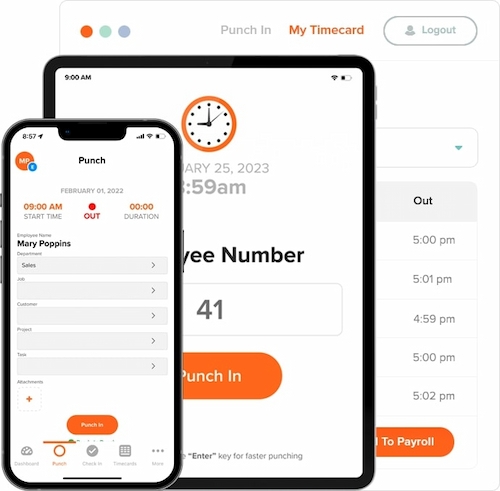
Key features
- Clock in and out via web, mobile app, or kiosk
- PTO tracking with accruals and approvals
- Overtime calculations based on labor law and company policy
- Geofencing to restrict clock-ins to designated locations
- Payroll integrations with QuickBooks and Gusto
- Scheduling and shift management
- Reporting and timesheet exports
Pricing
OnTheClock offers a free plan for 1-2 employees. Paid plans start at approximately $2.50 per user per month for standard features including geofencing and overtime alerts, with slightly lower per-user rates for teams over 100 employees.
✅ When it works best
- You run a small business with hourly employees and need a simple digital time clock
- You want an affordable option with geofencing and payroll integration
- You need PTO tracking and overtime calculations without paying for features you won’t use
- You want a tool that’s been proven over many years with a strong track record for small businesses
❌ When to avoid it
- You need project-based time tracking or client billing
- You manage a large enterprise workforce with complex scheduling needs
- You need advanced productivity monitoring or GPS tracking for field teams
Timely
Timely takes a fundamentally different approach to time tracking — instead of asking employees to start and stop timers, it runs silently in the background and captures everything automatically across apps, websites, calendars, and documents. At the end of the day, employees review what was captured and drag entries into their timesheet rather than reconstructing time from memory. For teams where manual time entry is consistently inaccurate or ignored, that passive capture approach solves the root problem rather than just adding reminders.
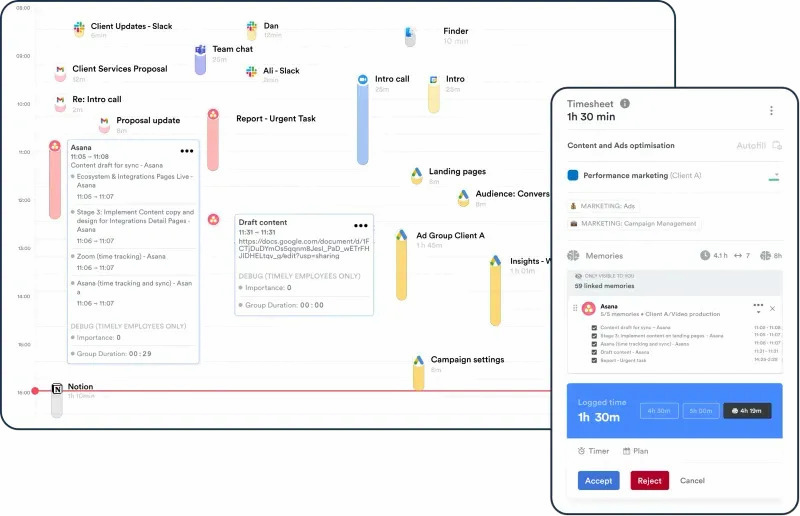
Key features
- Automatic background time capture across apps, websites, and calendars
- AI-assisted timesheet completion from captured activity
- Project budgeting with milestone alerts
- Billable and non-billable hour tracking
- Team capacity and workload reporting
- Integrations with Asana, Teamwork, and other project tools
Pricing
- Starter Plan: $9 per user/per month
- Premium Plan: $16 per user/per month
- Unlimited Plan: $22 per user/per month
✅ When it works best
- Your team consistently forgets to track time manually or submits inaccurate timesheets
- You want passive time capture without relying on employees to start and stop timers
- You manage project-based teams that need billable hour tracking and budget alerts
- You are a freelancer or agency that needs accurate client billing without manual effort
❌ When to avoid it
- You need GPS tracking or shift scheduling for field or hourly workers
- You want a free or low-cost option — Timely is one of the pricier tools on this list
- You need attendance tracking, PTO management, or payroll integrations
Timecamp
TimeCamp sits between Timely’s fully automatic approach and tools that rely entirely on manual timers. It can run in the background and record activity automatically, but also supports manual entry and traditional timesheets — so teams can choose how much automation they want rather than committing to one approach. Beyond basic time tracking it covers attendance, leave management, billing rates, and invoicing, making it one of the more complete free-tier options on this list.
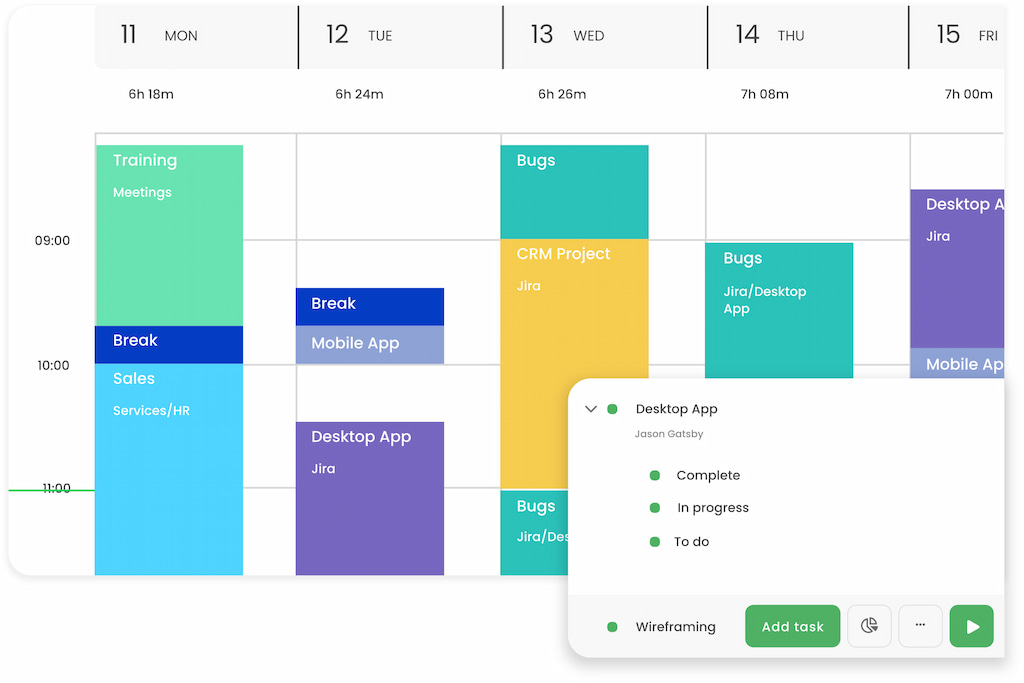
Key features
- Automatic background time tracking alongside manual entry
- Traditional weekly timesheets
- Attendance tracking with absences and leave management
- Billing rates and invoicing for client work
- Project and task tracking with budget monitoring
- Customizable reports and payroll exports
- Integrations with Asana, ClickUp, Trello, and more
Pricing
Free plan includes unlimited users, projects, and tasks via desktop and mobile. Starter plan is $3.99 per user per month and adds time rounding, custom reports, and management roles.
✅ When it works best
- Your team struggles with manual time entry and wants automatic tracking as a fallback
- You need a genuinely free plan with unlimited users and projects
- You want billing rates and invoicing alongside attendance tracking
- You track leave and absences alongside project time
❌ When to avoid it
- You want full manual control over every time entry without background monitoring
- You need GPS tracking or shift scheduling for field or hourly workers
- You are sensitive to background activity monitoring
Jibble
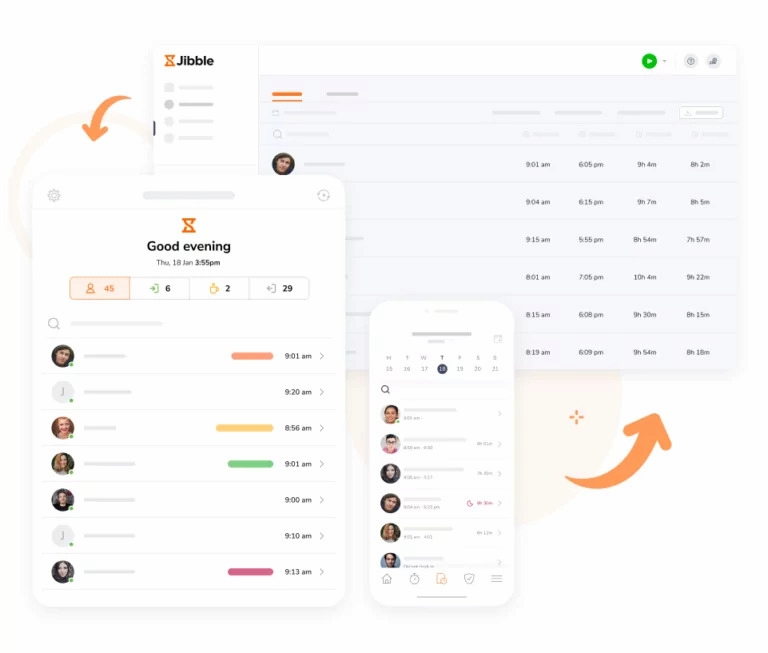
Jibble is built around one core problem: verifying that employees actually showed up, on time, and in the right place. Facial recognition at clock-in eliminates buddy punching, GPS confirms location, and geofencing restricts clock-ins to designated areas. Timesheets are generated automatically from that verified attendance data rather than relying on self-reported entries. For businesses where attendance accuracy is genuinely difficult to maintain, it solves that problem at a price point most competitors can’t match, including a free plan that covers unlimited users with basic tracking.
Key features
- Facial recognition for attendance verification at clock-in
- GPS location tracking and geofencing for field and mobile teams
- Multiple clock-in methods: web, mobile app, kiosk, or Slack
- Automated timesheet generation from attendance data
- Shift scheduling and overtime tracking
- Integrations with Slack, Microsoft Teams, and payroll tools
Pricing
Free
✅ When it works best
- You manage shift workers, retail staff, or field teams where attendance verification matters
- You need facial recognition or GPS to prevent buddy punching or inaccurate clock-ins
- You want a genuinely free plan with unlimited users and no time limit
- You use Slack or Microsoft Teams and want clock-in built directly into those tools
❌ When to avoid it
- You need project budgeting, client billing, or invoicing
- You manage knowledge workers who track time by project rather than attendance
- You need advanced payroll processing rather than basic timesheet exports
Quickbooks Time
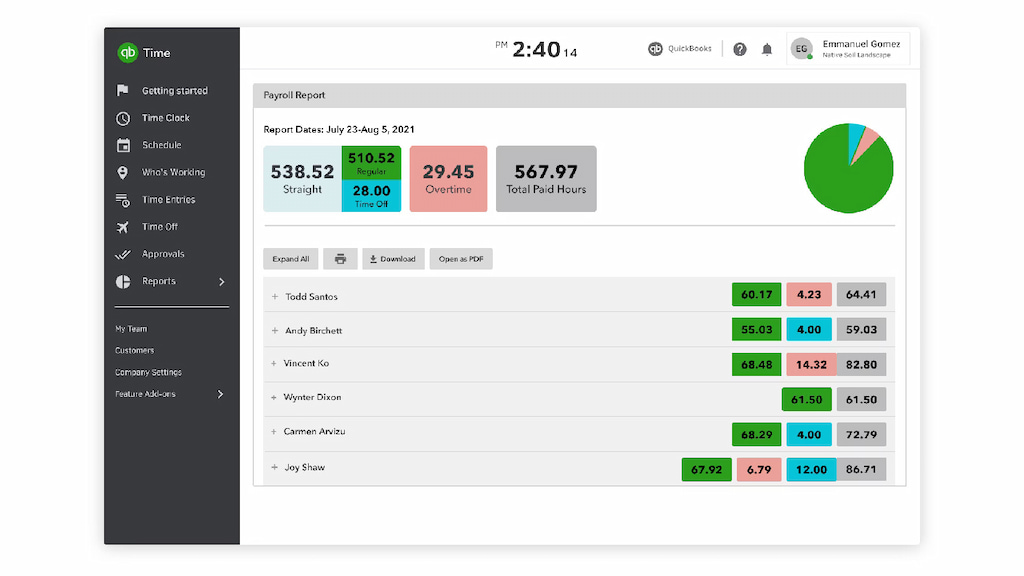
QuickBooks Time’s main reason to exist is the direct sync with QuickBooks Online and QuickBooks Payroll. Tracked hours flow straight into payroll without manual export or re-entry, which eliminates a significant source of payroll errors for businesses that run their accounting through QuickBooks. Outside of that integration, it’s a capable time and attendance platform with GPS tracking, geofencing, and shift scheduling — but at a price point that’s harder to justify if you’re not already in the QuickBooks ecosystem.
Key features
- Direct sync with QuickBooks Online and QuickBooks Payroll
- GPS tracking and geofencing for field teams
- Mobile clock-in and clock-out
- Shift scheduling and overtime calculations
- Job costing and labor reports
- Timesheet approvals and payroll exports
Pricing
No free plan. Premium plan is $20 per month base fee plus $10 per user per month (as of July 2026) and includes core time tracking, GPS, and QuickBooks sync.
✅ When it works best
- You already use QuickBooks Online or QuickBooks Payroll and want time data to sync directly
- You manage field workers who need GPS verification and geofencing
- You need job costing tied directly to tracked hours
- You want shift scheduling alongside payroll integration
❌ When to avoid it
- You don’t use QuickBooks — the main advantage disappears without that integration
- You are a small team where the base fee makes total cost disproportionately high
- You want a free or low-cost option — QuickBooks Time is now one of the pricier tools in this category
DeskTime
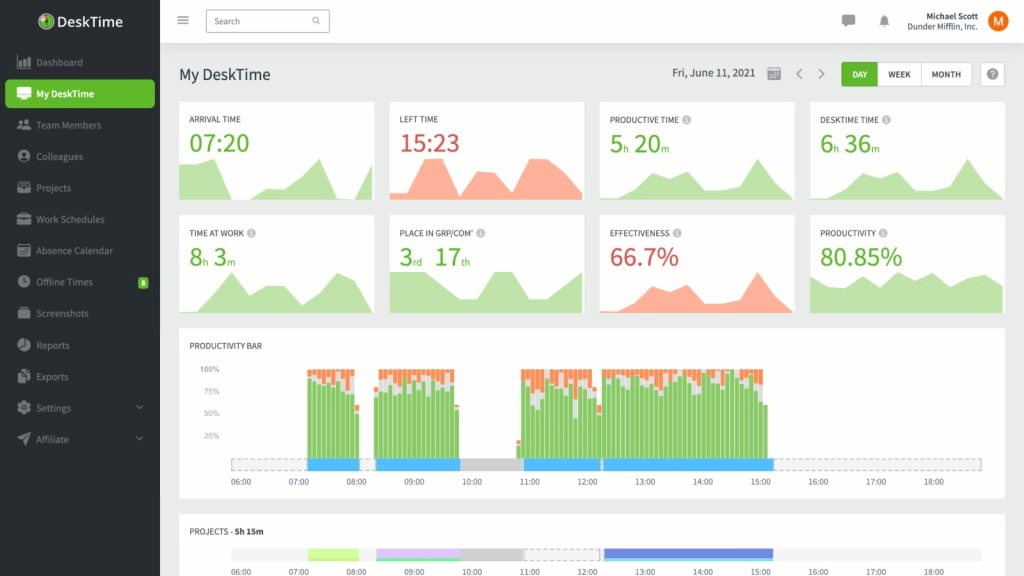
DeskTime is an automatic time tracking and productivity monitoring platform that runs in the background and records which applications and websites employees use during work hours, without requiring manual timers or check-ins. For managers who want to understand how work time is actually being spent across a team, it provides that data automatically. It sits in similar territory to Time Doctor but with a lighter monitoring footprint: no screenshots by default on the base plan, and a cleaner interface that’s easier to adopt without creating team friction.
Key features
- Automatic time tracking by application and website usage
- Productivity categorization — productive, unproductive, and neutral time
- Project time tracking with task-level detail
- URL and app tracking with customizable productivity labels
- Shift scheduling and absence calendar on higher plans
- Screenshots on Premium plan for additional accountability
- Integrations with Google Calendar, Trello, Asana, and Basecamp
Pricing
No permanent free plan — the previously available free single-user plan has been discontinued. Pro plan is $7 per user per month and includes automatic tracking, application and URL monitoring, and project time tracking.
✅ When it works best
- You manage office or remote teams and want automatic productivity insights without manual time entry
- You want to understand how work time is distributed across applications and tasks
- You need productivity categorization to identify inefficiencies across a team
- You want shift scheduling and absence tracking alongside automatic time capture
❌ When to avoid it
- You need GPS tracking or geofencing for field workers
- You want a privacy-focused tool — automatic app and URL monitoring may not suit all team cultures
- You need project billing, invoicing, or client-facing reports on the base plan
Time Doctor
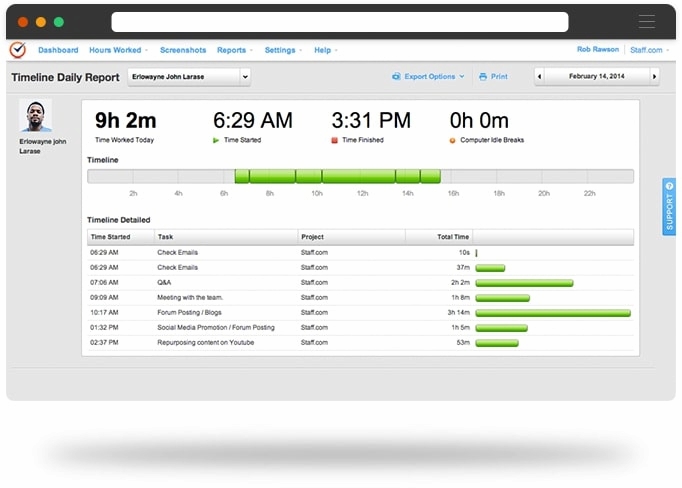
Time Doctor is the most monitoring-focused tool on this list. It doesn’t just record when employees clock in and out — it tracks which websites and applications are used during work hours, captures screenshots at intervals, measures keyboard and mouse activity, and generates productivity reports based on that data. For businesses managing large remote or outsourced teams where output visibility is genuinely difficult to maintain any other way, that level of insight has real operational value. For teams where trust is the foundation of how people work, it can create the kind of surveillance dynamic that damages culture faster than it improves productivity.
Key features
- Time tracking via manual timers and automatic activity detection
- Website and application usage monitoring during work hours
- Screenshot capture at configurable intervals
- Productivity reports with distraction alerts
- Payroll integration and export on higher plans
- Project and task tracking
- Integrations with project management and accounting tools on Standard and above
Pricing
No free plan — 14-day free trial with full feature access, no credit card required. Basic plan is $8 per user per month (or $6.70 billed annually) and covers core time tracking but excludes screenshots, payroll, and integrations.
✅ When it works best
- You manage large remote teams or outsourced contractors where activity verification is a genuine need
- You want detailed data on how work hours are spent across applications and websites
- You need payroll integration tied directly to monitored work hours
- You manage teams where accountability is difficult to maintain through trust alone
❌ When to avoid it
- You are concerned about employee privacy or the cultural implications of screenshot monitoring
- You manage a small team or knowledge workers where trust-based working is the norm
- You need GPS tracking for field workers — Time Doctor is built for computer-based work
- You want a lightweight attendance tool without productivity surveillance features
➡️ Learn more about the tool in our review of Time Doctor vs Everhour.
How to Choose Time and Attendance Software
- For project-based teams: Everhour
- For employee attendance: Jibble, Everhour, or Buddy Punch
- For field workers: Hubstaff or QuickBooks Time
- For shift scheduling: Findmyshift or Connecteam
- For automatic time tracking: Timely or TimeCamp
- For employee monitoring: DeskTime, Hubstaff, or Time Doctor
- For free time and attendance software: Jibble, TimeCamp, or OnTheClock
Also consider your team size, work locations, payroll system, and privacy requirements.
For most businesses, the right tool is the one that makes timekeeping easy for employees while giving managers the attendance and reporting data they actually need.
FAQ
Time and attendance software records employee work hours, attendance, breaks, overtime, and time off. It replaces manual timesheets and punch cards and helps businesses manage payroll and workforce data.
The best option depends on your needs. Everhour is a strong choice for project-based teams, while Jibble works well for attendance and GPS tracking, and QuickBooks Time is useful for payroll and accounting.
Look for time clocks, attendance tracking, overtime calculations, PTO management, scheduling, reporting, payroll integrations, and mobile access. GPS or geofencing may also be important for field teams.
Yes. Remote teams can use time and attendance software to record working hours, manage schedules, and track attendance. Some platforms also offer GPS, activity tracking, or other remote-work features.
Yes. Tools such as Hubstaff, Jibble, and QuickBooks Time offer GPS or location-based tracking. These features are particularly useful for field and mobile workforces.
Yes. Many platforms integrate with payroll or accounting systems to transfer approved hours and simplify payroll processing. QuickBooks Time and Everhour, for example, integrates with QuickBooks.
Yes, although the two often overlap. Time tracking focuses on how employees spend their working hours, while attendance tracking focuses on when they are working, absent, late, or on leave.
Yes. Everhour, Jibble, TimeCamp, and OnTheClock offer free options, although available features and user limits vary by provider.
Conclusion
The right time and attendance software depends on what you actually need it to do. If accurate project-based time tracking and client billing matter most, Everhour is the strongest fit. If you manage field workers who need GPS verification and geofencing, Hubstaff, Jibble, or QuickBooks Time are worth a closer look. If attendance tracking with facial recognition is the priority, Jibble covers that better than most tools at any price point. And if you want something free to start with, Jibble, TimeCamp, and OnTheClock all have genuinely usable free plans.
Start with your primary use case — payroll accuracy, field team compliance, remote workforce visibility, or project billing — and match the tool to that rather than picking the one with the longest feature list.

Maria
A dedicated content enthusiast with extensive experience in international teams and projects of all sizes. Maria thrives on creativity and attention to detail, fueled by a love for fantasy novels, music, classic black-and-white films, and always finding ways to make things better.