


Empathy in the Workplace: Real Examples & Ways to Build It

Empathy in the workplace is the ability to understand other people’s perspectives and recognize their feelings, even when you don’t share their experience. It helps employees communicate more effectively, handle disagreements constructively, and work together with greater understanding.
Workplace empathy isn’t just about being kind or offering emotional support. It also means considering the circumstances behind someone’s actions, listening before making assumptions, and responding appropriately to their concerns. For managers, this can mean recognizing when an employee is struggling with workload; for colleagues, it can mean understanding a different point of view before dismissing it.
What Is Empathy in the Workplace?
Empathy in the workplace means understanding how other people think and feel and taking that understanding into account when communicating, making decisions, or responding to problems.
It can show up in everyday situations: a manager asking why a deadline was missed before criticizing an employee, a colleague listening to concerns during a disagreement, or a customer service representative acknowledging a customer’s frustration before offering a solution.
Workplace empathy doesn’t require agreeing with everyone or taking responsibility for their emotions. Instead, it helps people understand the context behind a situation and respond with consideration while maintaining professional boundaries and clear expectations.
Empathy vs. sympathy vs. compassion
Empathy, sympathy, and compassion are related, but they describe different responses to another person’s experience.
| Concept | Meaning | Workplace example |
|---|---|---|
| Empathy | Understanding another person’s perspective or feelings | Listening to an employee explain why a deadline is difficult |
| Sympathy | Feeling concern for someone else’s situation | Expressing concern when a colleague is having a difficult week |
| Compassion | Recognizing someone’s difficulty and wanting to help | Working with an employee to identify practical support or adjust priorities |
These responses can overlap. A manager might empathize with an employee’s frustration, feel sympathy for their situation, and show compassion by helping them address the problem.
The important distinction is that empathy helps you understand another person’s experience, while compassion can motivate you to act on that understanding.
In the workplace, both can support better communication and more constructive responses to difficult situations.
Why Is Empathy Important in the Workplace?
Empathy helps people understand one another’s perspectives before reacting, making it easier to communicate, resolve disagreements, and work through problems. Its impact depends on how people apply it in everyday interactions and whether the workplace supports respectful communication.
Builds trust and psychological safety
Employees are more likely to raise concerns, ask questions, and admit mistakes when they feel their perspectives will be taken seriously. Empathetic responses help managers and colleagues create an environment where people can speak openly without expecting an immediate judgment or dismissal.
Improves communication and collaboration
People have different communication styles, priorities, and working conditions. Empathy helps colleagues understand those differences, clarify misunderstandings, and coordinate their work more effectively.
Helps resolve workplace conflicts
Disagreements often arise because people have different expectations or incomplete information. Taking time to understand each person’s perspective can reveal the source of a conflict and make it easier to find a constructive solution.
Supports employee engagement and retention
Employees who feel heard and treated with consideration may have a more positive experience at work. Empathetic management can increase employee engagement and identify concerns about workload, recognition, or support before they contribute to disengagement. Empathy alone, however, cannot compensate for poor pay, unreasonable workloads, or limited career opportunities.
Helps managers recognize workload problems
A missed deadline or declining performance isn’t always a motivation problem. An employee may be dealing with conflicting priorities, unclear instructions, or more work than they can reasonably complete. Empathy encourages managers to investigate those factors before deciding how to respond.
Creates better customer experiences
Customer-facing employees often deal with frustration, confusion, and unmet expectations. Recognizing what a customer is experiencing helps employees respond appropriately, explain solutions clearly, and avoid making a difficult interaction worse.
Examples of Empathy in the Workplace
Workplace empathy is easiest to recognize through behavior. It doesn’t require elaborate gestures; often, it means listening carefully, asking a question before judging, or adapting your response to the situation.
| Situation | Empathetic response |
|---|---|
| An employee misses a deadline | Ask what caused the delay and whether priorities or resources need to change |
| A colleague disagrees with a decision | Listen to their concerns and ask what they think could work better |
| An employee seems overwhelmed | Review their workload and agree on realistic priorities |
| A team member receives critical feedback | Acknowledge that the conversation may be difficult while explaining what needs to improve |
| A new employee struggles with a task | Clarify expectations, demonstrate the process, and give them time to learn |
| A customer is frustrated | Recognize the customer’s concern, clarify the problem, and explain the next steps |
| A colleague is unusually quiet in a meeting | Invite their input without putting them on the spot |
| Two teammates are in conflict | Hear both perspectives before deciding how to resolve the issue |
| An employee requests flexibility | Discuss their needs and explore options that work for the employee and the team |
| A colleague makes a mistake | Focus on understanding what happened and preventing a repeat, rather than assigning blame immediately |
The goal is to respond with a better understanding of the situation rather than relying on assumptions or reacting too quickly.
Types of Empathy in the Workplace
Workplace empathy is often described in three forms: cognitive empathy, emotional empathy, and compassionate empathy. Each helps people understand and respond to others in a different way.
Cognitive empathy
Cognitive empathy is the ability to understand another person’s perspective, thoughts, or reasoning. It helps people see why someone might react differently or approach a problem in an unexpected way.
Example: A manager realizes that an employee’s missed deadline may stem from competing priorities rather than a lack of commitment. Instead of immediately criticizing them, the manager asks how the work was planned and what got in the way.
Emotional empathy
Emotional empathy involves recognizing and, to some extent, sharing another person’s emotional experience. It helps people respond sensitively to frustration, disappointment, excitement, or stress.
Example: A colleague receives disappointing news about a project and seems discouraged. A teammate recognizes their disappointment, gives them space to talk, and avoids immediately dismissing their concerns.
Compassionate empathy
Compassionate empathy combines understanding someone’s experience with a willingness to help. At work, this can mean offering practical support while considering responsibilities and boundaries.
Example: An employee is struggling to manage several urgent assignments. Their manager listens to their concerns and works with them to reprioritize tasks or arrange additional support.
These forms of empathy often overlap. Understanding someone’s perspective can help you recognize their emotions, while both can inform a constructive response. The appropriate response depends on the situation: sometimes listening is enough; in other cases, practical action is needed.
How Managers Can Build an Empathetic Workplace
Managers influence workplace empathy through their everyday decisions, communication, and responses to employee concerns. Encouraging empathy requires more than telling people to be considerate; it also means creating conditions in which employees can raise problems and receive fair treatment.
Make one-to-one conversations meaningful
Regular one-to-one meetings give employees an opportunity to discuss challenges, ask questions, and raise concerns they might not bring up in a group setting. Ask about obstacles, priorities, and support needs rather than focusing exclusively on completed tasks.
Understand employee workload and constraints
Before interpreting missed deadlines or declining performance as individual shortcomings, examine the conditions affecting the work. Conflicting priorities, unclear responsibilities, and insufficient capacity can make expectations difficult to meet.
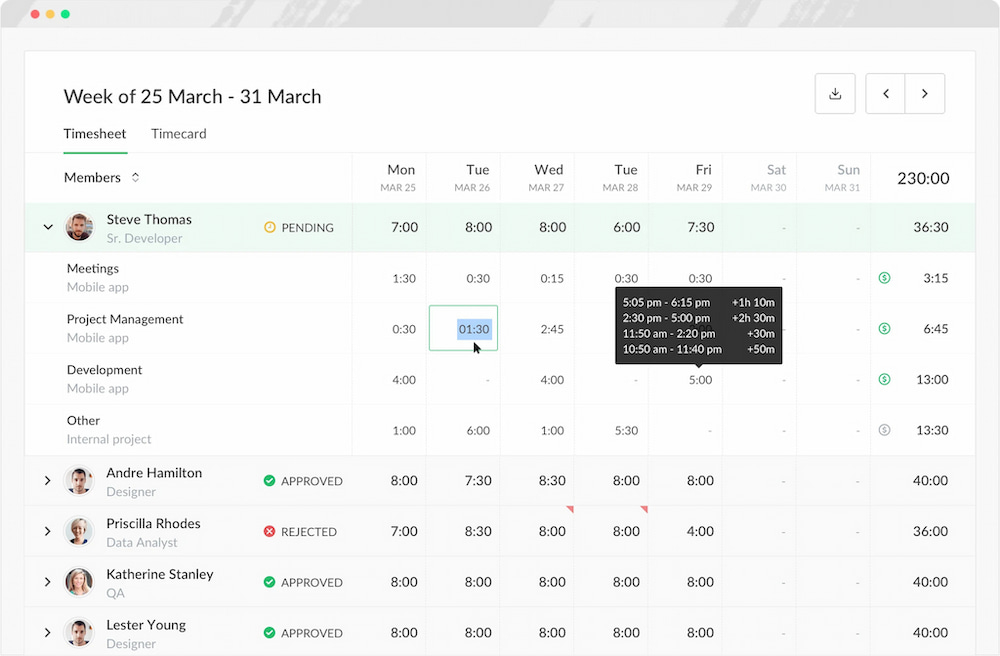
Time-tracking data can help managers understand where working hours go and which projects or tasks consume the most time. Everhour’s time tracker, for example, helps teams track time across tasks and projects, giving managers additional context when reviewing workload and planning capacity. Time data should inform conversations, not replace them: it cannot explain every difficulty an employee experiences.
Give constructive, respectful feedback
Be specific about the behavior that needs to change and explain its impact. Allow the employee to share their perspective, then agree on practical next steps.
For example, instead of labeling someone as unreliable after a missed deadline, explain how the delay affected the project, ask what happened, and discuss how to prevent similar problems.
Respond to mistakes with curiosity before blame
Mistakes can result from individual errors, unclear instructions, inadequate training, or flaws in a process. Understanding the cause helps managers decide whether the right response is coaching, clearer expectations, process improvements, or accountability.
This doesn’t mean ignoring repeated mistakes. It means responding based on what happened rather than making assumptions about the person’s intentions.
Encourage employees to speak up
Employees should be able to raise concerns, disagree respectfully, and admit when they need help. Managers can encourage this by listening without becoming defensive, responding consistently, and explaining decisions—even when they cannot accommodate every request.
Model empathetic behavior
Managers set an example through how they handle disagreements, respond to feedback, and treat people under pressure. Employees are more likely to adopt empathetic behaviors when they see leaders practice them consistently.
How to Develop Empathy at Work
Empathy can be strengthened through deliberate practice. Employees and managers can work on understanding different perspectives, recognizing emotional cues, and responding more thoughtfully in difficult situations.
Practice active listening
During conversations, focus on understanding the other person’s point before preparing your reply. Summarize what you’ve heard and ask whether you’ve understood correctly.
Challenge your assumptions
When someone’s behavior frustrates you, separate what you know from what you’re assuming. Ask yourself whether there might be another explanation before drawing conclusions.
Learn to recognize emotional cues
Pay attention to changes in tone, hesitation, or body language where these cues are available. Treat them as reasons to check in rather than proof of how someone feels.
Ask for feedback on your communication
Ask trusted colleagues whether your communication feels clear, respectful, and open to discussion. Be willing to hear that your intentions and the way others experience your behavior may differ.
Reflect on difficult interactions
After a tense conversation, consider what triggered your reaction, what the other person might have been experiencing, and whether a different response could have improved the outcome.
Work with people who have different perspectives
Collaborating with colleagues from different roles or backgrounds can help you recognize assumptions and understand alternative approaches. Ask questions with genuine curiosity instead of expecting others to explain or represent an entire group.
Developing empathy doesn’t mean getting every interaction right. The goal is to become more aware of other people’s perspectives and respond more thoughtfully over time.
When Empathy Becomes Difficult: Boundaries and Accountability
Empathy can improve workplace relationships, but it doesn’t mean agreeing with everyone, avoiding difficult conversations, or taking responsibility for other people’s problems. It works best alongside clear expectations, fair treatment, and professional boundaries.
Empathy doesn’t mean agreeing with everyone
You can understand why a colleague disagrees with a decision without changing that decision. Acknowledge their concerns, explain your reasoning, and consider whether their perspective reveals something you have overlooked.
Empathy doesn’t mean avoiding difficult feedback
Managers sometimes avoid giving critical feedback because they don’t want to upset an employee. However, withholding important feedback can leave people unsure about expectations and prevent them from improving.
An empathetic approach addresses the issue directly while respecting the person. Explain what needs to change, listen to their perspective, and agree on specific next steps.
Supporting employees doesn’t mean accepting every request
An employee may have a valid reason for requesting a deadline extension, a different schedule, or a lighter workload. That doesn’t mean every request can be accommodated.
Consider the employee’s circumstances alongside project requirements, team capacity, and other commitments. If the original request isn’t feasible, explain why and explore alternatives.
Boundaries still matter
Employees and managers can care about one another without becoming responsible for solving every personal or professional difficulty. It’s important to respect privacy, avoid pressuring people to disclose personal information, and recognize when a concern requires support from HR or another appropriate resource.
Empathy must be balanced with fairness and accountability
Understanding why something happened doesn’t remove its consequences. If an employee repeatedly misses deadlines, for example, a manager can investigate the underlying causes while still addressing the impact on the team.
The aim is to respond proportionately, identify what needs to change, and provide appropriate support without abandoning shared standards.
How to Measure Empathy in the Workplace
Empathy is difficult to measure with a single number. Organizations can instead look at employee feedback, communication patterns, and other indicators of whether people feel heard, respected, and supported.
| Indicator | What it can reveal |
|---|---|
| Employee surveys | Whether employees feel listened to and treated with respect |
| Team feedback | How people experience communication and collaboration |
| Conflict resolution | Whether disagreements are handled constructively |
| One-to-one conversations | Whether managers understand employee concerns and obstacles |
| Customer feedback | Whether customers feel understood during interactions |
| Engagement and retention trends | Possible patterns in employee experience that warrant further investigation |
These indicators need context. For example, a high retention rate doesn’t necessarily mean a workplace is empathetic, and a rise in reported conflicts could reflect employees becoming more comfortable raising concerns rather than relationships getting worse.
Organizations can also assess empathy through observed behaviors, such as whether managers ask questions before making assumptions, acknowledge concerns, and communicate decisions respectfully.
Frequently Asked Questions
If an employee misses a deadline, an empathetic manager asks what happened and whether the employee needs more support or clearer priorities before deciding how to respond. The goal is to understand the situation without ignoring the missed deadline.
Empathy helps people communicate more effectively, resolve disagreements, build trust, and understand each other’s needs. It can also help managers identify workload problems and support better collaboration.
The three commonly discussed types are cognitive empathy, which involves understanding another person’s perspective; emotional empathy, which involves recognizing and sharing their feelings; and compassionate empathy, which combines understanding with a willingness to help.
Managers can show empathy by listening without interrupting, asking questions before making assumptions, giving respectful feedback, checking employee workloads, and considering individual circumstances while applying expectations fairly.
Employees can practice active listening, ask questions instead of making assumptions, consider alternative perspectives, pay attention to emotional cues, and reflect on how their words and actions affect colleagues.
Empathy means understanding another person’s perspective or feelings. Sympathy means feeling concern for someone experiencing difficulty. Compassion goes a step further by motivating someone to help.
Empathy can become difficult to manage when it leads to emotional exhaustion, blurred boundaries, or inconsistent decisions. Workplace empathy should help people understand one another without requiring them to take responsibility for everyone else’s feelings or accept every request.
Empathy helps teammates understand different working styles, communicate through disagreements, and address problems before they escalate. It makes collaboration easier by encouraging people to consider how their decisions affect others.
Empathetic leadership helps managers understand employee concerns, give more constructive feedback, and make better-informed decisions. It can build trust, but it still needs to be paired with clear expectations and accountability.
Yes. Empathy is one of the most important customer service skills and it helps customer service teams acknowledge frustration, understand the actual problem, and explain appropriate next steps. It doesn’t mean agreeing to every request; it means responding in a way that shows the customer’s concern has been understood.
Conclusion
Empathy in the workplace means understanding other people’s perspectives and taking their circumstances into account when communicating, making decisions, and resolving problems. It can strengthen trust, improve collaboration, and help managers identify issues that might otherwise go unnoticed.
Building empathy starts with everyday behaviors: listening carefully, asking questions before making assumptions, giving respectful feedback, and considering different perspectives. At the same time, empathy needs boundaries. Understanding someone’s difficulties doesn’t mean avoiding accountability or overlooking problems such as unrealistic workloads and unclear expectations.
The goal isn’t to agree with everyone or solve every personal problem. It’s to understand people well enough to respond fairly, communicate clearly, and create better conditions for working together.

Maria
A dedicated content enthusiast with extensive experience in international teams and projects of all sizes. Maria thrives on creativity and attention to detail, fueled by a love for fantasy novels, music, classic black-and-white films, and always finding ways to make things better.