


Upskilling: What It Is, Benefits, and Strategies for the Workplace

As technology and business needs evolve, employees must keep developing their skills to stay effective in their roles. New tools, AI, and changing customer expectations can make existing knowledge insufficient. For employers, upskilling is one way to build the capabilities they need while making better use of existing talent.
This guide covers what upskilling means, its benefits, workplace examples, and practical ways to develop an effective upskilling strategy.
What Is Upskilling?
Upskilling is the process of developing existing skills to perform a current role more effectively or take on additional responsibilities. It can involve technical expertise, digital skills, communication, leadership, or other capabilities relevant to an employee’s work.
It can take place through courses, certifications, mentoring, workshops, on-the-job training, or self-directed learning. The goal is to build on what employees already know rather than prepare them for an entirely different occupation.
Upskilling vs. reskilling
The terms are often used together, but they describe different approaches to workforce development:
- Upskilling: Improving existing capabilities to perform better or take on more responsibilities within a current role or career path.
- Reskilling: Learning a new set of skills to move into a different role or occupation.
For example, a software developer learning to use AI-assisted coding tools is upskilling. An administrative employee training to become a data analyst is reskilling.
Both help organizations adapt to changing business needs: upskilling strengthens existing roles, while reskilling prepares employees for new ones.
Why Is Upskilling Important?
Technology, business models, and job requirements change quickly. Employees may need capabilities that weren’t part of their original training, while employers must address skills gaps without relying solely on recruitment.
The World Economic Forum’s Future of Jobs Report 2025 estimates that 59 out of every 100 workers will need training by 2030. Of these, 29 could be upskilled in their current roles. The report also found that 85% of surveyed employers plan to prioritize workforce upskilling.
Several factors make ongoing skills development increasingly important:
- Changing skill requirements: New technologies and processes introduce capabilities employees may not yet have.
- Skills shortages: Developing existing talent can help businesses address gaps that are difficult to fill through recruitment.
- Career development: Learning opportunities help employees expand their responsibilities and prepare for future roles.
- Business adaptability: Teams with relevant, up-to-date skills can respond more effectively to new priorities and market changes.
Upskilling is therefore not just an employee benefit. It’s also a way for organizations to maintain the capabilities they need as their work evolves.
Benefits of Employee Upskilling
When training addresses real job requirements, it can improve individual performance while helping organizations build stronger teams.
Close skills gaps
Upskilling helps bridge the gap between employees’ current capabilities and the skills their roles require. For example, a finance team adopting new reporting software could train existing employees to use its analytical features rather than recruit specialists for every new requirement.
Improve productivity and performance
Employees who understand their tools and processes can work more efficiently and handle complex tasks with greater confidence. Training in automation, software, or analytical methods can also reduce repetitive work and support better decisions.
The key is relevance: employees should be able to apply what they learn to their everyday responsibilities.
Support engagement and retention
Professional development gives employees a reason to see a future within the organization. Opportunities to build skills, take on new responsibilities, and progress in their careers can strengthen employee engagement and make employees more likely to stay.
Increase workforce adaptability
Employees with broader skill sets can adjust to new workflows, support different projects, and take on responsibilities beyond their usual scope. This gives organizations more flexibility when priorities change or new capabilities are needed across teams.
Reduce recruitment and onboarding costs
Developing internal talent can be more efficient than hiring externally whenever a new skill is required. Existing employees already understand the organization’s processes and expectations, which can shorten the transition into expanded responsibilities.
Upskilling won’t replace external recruitment when specialized expertise is missing, but it can help businesses make better use of the talent they already have.
Examples of Upskilling in the Workplace
Upskilling can target different capabilities depending on an employee’s role, industry, and career goals. Common examples include:
- Technical and digital skills: Learning new software, programming languages, data analysis tools, or cybersecurity practices.
- AI literacy and automation: Using AI tools effectively, writing better prompts, evaluating AI-generated outputs, and automating routine tasks.
- Communication and collaboration: Improving presentation skills, written communication, conflict resolution, collaboration skills, and cross-functional teamwork.
- Leadership and management: Developing skills in delegation, feedback, decision-making, coaching, and project management.
- Analytical and problem-solving skills: Learning to interpret data, identify patterns, evaluate options, and make evidence-based decisions.
The most useful upskilling opportunities address a specific need rather than follow trends for their own sake. For example, teaching a customer support team to use AI-assisted tools makes sense when it can improve response workflows, while leadership training is more relevant when employees are preparing to manage others.
How to Build an Effective Upskilling Strategy
An effective upskilling strategy connects employee development with the organization’s current and future needs. These steps can help turn training into a practical, ongoing process.
1. Identify current and future skill requirements
Start by reviewing the skills employees need to perform their roles and meet upcoming business goals. Consider changes in technology, workflows, customer expectations, and planned projects.
Involve team leads and employees in identifying capabilities that are becoming more important. This helps distinguish genuine business needs from skills that are simply popular at the moment.
2. Conduct a skills gap analysis
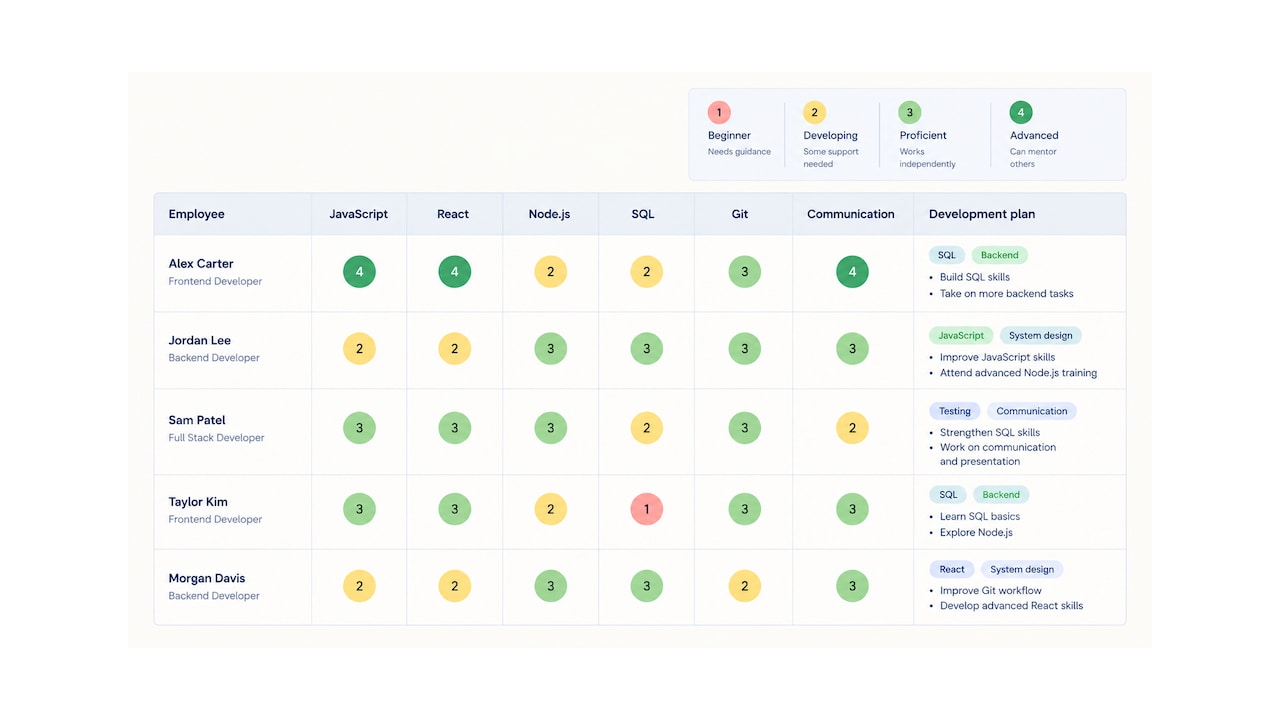
Compare the capabilities your workforce currently has with those the organization will need. Performance reviews, employee surveys, skills assessments, and manager feedback can help identify gaps at both individual and team levels.
A skills matrix can make the results easier to interpret by showing which capabilities are well represented and where additional development is needed.
3. Set clear learning objectives
Define what employees should be able to do after completing their training. Objectives should be specific and connected to practical responsibilities.
For example, instead of setting a broad goal to improve data literacy, aim for employees to build and interpret basic reports using the company’s analytics platform. Clear objectives also make it easier to evaluate whether training has been effective.
4. Choose appropriate training methods
Match the learning format to the skill being developed. Technical capabilities may require structured courses and hands-on practice, while communication or leadership skills often benefit from coaching, mentoring, and feedback.
Consider employees’ experience levels and learning preferences, too. A single training format rarely works equally well for everyone.
5. Make time and resources available
Training needs dedicated time, budget, and access to relevant tools. If employees are expected to learn alongside a full workload, development can easily become a lower priority.
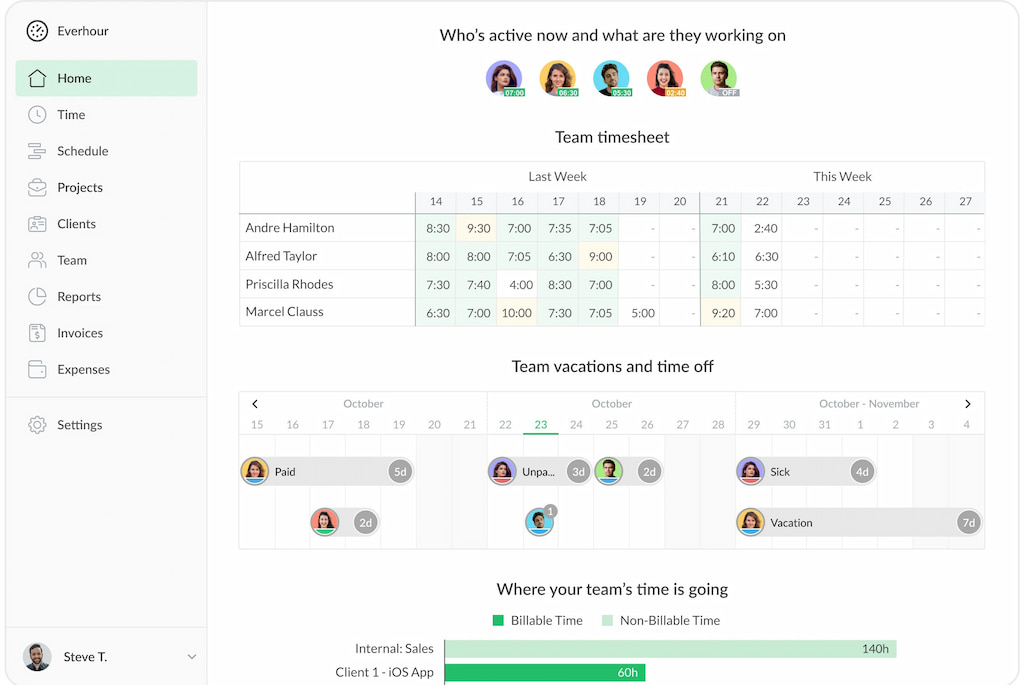
Review team capacity before scheduling training and account for learning time when planning projects. Tools such as Everhour’s time tracker can help managers understand how employees spend their time across tasks and projects, compare tracked hours with estimates, and identify where workloads may leave room for development.
6. Monitor progress and adjust the strategy
Review whether employees are applying their new skills and whether the training addresses the original capability gaps. Gather feedback from participants and managers, assess practical performance, and update learning plans as business needs change.
Upskilling should be an ongoing process rather than a one-off initiative. Regular reviews help keep development relevant as roles, tools, and priorities evolve.
Upskilling Methods and Approaches
Organizations can use several learning methods to help employees develop new capabilities. The right approach depends on the skill, the employee’s experience, and the resources available.
- Online courses and certifications: Structured courses help employees build technical knowledge, learn new software, or gain recognized qualifications. They’re useful for c-paced learning, especially when teams need consistent training.
- On-the-job training: Employees develop skills through practical assignments, supervised tasks, and hands-on experience. This makes it easier to apply new knowledge to real work.
- Mentoring and coaching: More experienced colleagues can share expertise, provide feedback, and help employees work toward specific development goals.
- Workshops and instructor-led training: Group sessions allow employees to learn from specialists, practise new skills, and discuss challenges with colleagues.
- Cross-functional projects and job rotation: Working with other teams exposes employees to different processes and responsibilities, helping them develop broader business knowledge.
- Peer learning and knowledge sharing: Team presentations, internal demos, and knowledge-sharing sessions allow employees to learn from one another’s experience.
Many organizations combine these approaches. For example, employees might complete an online course, practise the skills on a project, and receive feedback from a mentor.
How to Measure the Success of Upskilling Programs
Tracking course completion alone won’t show whether employees have developed useful skills. Organizations should also evaluate how learning translates into workplace performance.
Consider these indicators:
- Participation and completion: Track enrollment, attendance, and course completion to understand whether employees are engaging with training.
- Skill improvement: Use competencies assessments, practical exercises, or manager evaluations to compare employees’ capabilities before and after training.
- Application on the job: Check whether employees use their new skills in everyday tasks and can handle responsibilities they previously couldn’t.
- Performance changes: Monitor relevant indicators such as task quality, productivity, error rates, or project delivery times. Choose metrics that reflect the skill being developed.
- Internal mobility: Track whether employees take on expanded responsibilities, move into new roles, or qualify for promotion after training.
- Employee feedback and retention: Gather feedback on training relevance and usefulness, and monitor engagement and retention trends over time.
No single metric provides a complete picture. Combining participation data, skill assessments, and workplace outcomes gives organizations a better understanding of whether their investment in upskilling is paying off.
Frequently Asked Questions About Upskilling
A marketing specialist learning advanced analytics to improve campaign reporting is an example of upskilling. The employee builds on existing marketing knowledge to perform their current role more effectively.
Upskilling improves existing skills so employees can perform their current roles or take on additional responsibilities. Reskilling involves learning new capabilities to transition into a different role or occupation.
Upskilling helps employees stay relevant as job requirements change, improve their performance, and prepare for career progression. It can also create opportunities to take on more complex or rewarding responsibilities.
Companies invest in upskilling to address skills gaps, improve productivity, retain talent, and adapt to changing business needs. Developing existing employees can also reduce reliance on external recruitment for every new capability.
Priorities depend on the role and industry, but several capabilities are increasingly relevant:
AI literacy and the ability to work effectively with AI tools
Data analysis and digital skills
Cybersecurity awareness
Critical thinking and problem-solving
Communication and collaboration
Leadership and adaptability
Employees should prioritize skills that support their current responsibilities and likely career paths rather than trying to learn every emerging technology.
Organizations can combine training participation and completion rates with skills assessments, practical application, performance indicators, and internal mobility data. Employee feedback also helps establish whether training is relevant and useful.

Maria
A dedicated content enthusiast with extensive experience in international teams and projects of all sizes. Maria thrives on creativity and attention to detail, fueled by a love for fantasy novels, music, classic black-and-white films, and always finding ways to make things better.