


Time Management Statistics: Key Productivity Data and Insights (2026)
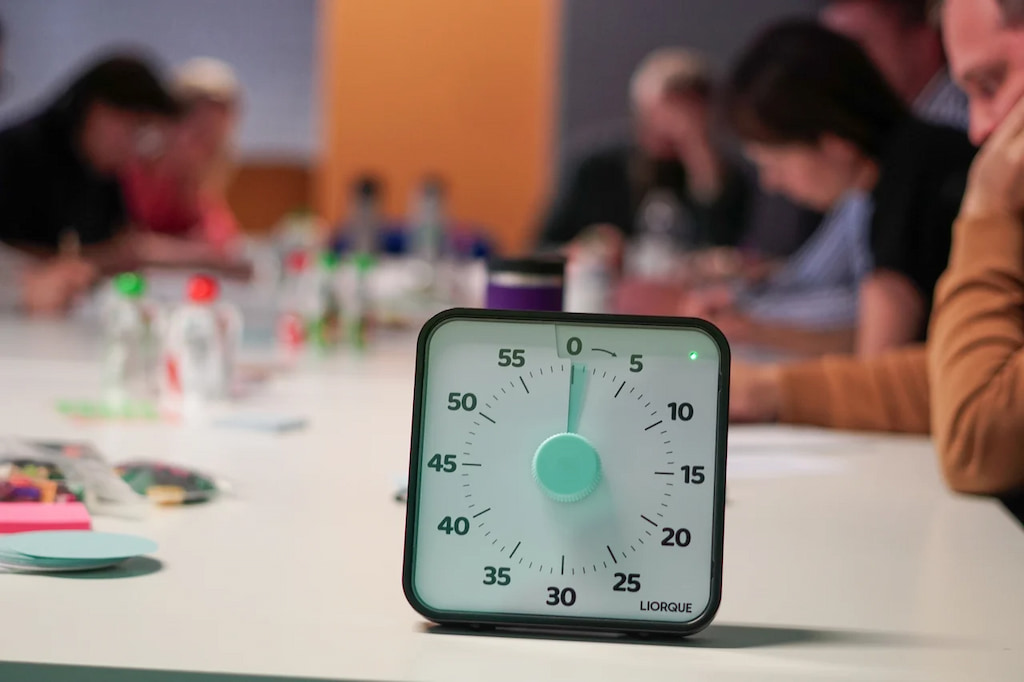
Time management has become one of the biggest productivity challenges in modern workplaces. Employees are constantly switching between meetings, emails, chats, notifications, and actual work — and the numbers show how heavily those interruptions affect focus and efficiency.
Recent time management statistics reveal how much time is lost to distractions, multitasking, unnecessary meetings, and workload overload. They also show why businesses are investing more in scheduling, time tracking, and productivity tools to improve visibility and reduce burnout.
In this article, we’ll break down the latest time management statistics, workplace productivity trends, distraction data, burnout insights, and remote work patterns shaping how teams work today.
Key Time Management Statistics
- Employees spend an average of 57% of the workday on communication activities like meetings, email, and chat instead of focused work.
- Research suggests it can take more than 20 minutes to refocus after an interruption, making constant notifications a major productivity drain.
- 75% of employees say they waste up to two hours per day on low-value tasks or unnecessary meetings.
- Workplace interruptions cost U.S. businesses an estimated $588 billion annually in lost productivity.
- Around 52% of employees report feeling burned out, with workload pressure and constant communication being major contributors.
- Remote employees report better productivity and tend to experience fewer interruptions and spend more time on deep-focus work compared to office-based teams.
- Companies increasingly use time tracking and workload management tools to improve productivity visibility, scheduling accuracy, and labor planning.
Employees Spend More Than Half The Workday Communicating
Modern work is increasingly dominated by communication rather than focused execution. Microsoft research shows that employees now spend around 57% of their workday in meetings, email, and chat tools — leaving less than half the day for actual deep work.
At the same time, the volume of communication has exploded. Many employees now deal with 200+ messages per day, spread across email, Slack, Teams, and other platforms.
What used to be structured collaboration has turned into a constant stream of interruptions.
A few trends stand out behind these numbers:
- Communication overload is becoming the default work environment rather than the exception
- Slack, email, and chat tools create fragmentation across multiple channels
- Constant context switching reduces focus and slows down meaningful progress
- Collaboration has increased, but it doesn’t always translate into productivity
- Being “busy” is increasingly disconnected from actually getting work done
This shift also explains why so many employees feel like their days are full but not productive. Even when communication is work-related, the sheer volume of interruptions makes it harder to complete deep, uninterrupted tasks.
Other contributing factors include rising meeting loads, unclear meeting outcomes, and notification fatigue — all of which add more pressure to already fragmented workdays.
Focused Work Is Becoming Increasingly Rare
True uninterrupted work is becoming harder to protect in modern workplaces. According to research, around 68% of employees say they don’t have enough uninterrupted focus time during the workday, which directly impacts how much meaningful work actually gets done.
Even when interruptions are brief, the cost adds up quickly. Studies suggest it can take 20+ minutes to fully regain focus after a disruption, meaning a single notification or message can derail a significant portion of productive time.
Several patterns help explain this decline in deep work:
- Interruption recovery time quietly eats into productive hours throughout the day
- Constant app switching between email, chat, and project tools fragments attention
- Deep work is being replaced by reactive task switching
- Digital distractions and smartphone use pull attention away from priority work
- Always-on connectivity makes it harder to mentally disconnect and reset focus
Multitasking adds another layer of inefficiency. Research shows it can reduce productivity by up to 40%, as the brain continuously shifts between competing inputs instead of progressing on a single task.
Employees Lose Hours Every Week To Low-Value Work
A significant share of the modern workday is still spent on tasks that don’t directly contribute to core outcomes. Research suggests that employees spend around 51% of their workday on low-value activities, from repetitive admin work to unnecessary coordination and task switching.
On an individual level, this often translates into 1–2 hours per day spent on work that doesn’t meaningfully move projects forward. Over a full week, that becomes a substantial loss of productive capacity across teams.
This pattern is usually driven by a few underlying issues:
- Repetitive administrative work that takes time away from higher-impact tasks
- Unclear priorities that force employees to constantly re-evaluate what matters
- Inefficient workflows that create extra steps for simple processes
- Duplicated communication across tools and teams
- “Fake productivity,” where activity replaces actual progress
- A reactive work culture focused on responding rather than executing
The result is a work environment where people stay busy, but not necessarily effective. Instead of spending time on strategic or creative work, employees often find themselves maintaining systems, chasing updates, or repeating tasks that don’t add long-term value.
Meetings Are One Of The Biggest Productivity Drains
Employees spend an average of 7–8 hours per week in meetings, and for many managers that number is significantly higher. But the real issue isn’t just time spent — it’s what those meetings produce. A large share of meetings are still described as unproductive or lacking clear outcomes. That means time is being spent without clear forward momentum. And it compounds.
Back-to-back calls leave very little space for actual execution work. In hybrid environments, this often turns into entire days shaped around video meetings rather than focused tasks.
There’s also a clear structural problem: meetings don’t always translate into action. There are certain bottlenecks:
- decisions get made, but not clearly documented
- ownership is unclear
- follow-ups turn into new meetings
Over time, coordination starts to replace execution. That’s one reason so many employees feel constantly behind — even when their calendars are completely full. The work isn’t missing. It’s just fragmented across too many conversations.
Burnout And Overwork Continue To Rise
Burnout is now affecting a large share of employees across industries, with recent data suggesting that around 52% of workers report experiencing burnout symptoms. The reasons behind it are rarely about one factor. It’s usually a mix of workload pressure, constant availability, and unclear boundaries between work and personal time.
Overtime culture plays a big role here. Even when formal working hours end, many employees still stay partially “on” — checking messages, clearing inboxes, or mentally tracking unfinished tasks. And this is where things start to break down.
Work-life boundaries have become increasingly blurred, especially in remote and hybrid setups. What used to be recovery time is often interrupted or shortened by work-related pressure.
At the same time, longer hours don’t necessarily translate into better output. In many cases, sustained overwork leads to slower performance, more errors, and lower focus. A few patterns consistently show up in burnout-related data:
- always-on communication expectations
- blurred separation between work and personal time
- the assumption that longer hours equal higher productivity
- reduced efficiency under sustained stress
- declining engagement and higher turnover risk
PTO usage trends also reinforce this picture, suggesting that many employees are not fully disconnecting even when they technically have time off.
Burnout is no longer just a wellbeing concern — it’s becoming a long-term productivity and retention issue.
Remote Workers Tend To Experience Fewer Interruptions
One of the clearest shifts in modern work is how environment affects focus. Remote workers consistently report fewer interruptions compared to office-based teams, which directly impacts their ability to do deep work.
Research comparing work environments shows that office workers face significantly more day-to-day disruptions, from spontaneous desk questions to unplanned meetings and background noise. Remote setups remove many of these physical interruptions by default. But the picture isn’t entirely one-sided.
Remote work also changes how communication happens, not just how often. Instead of in-person interruptions, employees rely more heavily on messaging tools and asynchronous updates, which can still fragment attention — just in a different way.
A few patterns stand out across remote and hybrid work data:
- fewer spontaneous office interruptions in remote settings
- increased reliance on asynchronous communication
- improved flexibility for focus-heavy work
- scheduling complexity across distributed teams
- ongoing work-life boundary challenges
- communication overload in hybrid setups
The result is a trade-off: more control over focus time, but a greater need for intentional structure around communication.
Remote work doesn’t automatically solve time management problems — but it does shift where those problems appear.
Time Tracking Gives Companies Better Visibility Into Work
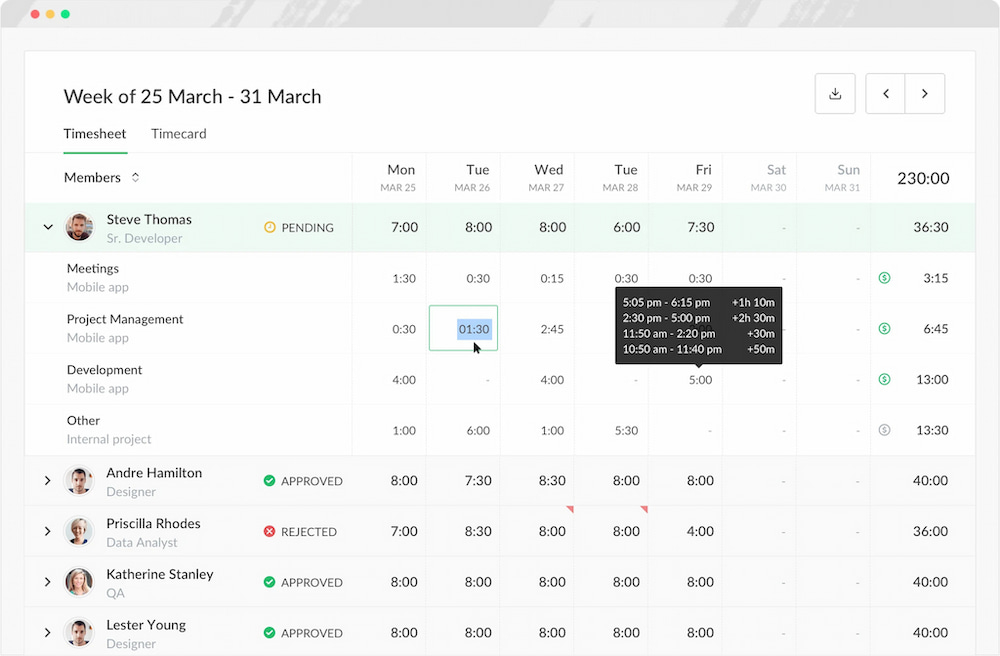
Time tracking matters a lot and has become more widely adopted as teams shift toward remote and hybrid work environments, where visibility into daily output is naturally reduced. Research shows that organizations consistently struggle with a gap between estimated and actual time spent on work, especially in project-based environments where scope changes over time. This gap has a direct impact on planning accuracy and workload distribution.
With time tracking in place, companies are able to better understand:
- how long tasks actually take compared to estimates
- where workload imbalances are forming across teams
- how project timelines shift in practice versus planning
- where labor costs are being over- or underestimated
This visibility is particularly important in environments where multiple projects run in parallel and capacity is constantly shifting.
A time tracker like Everhour is used in this context to compare tracked vs estimated hours, giving teams clearer insight into workload distribution, scheduling accuracy, and project forecasting.
Over time, this shifts planning from assumption-based estimates to data-backed decisions about capacity and delivery.
FAQ
They help businesses understand how employees spend their time and where productivity is being lost or improved across tasks, meetings, and workflows.
Because most productivity issues come from interruptions, unclear priorities, and inefficient workflows rather than lack of effort.
Studies consistently show that meetings can reduce focused work time, especially when they are frequent, unstructured, or lack clear outcomes.
Remote work often reduces physical interruptions, but it can also increase communication load through messaging tools and hybrid coordination.
It improves visibility into workload, helps compare estimates vs actual time spent, and supports better planning and resource allocation.
Conclusion
Time management plays a critical role in productivity across all industries, but the challenges look different depending on the work environment. Office teams struggle with meetings and communication overload, retail and hospitality deal with complex scheduling, healthcare faces burnout and long shifts, and tech teams often lose time to constant interruptions.
Across all industries, one pattern is clear: better visibility into how time is spent leads to better decisions, improved productivity, and more efficient workloads. Tools for scheduling, tracking, and workload planning can help teams reduce wasted time and improve overall performance.

Maria
A dedicated content enthusiast with extensive experience in international teams and projects of all sizes. Maria thrives on creativity and attention to detail, fueled by a love for fantasy novels, music, classic black-and-white films, and always finding ways to make things better.