


What Is Bereavement Leave? Meaning, Rules & Examples

Losing a loved one can affect every aspect of daily life, including work. Bereavement leave gives employees time away from work to handle responsibilities following a loss and focus on personal matters. However, bereavement leave policies vary significantly between employers and countries. Eligibility rules, leave duration, and pay entitlements are often determined by company policy rather than law.
In this article, we’ll explain what bereavement leave is, who qualifies, how long it typically lasts, and how employers can build effective bereavement leave policies.
What Is Bereavement Leave?
Bereavement leave is a workplace policy that allows employees to take time off following the death of a family member, dependent, or another person with whom they have a close relationship.
The leave is intended to give employees time to manage the practical and personal responsibilities that often follow a loss.
Why employers offer bereavement leave
Bereavement leave helps employees:
- attend funerals, memorials, or religious services
- make travel arrangements or visit family members
- handle estate, legal, or administrative matters
- manage caregiving and family responsibilities
- take time away from work after a significant loss
Unlike sick leave, which is intended for illness or medical recovery, bereavement leave is specifically designed for situations involving the death of a loved one. It is also typically separate from vacation or paid time off (PTO), although some employers may allow employees to use accrued leave if additional time is needed.
Who Is Eligible for Bereavement Leave?
Eligibility for bereavement leave depends largely on company policy and local employment laws. While many employers offer leave to full-time employees, part-time and temporary workers may also qualify depending on the organization.
In most cases, bereavement leave is intended for employees who experience the death of an immediate family member. Commonly covered relationships include:
- Spouse, domestic partner, or significant other
- Parent, stepparent, or legal guardian
- Child, stepchild, or adopted child
- Sibling
- Grandparent or grandchild
Some employers extend coverage to additional family members, such as in-laws, aunts, uncles, nieces, nephews, or cousins. Others may allow leave for the death of a close friend or another person who played a significant role in the employee’s life.
Certain organizations also recognize situations such as miscarriage, stillbirth, or pregnancy loss under bereavement leave policies, though eligibility and leave duration vary widely.
Because there is no universal standard, employees should review their employer’s bereavement leave policy carefully. The policy will typically define which relationships are covered, how much leave is available, and whether any documentation is required.
How Long Is Bereavement Leave?
The length of bereavement leave varies significantly between employers, industries, and countries. In many organizations, employees receive between one and five days of leave following the death of a close family member, though some employers offer longer periods depending on the circumstances.
➡️ Several factors can influence how much leave an employee is entitled to receive, including:
- The employee’s relationship to the deceased
- Whether travel is required to attend services or support family members
- Company policies and workplace agreements
- Local employment laws and regulations
Bereavement leave is often paid, particularly when it involves the death of an immediate family member. However, some employers provide unpaid leave, while others allow employees to use vacation days, personal leave, or sick leave if additional time is needed.
In recent years, a growing number of organizations have adopted more flexible approaches to bereavement leave. Rather than offering a fixed number of days, some employers allow employees to take additional time based on individual circumstances.
A small number of companies have even introduced extended or open-ended bereavement leave policies that recognize grief does not follow a predictable timeline.
Because policies vary widely, employees should review their employer’s leave guidelines to understand what benefits are available.
Is Bereavement Leave Legally Required?
Some countries require employers to provide bereavement leave by law, while others leave it entirely up to individual organizations. As a result, employee rights can vary significantly from one country — and sometimes one workplace — to another.
In general:
- Some countries mandate bereavement leave for certain family relationships.
- Others require leave only under specific circumstances.
- Many leave bereavement policies entirely to employers.
European countries often provide stronger worker protections, and bereavement leave may be covered by labor laws, collective agreements, or statutory leave requirements. The amount of leave available and the family members covered vary between jurisdictions.
In contrast, bereavement leave in the United States is generally not required under federal labor laws. While some states have introduced limited protections, most leave is offered through employer bearevement policies rather than legal mandates.
How Bereavement Leave Works In Practice
While employee bereavement leave policies vary between employers, the process is usually designed to be straightforward during a difficult time.
In most workplaces, employees simply need to notify their manager, supervisor, or HR department about the loss and request time off after loss. Many organizations try to keep the process as simple as possible, recognizing that employees may be dealing with funeral arrangements, family responsibilities, and emotional stress.
What employees can typically expect
- Notify a manager or HR representative as soon as possible
- Discuss how much time off is needed
- Follow any company-specific leave procedures
- Provide documentation only if requested
Documentation requirements are often minimal. Some employers may ask for proof, such as an obituary, funeral notice, or death certificate, but many rely on employee self-reporting unless additional leave is requested.
Flexibility is becoming more common
Bereavement leave is often taken immediately after a loss, but some companies allow employees to use leave days later if funeral services, travel, or family obligations occur weeks afterward.
Employers may also offer additional flexibility, such as:
- Splitting bereavement leave across multiple dates
- Working remotely during the transition back to work
- Adjusting schedules temporarily
From an HR perspective, the best bereavement leave policies prioritize speed, simplicity, and compassionate communication rather than lengthy approval processes.
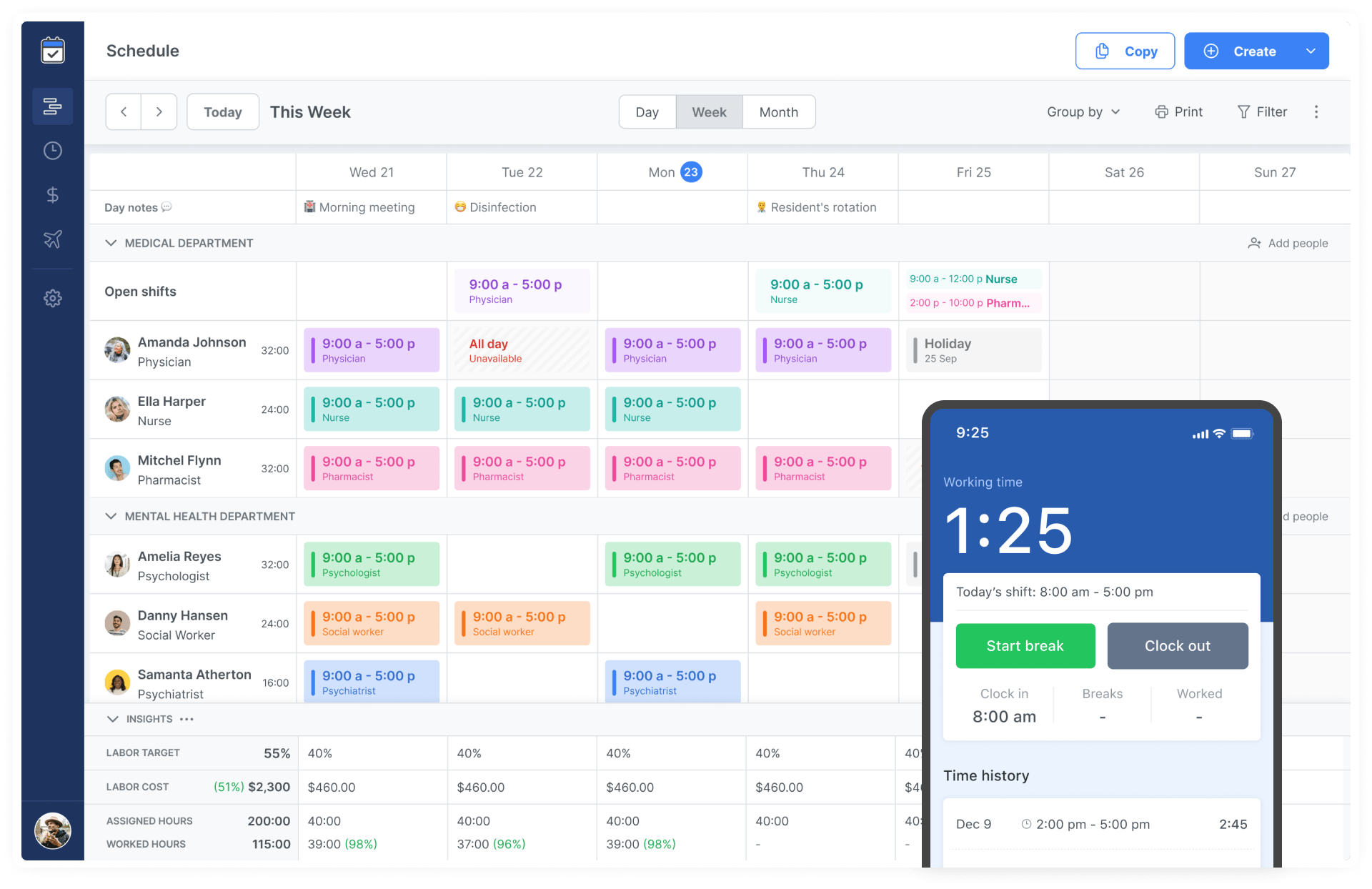
For employers, bereavement leave often requires quick schedule adjustments, especially in shift-based workplaces. Managers may need to find coverage, reassign responsibilities, or update schedules on short notice. Using employee scheduling software and leave management system like Shifts by Everhour can help teams track leave requests, manage absences, and communicate schedule changes without relying on spreadsheets or manual updates.
Company Bereavement Leave Policies: Best Practices
A good bereavement leave policy provides clear guidance while giving employees flexibility during a difficult time.
At a minimum, policies should clearly outline:
- Who is eligible for leave
- Which family relationships are covered
- How much leave is available
- Whether the leave is paid or unpaid
- How employees should request time off
Where possible, paid leave should be the standard. Employees dealing with a loss should not have to worry about losing income while managing family responsibilities and funeral arrangements.
Modern bereavement leave practices
Many employers are moving beyond traditional policies by offering:
- Additional leave for the loss of a spouse, partner, child, or parent
- Coverage for non-traditional family structures and chosen family
- Flexible schedules or remote work options after returning
- Access to counseling, EAPs, or mental health resources
Manager and HR considerations
The way a policy is applied matters as much as the policy itself.
Managers should:
- Communicate with empathy
- Avoid requiring unnecessary details
- Keep the approval process simple
It’s also important to recognize that grieving practices vary across cultures, religions, and family traditions. Flexible policies are often better equipped to support employees during a loss.
FAQ
It depends on the employer and local laws. Many organizations offer paid bereavement leave, but some provide unpaid leave or require employees to use vacation time.
Most policies cover immediate family members, such as spouses, partners, parents, children, and siblings. Some employers also include grandparents, in-laws, or close personal relationships.
Many employers provide between one and five days of leave, though the amount varies depending on company policy, the relationship to the deceased, and local regulations.
Yes. Some employers may request documentation such as an obituary, funeral notice, or death certificate, although many do not require proof unless additional leave is requested.
In some organizations, yes. Employees may be allowed to use bereavement leave around funeral services, travel, estate matters, or other responsibilities related to the loss.
Requirements vary by country and jurisdiction. In some places, employers must provide bereavement leave by law, while in others it is offered solely through company policy.
Some employers extend coverage to close friends, domestic partners, or chosen family members.
Many employers allow employees to use vacation days, personal leave, unpaid leave, or flexible work arrangements if additional time is needed beyond standard bereavement leave.
Conclusion
Bereavement leave is time off provided to employees after the death of a close family member or loved one, allowing them to step away from work and manage both practical and personal responsibilities during a difficult period. While the core purpose is consistent across workplaces, the details — including who qualifies, how much leave is offered, and whether it is paid — vary widely between employers and countries.
Because bereavement leave is often shaped by company policy rather than strict legal requirements, clear and consistent internal guidelines play an important role in ensuring employees are supported fairly.
Ultimately, well-designed bereavement policies are not just administrative frameworks — they are a reflection of how an organization treats people during some of the most difficult moments in their lives.

Maria
A dedicated content enthusiast with extensive experience in international teams and projects of all sizes. Maria thrives on creativity and attention to detail, fueled by a love for fantasy novels, music, classic black-and-white films, and always finding ways to make things better.