


Role Clarity: Definition, Examples, and How to Improve It

Role clarity means understanding what your job requires, which responsibilities you own, what decisions you can make, and how your work will be evaluated. When employees know what is expected of them, they can work more independently, coordinate with colleagues, and take responsibility for results.
When roles are unclear, work can fall through the cracks, teams may duplicate efforts, and employees can struggle to prioritize competing requests. Improving role clarity starts with defining responsibilities, setting expectations, and making ownership explicit.
What Is Role Clarity?
Role clarity means understanding your responsibilities, what you’re expected to deliver, and how your work connects to the rest of the team. It helps employees know which decisions they can make independently, where they need input, and who is responsible for shared tasks.
Role clarity helps teams work efficiently by making responsibilities and expectations explicit. When employees know who owns each task, which decisions they can make, and how their work will be evaluated, they can act with greater job autonomy and accountability. Clear ownership also reduces duplicated work, unnecessary approvals, and delays caused by uncertainty.
For example, during a product launch, marketing handles promotional materials, sales coordinates outreach, and customer support prepares to answer questions. Clear responsibilities help each team coordinate its work without duplicating tasks or overlooking important steps.
Unlike a job description, which outlines general duties, role clarity reflects how responsibilities and expectations translate into everyday work.
It also needs to evolve as projects, priorities, and team structures change.
Examples of Role Clarity in the Workplace
Role clarity becomes easier to understand when comparing common workplace situations with and without clearly defined expectations.
| Situation | Lack of role clarity | Clear role expectations |
|---|---|---|
| Project ownership | Several people assume someone else will complete a task. | One person owns delivery, with contributors and deadlines identified. |
| Decision-making | Employees seek approval for routine decisions or disagree about who has authority. | Decision-making authority and escalation points are agreed upon. |
| Team responsibilities | Two teams duplicate work or leave gaps between their responsibilities. | Teams agree on ownership, boundaries, and handoffs. |
| Priorities | Employees receive conflicting requests without knowing which takes precedence. | Priorities are explicit, and employees know who resolves competing demands. |
| Performance expectations | Employees don’t know what their manager considers successful work. | Expected outcomes and evaluation criteria are discussed in advance. |
Role clarity doesn’t mean every employee works independently or that responsibilities can never overlap. Many projects require shared ownership, collaboration, and input from multiple people. The important distinction is that everyone understands their contribution, who is accountable for the outcome, and who has the authority to make relevant decisions.
What Causes a Lack of Role Clarity?
A lack of role clarity often develops when responsibilities, processes, or expectations change without being communicated consistently. Several common workplace issues can contribute to it.
Vague job descriptions and expectations
Job descriptions may outline broad duties without specifying expected outcomes, decision-making authority, or the boundaries between related roles. Employees can understand their general responsibilities while remaining uncertain about what they should prioritize in practice.
Overlapping responsibilities
When employees or teams have similar responsibilities, ownership can become unclear. Without agreed boundaries, people may duplicate work, disagree about who should lead, or assume another person is responsible for a task.
Employees may know what needs to be done but not whether they can make the necessary decisions themselves. Uncertainty about approval requirements can delay work and discourage initiative.
Changing priorities and responsibilities
As organizations grow, employees take on new projects, teams are restructured, and responsibilities shift. If role expectations aren’t updated alongside these changes, outdated assumptions can create confusion.
Poor communication between managers and employees
Managers and employees may have different assumptions about deadlines, ownership, or expected results. When these assumptions aren’t discussed explicitly, misunderstandings can persist until a task is delayed or performance is questioned.
Organizational silos
Departments may understand their own responsibilities but have limited visibility into other teams’ processes. This can create gaps at handoff points, conflicting priorities, or uncertainty about who owns work that spans multiple departments.
Role Clarity vs. Role Ambiguity vs. Role Conflict
Role clarity, role ambiguity, and role conflict describe related but distinct workplace situations. Understanding the differences helps managers identify the underlying problem and choose an appropriate response.
| Concept | Meaning | Example |
|---|---|---|
| Role clarity | Employees understand their responsibilities, expected outcomes, and authority. | An employee knows which deliverables they own and how success is assessed. |
| Role ambiguity | Employees lack sufficient information about their responsibilities, expectations, or authority. | An employee doesn’t know who approves their work or which tasks take priority. |
| Role conflict | Employees face incompatible expectations or demands. | Two managers assign urgent tasks with conflicting deadlines. |
Role ambiguity is a lack of clarity, while role conflict occurs when expectations clash. The two can also occur together: an employee who receives conflicting instructions may be unsure which manager’s priorities take precedence.
The distinction matters because the solutions differ. Role ambiguity often requires clearer communication and more explicit responsibilities. Role conflict may require managers to reconcile competing demands, agree on priorities, or establish a shared decision-making process.
Signs Your Team Lacks Role Clarity
A lack of role clarity often appears in everyday workflows before it becomes an obvious management problem. Common signs include:
- Employees frequently ask who is responsible for a task or decision.
- Work is duplicated, delayed, or left unfinished because ownership is uncertain.
- Decisions stall while employees wait for approval or clarification.
- Different managers give employees conflicting instructions.
- Team members disagree about responsibilities, deadlines, or priorities.
- Performance reviews reveal different understandings of what success should look like.
- Employees avoid taking initiative because they aren’t sure what they are authorized to do.
An isolated incident doesn’t necessarily indicate a systemic problem. Look for recurring patterns across projects, teams, and workflows. For example, repeated delays at the same handoff point may indicate that responsibilities between departments need to be clarified.
How to Improve Role Clarity in the Workplace
Improving role clarity requires more than documenting job duties. Managers need to establish clear expectations, agree on ownership, and revisit responsibilities as work evolves.
1. Define responsibilities and expected outcomes
Explain what each role is accountable for and what successful performance looks like. Instead of relying on broad descriptions such as “support project delivery,” specify the outcomes an employee is expected to deliver, the relevant deadlines, and how results will be evaluated.
Clear expectations help employees understand both the work they need to complete and the standards they are working toward.
Identify who is directly responsible for completing key tasks and who contributes, reviews, or approves the work. This is especially important for cross-functional projects, where several people may be involved in the same outcome.
Shared responsibilities should be explicit rather than assumed. Employees need to know how their contributions fit together and who is accountable for ensuring the final result is delivered.
3. Set decision-making boundaries
Specify which decisions employees can make independently, which require consultation, and which need formal approval. These boundaries should reflect the risks and responsibilities associated with each decision rather than requiring approval for every action.
Clear decision-making authority allows employees to move forward confidently while ensuring that important decisions receive the appropriate oversight.
4. Align priorities and expectations
Make sure employees understand which tasks take precedence, how competing requests are resolved, and who sets priorities when demands conflict. Managers should communicate changes explicitly rather than assuming employees will infer what matters most.
Regular priority discussions are particularly useful when employees support multiple projects or report to more than one manager.
5. Document roles and workflows
Use job descriptions, responsibility matrices, project documentation, and workflow tools to make expectations accessible. Documenting responsibilities helps employees find answers without relying on memory or repeatedly asking colleagues for the same information.
Keep documentation practical and specific. A short explanation of ownership and approval requirements is often more useful than a lengthy document that employees rarely consult.
6. Discuss expectations regularly
Use one-on-one meetings, team discussions, and project kickoffs to confirm responsibilities and resolve uncertainty. Encourage employees to raise questions when expectations conflict or when they are unsure who owns a decision.
These conversations also help managers identify gaps between what they expect and what employees understand, allowing misunderstandings to be addressed before they affect delivery.
7. Review roles as work changes
Revisit responsibilities when teams grow, processes change, employees take on new duties, or projects introduce overlapping ownership. A role that was clear six months ago may no longer reflect the way the team operates.
Treat role clarity as an ongoing management responsibility rather than a one-time exercise. Documentation should support these conversations, not replace them.
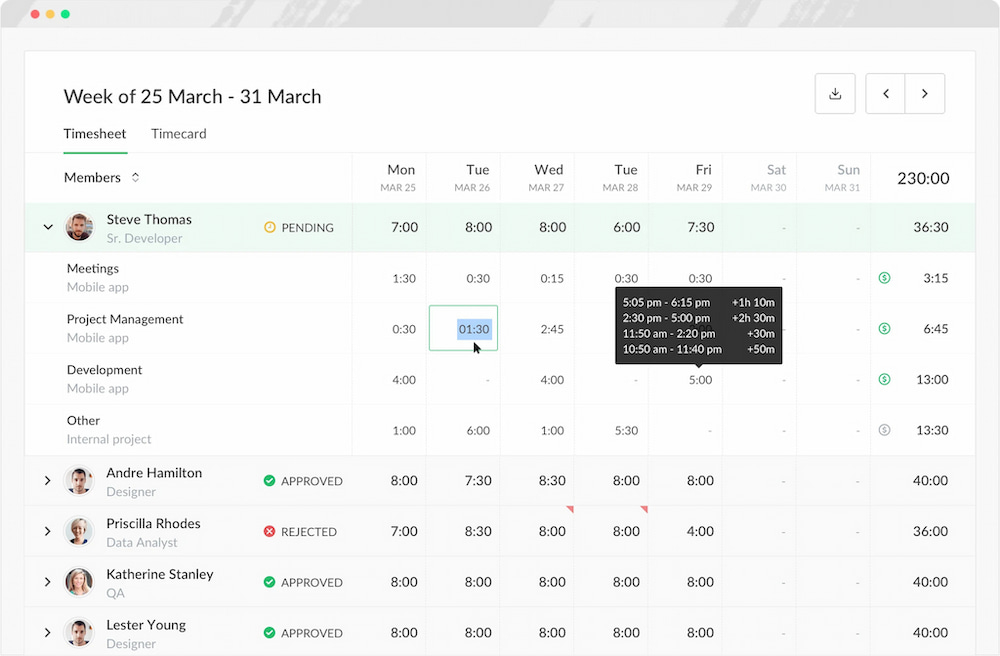
Time tracking can also help teams make responsibilities and workloads more visible. With Everhour’s time tracker, teams can track time against tasks and projects in tools like Asana, ClickUp, and Jira, making it easier to see who is working on what, understand how effort is distributed, and spot workload imbalances. While time tracking doesn’t define roles on its own, it can give managers useful information for reviewing responsibilities and adjusting workloads.
Tools and Frameworks That Support Role Clarity
Different tools address different aspects of role clarity. The right choice depends on whether a team needs to define general duties, clarify decision-making authority, or coordinate specific tasks.
- Job descriptions: Document core duties, expected competencies, reporting relationships, and the general scope of a role. They’re most useful for establishing baseline expectations.
- RACI matrix: Defines who is Responsible, Accountable, Consulted, and Informed for specific activities or deliverables. It’s particularly useful when several people or departments contribute to the same work.
- Organizational charts: Show reporting relationships and team structure. They help employees understand who manages which teams, although they don’t necessarily explain task ownership or decision-making authority.
- Project management tools: Make task owners, deadlines, dependencies, and progress visible. They’re useful for translating agreed responsibilities into day-to-day execution.
- Regular one-on-ones: Give managers and employees an opportunity to discuss priorities, clarify expectations, and address responsibilities that have changed.
These tools work best when employees and managers agree on the responsibilities being documented. A responsibility matrix or project board cannot resolve disagreements about ownership unless the people involved first establish clear expectations.
How to Measure Role Clarity
Role clarity can be assessed through employee feedback, recurring workflow problems, and the degree to which employees and managers agree on expectations. Combining these sources provides a more reliable picture than relying on a single metric.
- Employee feedback: Ask employees whether they understand their responsibilities, priorities, expected outcomes, and decision-making authority. Short surveys and one-on-one conversations can reveal uncertainty that isn’t visible in project reports.
- Role-related questions: Track recurring questions about task ownership, approvals, priorities, and handoffs. Repeated questions about the same process may indicate that expectations or documentation need improvement.
- Workflow indicators: Review duplicated work, stalled decisions, missed handoffs, and avoidable rework. These patterns can highlight areas where unclear responsibilities may be contributing to inefficiency.
- Performance alignment: Check whether employees and managers agree on expected outcomes and evaluation criteria. Significant differences in their understanding may point to unclear or inconsistently communicated expectations.
- Periodic role reviews: Reassess responsibilities after reorganizations, changes in processes, or the introduction of new projects. This helps identify outdated assumptions before they create persistent confusion.
Avoid attributing every workflow problem to role clarity alone. Delays, rework, and missed deadlines can have several causes, including resource constraints and unrealistic schedules. Combining operational indicators with direct employee feedback makes it easier to identify whether unclear roles are a contributing factor.
FAQs
A project manager who knows which deliverables they own, which decisions they can make independently, who needs to approve major changes, and how project success will be measured.
Role clarity can improve productivity, accountability, decision-making, collaboration, and employee confidence. It reduces uncertainty about responsibilities and priorities, helping employees work independently while coordinating more effectively with colleagues.
Common causes include vague job descriptions, overlapping responsibilities, unclear approval processes, changing priorities, poor communication, and organizational silos. Role clarity can also deteriorate when teams grow or responsibilities change without corresponding updates to expectations.
Role clarity means employees understand their responsibilities, expectations, and authority. Role ambiguity means they lack sufficient information about one or more of these areas. Clear communication and agreed responsibilities can help reduce role ambiguity.
Role clarity helps team members understand their contributions, coordinate handoffs, and avoid duplicating work. It also makes it easier to resolve disagreements about ownership and priorities, particularly when projects involve multiple departments.
Managers typically have primary responsibility for defining and communicating role expectations, but role clarity is a shared responsibility. Employees should raise questions when expectations are unclear, while team leaders and departments need to coordinate responsibilities that overlap across organizational boundaries.
Yes. Role clarity can change as organizations grow, projects evolve, priorities shift, and employees take on new responsibilities. Teams should revisit expectations regularly and update documentation when roles or workflows change.
Conclusion
Role clarity gives employees a shared understanding of their responsibilities, priorities, expected outcomes, and decision-making authority. Without it, teams can experience duplicated work, delayed decisions, conflicting expectations, and avoidable stress.
To improve role clarity, start with the tasks and workflows where confusion causes the most friction. Agree on ownership, define what successful performance looks like, establish decision-making boundaries, and make expectations easy to access. Regular conversations and reviews will help keep responsibilities clear as the organization evolves.

Maria
A dedicated content enthusiast with extensive experience in international teams and projects of all sizes. Maria thrives on creativity and attention to detail, fueled by a love for fantasy novels, music, classic black-and-white films, and always finding ways to make things better.