


Downward Communication: How to Get the Message Through

Downward communication is the flow of information from managers or leadership down to employees and teams — task assignments, policy updates, strategic direction, feedback, and other messages that move top-down through an organization. Done well, it helps teams manage priorities and reduces the time lost to confusion or rework. Done poorly, it creates the kind of vague, inconsistent, or one-way messaging that leaves teams guessing.
This guide covers what downward communication is, why it matters, practical best practices for doing it well, mistakes to avoid, and how to improve it across an organization.
Quick Overview
- Downward communication moves information from leadership or managers to employees and teams.
- It works best when messages are clear, explain the “why,” and use the right channel for the content.
- Even though it flows one direction, effective downward communication includes space for questions and feedback.
- Common failure points: vague messaging, inconsistency across channels, and no follow-up to confirm understanding.
What Is Downward Communication?
Downward communication is communication that moves from people in higher positions to people in lower positions within an organization’s hierarchy. It can flow from executives to managers, managers to team leaders, or supervisors to employees.
The information can be formal or informal and can be delivered through meetings, emails, company announcements, project management tools, employee handbooks, or one-on-one conversations.
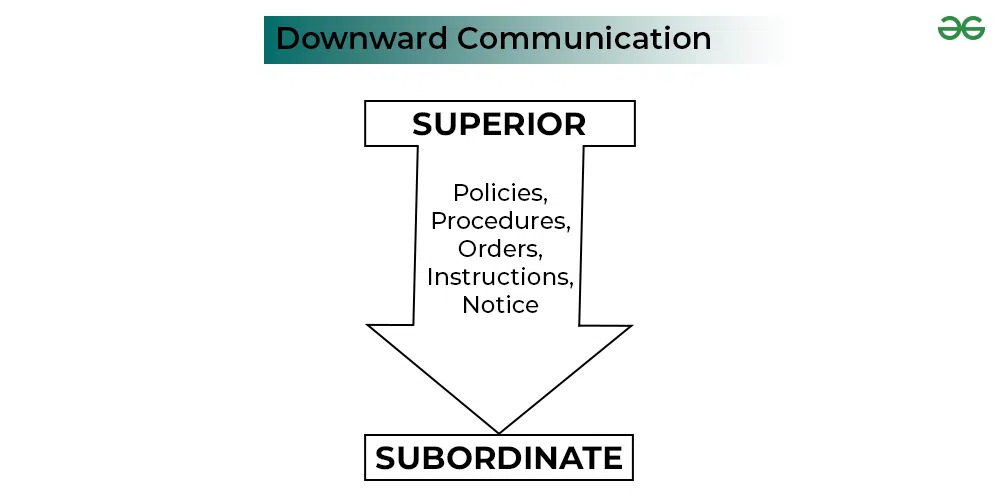
How does downward communication work?
Downward communication usually follows an organization’s reporting structure. A message may start with senior leadership and move through managers and team leaders before reaching employees. For example:
Company leadership → Department manager → Team leader → Employees
The message may change slightly as it moves through these levels. Managers may add context or translate a broader company decision into specific instructions for their teams.
What is the purpose of downward communication?
The main purpose of downward communication is to give employees the information and direction they need to do their work. Common purposes include:
- Giving instructions: Explain what employees need to do and how work should be completed.
- Communicating policies: Inform employees about rules, procedures, and organizational changes.
- Setting goals: Explain company, department, or team objectives.
- Providing feedback: Help employees understand what they are doing well and where they can improve.
- Coordinating work: Communicate priorities, deadlines, responsibilities, and changes that affect employees.
- Providing guidance: Give employees information, training, or context that helps them perform their roles.
Examples of Downward Communication
Downward communication can take many forms, from formal company announcements to everyday instructions from a manager. Common examples include:
- Manager assigning a task: A manager gives an employee a specific task, deadline, and instructions for completing it.
- Company announcing a new policy: Leadership informs employees about changes to workplace rules, procedures, or benefits.
- Team leader explaining project requirements: A team leader explains what needs to be delivered, who is responsible, and when the work is due.
- Manager giving performance feedback: A manager discusses an employee’s performance and provides guidance for improvement.
- HR communicating workplace policies: HR explains policies such as leave procedures, workplace conduct, or health and safety requirements.
- Supervisor providing safety instructions: A supervisor tells employees how to follow safety procedures or use equipment correctly.
- Leadership communicating organizational goals: Executives explain company objectives and how different teams contribute to them.
- Manager announcing schedule changes: A manager informs employees about changes to working hours, shifts, deadlines, or other arrangements.
- Senior employee providing guidance: An experienced manager or team leader explains how a process should be handled or helps an employee understand their responsibilities.
These examples all involve information moving from someone with greater organizational authority or responsibility to someone lower in the reporting structure.
Types of Downward Communication
Downward communication can serve different purposes depending on what information managers or leaders need to share with employees.
Instructions and directives
Managers use downward communication to tell employees what needs to be done, how it should be done, and when it should be completed. This can include task assignments, work procedures, and deadlines.
Policies and procedures
Organizations use downward communication to inform employees about workplace rules, processes, and changes to existing policies. Employee handbooks, company emails, and formal announcements are common examples.
Organizational goals
Leaders communicate company and department goals so employees understand what the organization is working toward and how their work contributes to those objectives.
Performance feedback
Managers use downward communication to give employees feedback about their work, discuss performance, and provide guidance and areas for improvement.
Training and guidance
Managers and supervisors may communicate instructions, training materials, or other guidance that helps employees understand their responsibilities and perform their jobs effectively.
Channels Used for Downward Communication
Organizations use different communication channels to share information from managers and leaders with employees. The best channel depends on the type and urgency of the message.
| Channel | Common use |
|---|---|
| Team meetings | Instructions, updates, and discussion |
| Policies, announcements, and formal information | |
| Workplace chat | Quick updates and instructions |
| Project management tools | Tasks, deadlines, and project information |
| Employee handbooks | Policies and procedures |
| One-on-one meetings | Feedback, guidance, and performance discussions |
| Company-wide meetings | Organizational announcements and goals |
For important information, organizations may use more than one channel. For example, a manager might explain a change during a team meeting and then share the details in writing so employees can refer back to them later.
Advantages and Disadvantages of Downward Communication
Downward communication can help organizations provide clear direction and coordinate work, but relying on it too heavily can create communication problems.
| Advantages | Disadvantages |
|---|---|
| Clear direction: Employees know what is expected of them. | Limited feedback: Employees may have fewer opportunities to share their views or concerns. |
| Consistent information: Leaders can communicate policies and priorities across teams. | Information distortion: Messages can change as they pass through multiple management levels. |
| Better coordination: Teams can align their work with organizational goals. | Slower communication: Information may take longer to reach employees in larger hierarchies. |
| Faster implementation: Managers can communicate decisions to the people responsible for carrying them out. | Information overload: Too many instructions and announcements can make important information harder to notice. |
| Employee guidance: Feedback and instructions help employees understand their responsibilities. | Lower engagement: One-way communication can make employees feel that their input is not valued. |
Downward vs. Upward vs. Horizontal Communication
The main difference between these types of communication is the direction in which information flows within an organization.
| Type | Direction | Example | Main purpose |
|---|---|---|---|
| Downward communication | Management → employees | A manager assigns a task | Instructions, guidance, and decisions |
| Upward communication | Employees → management | An employee reports a problem | Feedback, concerns, and information |
| Horizontal communication | Employee/team → employee/team | Two teams coordinate a project | Collaboration and coordination |
Organizations generally need all three. Downward communication communicates decisions and expectations, while upward and horizontal communication give employees and teams ways to share information, provide feedback, and coordinate their work.
Best Practices for Downward Communication
Effective downward communication should give employees clear information while leaving room for questions and feedback.
- Be clear and specific: Explain what needs to happen, who is responsible, and when it is due.
- Choose the right channel: Use meetings for discussion, email for formal information, and project management tools for task-related communication.
- Provide context: Explain the reason behind important decisions or changes when employees need that information to act effectively.
- Keep messages focused: Share the information employees need without unnecessary details or repeated announcements.
- Confirm understanding: Give employees an opportunity to ask questions and clarify expectations.
- Keep information accessible: Store important instructions, policies, and project information where employees can find them later.
- Encourage feedback: Downward communication should not replace upward communication. Employees should have ways to ask questions, raise concerns, and share ideas.
Common Downward Communication Mistakes to Avoid
- Over-communicating or under-communicating: Too much messaging buries what’s actually important; too little leaves people making decisions without the context they need.
- One-way, broadcast-only communication: Treating downward communication as purely top-down, with no mechanism for questions or pushback, signals that feedback isn’t welcome.
- Inconsistent messaging: Different managers or channels delivering conflicting versions of the same information undermines trust in all of them.
- Withholding context: Giving instructions without explaining the reasoning behind them limits people’s ability to use good judgment when circumstances shift.
- Using unclear or jargon-heavy language: Messages full of ambiguous terms or internal shorthand can be misread by people who don’t share the same context.
- Assuming a message was understood because it was sent: Without any follow-up, it’s easy to overestimate how clearly a message actually landed.
Downward Communication by Context
For managers of remote or distributed teams
Written communication carries more weight for distributed teams, since there’s less opportunity for messages to be clarified informally in passing. Be more explicit than feels necessary, document decisions clearly, and build in asynchronous ways for people to ask questions.
For leadership communicating organization-wide change
Large-scale changes benefit from being communicated in stages — an initial heads-up, the full announcement with reasoning, and a follow-up window for questions — rather than a single message that has to carry the entire weight of the change.
For managers relaying shifting priorities
When priorities change, be explicit about what’s changing, what it replaces, and why. Simply adding a new priority without addressing the old one leaves teams unsure what to drop.
Frequently Asked Questions
Downward communication is information that flows from leadership or managers to employees and teams, such as task assignments, policy updates, and strategic direction.
Examples include assigning tasks, announcing policy changes, sharing company updates, delivering performance feedback, and communicating strategic priorities.
Downward communication flows from managers to employees, upward communication flows from employees to managers, and lateral communication flows between peers at the same level.
Common barriers include vague messaging, inconsistent information across managers or channels, lack of context for decisions, and no mechanism for employees to ask questions or give feedback.
Managers can improve downward communication by being specific, explaining the reasoning behind decisions, choosing the right channel for each message, and following up to confirm the message was understood.
Conclusion
Downward communication shapes how clearly a team understands what’s expected of them and why. The strongest downward communication is specific, consistent, and delivered through the right channel — but it also leaves room for questions and feedback, even though the information itself flows in one direction.
Review how information moves through your organization periodically, and adjust based on where people report losing context or clarity. The goal isn’t to communicate more, but to communicate clearly enough that people can act without having to guess the meaning.

Maria
A dedicated content enthusiast with extensive experience in international teams and projects of all sizes. Maria thrives on creativity and attention to detail, fueled by a love for fantasy novels, music, classic black-and-white films, and always finding ways to make things better.