


Poor Time Management: Causes, Effects & How to Fix It

Poor time management can make a normal workload feel unmanageable. Tasks take longer than expected, deadlines creep up, priorities compete for attention, and employees end up spending more time catching up than moving important work forward.
The problem doesn’t always come down to poor discipline. Unclear priorities, unrealistic workloads, frequent interruptions, inaccurate time estimates, and inefficient workflows can all make it harder to manage time effectively.
In this guide, we’ll look at the common causes and signs of poor time management, how it affects individuals and teams, and practical ways to improve it. We’ll also look at how time tracking can help teams understand where their time actually goes and make more realistic plans.
What Does Poor Time Management Look Like?
Poor time management means failing to plan, prioritize, estimate, or allocate working time effectively. Someone might spend too much time on low-priority tasks, underestimate how long important work will take, or constantly switch between competing tasks and projects.
At the team level, poor time management can also show up as unrealistic project timelines, repeated overtime, missed deadlines, or employees struggling to balance work across multiple projects.
Common signs include:
- Missing deadlines: Work regularly takes longer than planned, pushing deadlines back or forcing last-minute efforts.
- Poor prioritization: Low-value or less urgent tasks take time away from work that matters more.
- Constant context switching: Employees jump between projects, messages, meetings, and tasks instead of focusing on one priority at a time.
- Unrealistic estimates: People consistently underestimate how long tasks or projects will take.
- Overcommitment: Employees take on more work than they can realistically complete within their available time.
- Frequent overtime: People regularly work beyond their normal hours to finish work that didn’t fit into the original schedule.
- Last-minute work: Important tasks get delayed until deadlines approach, leaving little room for review or unexpected problems.
- Low visibility into time: Employees or managers struggle to explain where working hours actually went.
These signs don’t always point to an individual’s time-management habits. A consistently overloaded workload, too many simultaneous projects, or unrealistic deadlines can create many of the same symptoms.
What Causes Poor Time Management?
Poor time management isn’t always a matter of discipline. People can struggle because they don’t know where their time goes, avoid certain tasks, take on too much work, or work in an environment full of competing demands. Common causes include:
Lack of clarity about where time goes
It’s difficult to manage time when you don’t know how you actually spend it. Meetings, emails, admin work, interruptions, and small recurring tasks can take up a much larger part of the day than people realize.
Procrastination
People often put off tasks that feel difficult, boring, stressful, or overwhelming. The delay may provide short-term relief, but it leaves less time for important work and creates more pressure as the deadline approaches.
Poor prioritization
When everything feels urgent, people tend to respond to whatever demands their attention first. Without priorities management, small requests can push more important work further down the list.
Overcommitment
Taking on every new request can quickly create more work than someone can realistically complete. Employees may agree to additional tasks because they underestimate how long existing work will take or assume they’ll find time later.
Perfectionism
Spending too much time trying to get a task exactly right can leave too little time for everything else. High standards become a time-management problem when the extra effort adds little value to the final result.
Constant interruptions
Messages, meetings, notifications, and ad hoc requests make it harder to protect time for focused work. A day filled with interruptions can leave employees busy for hours without making much progress on their most important tasks.
Poor workload planning
Sometimes the problem isn’t time management at all. If an employee has more work than their available capacity allows, better prioritization or scheduling won’t make the workload disappear. Unrealistic deadlines, too many concurrent projects, and poor resource allocation can create the same symptoms as poor time management.
What Are the Effects of Poor Time Management?
Poor time management can affect individual performance, team capacity, and project results:
- Missed deadlines: Poor planning and inaccurate estimates push work past its planned completion date.
- Lower-quality work: Rushed tasks leave less time for review, testing, and corrections.
- More overtime: Employees work longer hours to compensate for time lost or poorly allocated earlier.
- Project delays: Delays in one task can affect dependent tasks and other team members.
- Poor resource allocation: Managers may struggle to see who has capacity and who already carries too much work.
- Inaccurate budgets: Projects that consistently take longer than estimated can exceed their planned costs.
- Less time for high-value work: Low-priority tasks, interruptions, and inefficient processes consume time that teams could spend on more important work.
How to Fix Poor Time Management
The solution starts with understanding where time goes, then using that information to improve priorities, workloads, and planning. These time management tips can help you overcome the difficulties:
Track where time goes
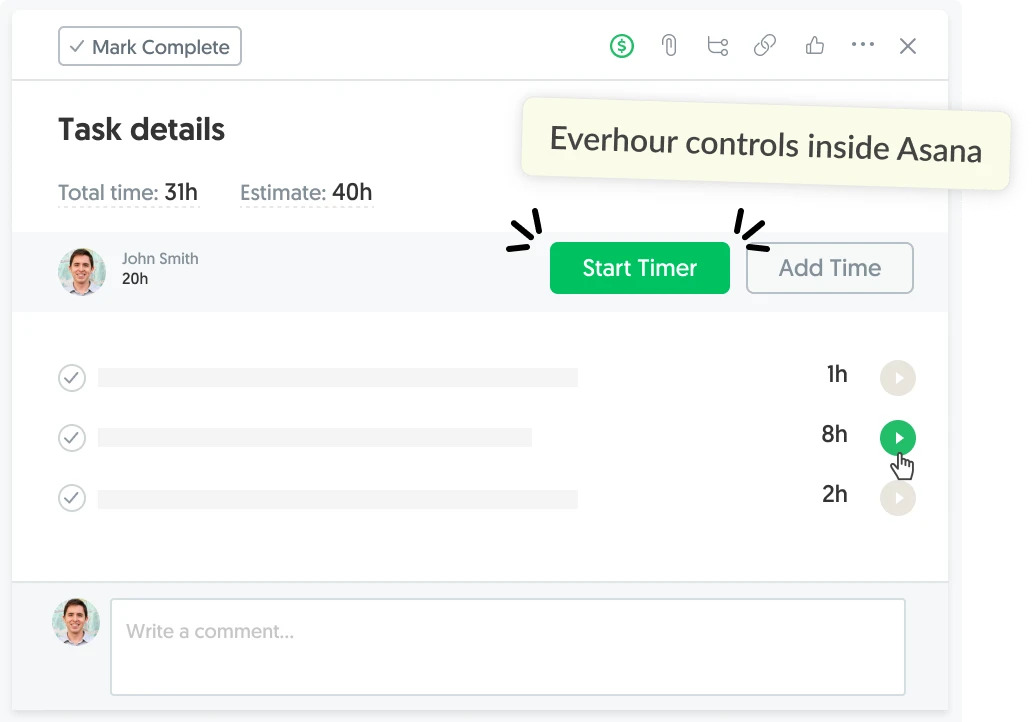
Track time across projects and tasks to identify unexpected time sinks, recurring delays, and work that takes longer than expected. Everhour‘s time tracker lets teams track time directly in their project management workflows and use reports to see where working hours go.
Set clear priorities
Limit competing priorities and decide what matters most before new requests take over the schedule. When priorities change, move or remove other work instead of simply adding more.
Plan around actual capacity
Account for meetings, admin, communication, and other commitments when planning project work. If employees consistently have more work than they can complete, redistribute the workload or adjust deadlines rather than expecting them to work longer.
Improve time estimates
Compare estimated and actual time to identify tasks that regularly take longer than planned. Use that data to create more realistic project timelines and budgets.
Reduce context switching
Limit unnecessary meetings and interruptions, and avoid assigning employees too many concurrent projects. Fewer competing priorities give employees more uninterrupted time for focused work.
Review time regularly
Review time and workload data to find recurring problems before they become normal. Regular reviews can reveal projects that consistently exceed estimates, overloaded employees, and processes that consume more time than they should.
How Can Time Tracking Improve Time Management?
Time tracking gives teams evidence instead of assumptions. By comparing tracked time with estimates, deadlines, and budgets, managers can see where work takes longer than expected and where employees spend time across projects.
This can help teams:
- Find time wasters: Identify tasks, meetings, or processes that consume more time than expected.
- Improve estimates: Use actual project data to make future estimates more realistic.
- Plan capacity: See how much time employees already commit to existing work before assigning new tasks.
- Monitor project budgets: Identify projects that are using more hours than planned before costs get out of control.
- Spot recurring problems: Find patterns such as frequent overtime, repeated delays, or tasks that consistently take longer than expected.
Tools like Everhour make this process easier by tracking time against the projects and tasks teams already work on. Managers can then use reports to understand where time goes and make adjustments based on actual work data.
Poor Time Management vs. Too Much Work
Poor time management and excessive workload can produce similar symptoms, but they require different solutions.
| Poor time management | Too much work |
|---|---|
| Poor prioritization | More work than available capacity |
| Procrastination | Too many simultaneous projects |
| Frequent context switching | Unrealistic deadlines |
| Poor time estimates | Understaffing or poor resource allocation |
| Disorganized planning | Constantly changing priorities |
For example, an employee who spends two hours on low-priority tasks before starting an important assignment may need to improve their time management (via time management techniques). An employee who spends their entire day working efficiently but still cannot complete everything because they have more work than their available hours has a capacity problem.
Time tracking can help distinguish between the two. If employees consistently use their available time on planned, high-priority work but still fall behind, managers may need to adjust workloads or introduce time management apps rather than simply asking employees to manage their time better.
Frequently Asked Questions
Poor time management means failing to plan, prioritize, estimate, or allocate time effectively. It can lead to missed deadlines, unfinished work, frequent interruptions, and too much time spent on low-priority tasks.
Common signs include regularly missing deadlines, underestimating task duration, procrastinating, constantly switching between tasks, overcommitting, and relying on overtime to finish work.
Poor prioritization, inaccurate time estimates, procrastination, interruptions, context switching, overcommitment, and unclear workloads can all contribute to poor time management.
It can reduce the amount of high-value work employees complete, increase errors and overtime, delay projects, and make it harder for teams to use their available capacity effectively.
Start by tracking where time goes, then use that information to improve priorities, estimates, workloads, and workflows. Reducing interruptions and context switching can also help employees spend more time on focused work.
Yes. Time tracking shows how employees actually spend their working hours and lets teams compare actual time with estimates, project budgets, and available capacity. This data can help teams identify time sinks and make more realistic plans.
No. An employee can manage their time effectively and still struggle with an excessive workload, unrealistic deadlines, or too many competing priorities. Managers should consider workload and team capacity before treating the problem as an individual productivity issue.
Conclusion
Poor time management can stem from individual habits, but workplace conditions often play a role as well. Unclear priorities, unrealistic estimates, interruptions, and excessive workloads can all make it difficult to use time effectively.
The first step toward fixing the problem is understanding where time actually goes. Time tracking can give teams the data they need to improve estimates, manage workloads, identify recurring time sinks, and make better decisions about how they allocate their time.

Maria
A dedicated content enthusiast with extensive experience in international teams and projects of all sizes. Maria thrives on creativity and attention to detail, fueled by a love for fantasy novels, music, classic black-and-white films, and always finding ways to make things better.