


27 Pay Periods in 2026: What Employers and Employees Need to Know

Most companies running biweekly payroll expect 26 pay periods per year. It’s the standard setup, and payroll systems are usually built around it. But the calendar doesn’t align neatly with a two-week cycle. In some years — including 2026 for certain payroll schedules — that mismatch results in an extra payday. That’s where the idea of a 27-pay-period year comes from.
It doesn’t change annual salary, but it can affect payroll timing, deductions, and budgeting if it’s not accounted for early.
Key Insights
- Only biweekly payroll schedules can result in 27 pay periods.
- Semi-monthly payroll is unaffected and always results in 24 pay periods.
- Extra pay periods happen when biweekly payroll cycles no longer align cleanly with the calendar year.
- The main impact is operational: payroll planning, deductions, and budgeting.
Why 27 Pay Periods Happen
Most businesses with biweekly payroll pay employees every two weeks, which normally results in 26 pay periods per year. However, a calendar year contains 365 days — or 366 during a leap year — which does not divide perfectly into two-week cycles. Over time, those extra days shift payroll schedules forward.
Eventually, the calendar alignment creates a year where an additional biweekly payday appears, resulting in 27 pay periods instead of 26.
This only affects biweekly payroll schedules. Semi-monthly payroll works differently because employees are paid on fixed dates each month, such as the 15th and last day of the month, which consistently creates 24 pay periods per year.
How To Check If Your Company Has 27 Pay Periods
The easiest way to check is to review your company’s 2026 payroll calendar and count the number of biweekly pay dates.
Companies are more likely to have 27 pay periods when:
- the first payday of 2026 falls early in the year
- employees are paid every two weeks
- the payroll cycle aligns in a way that creates an additional payday before the year ends
Companies with an early January first payday are more likely to have 27 pay periods. Employees can also confirm this directly with HR or payroll teams, especially if paycheck amounts appear slightly different than usual.
26 vs 27 Pay Periods
| 26 pay periods | 27 pay periods |
|---|---|
| Standard biweekly payroll year | Extra payroll cycle year |
| Slightly larger individual paychecks | Slightly smaller individual paychecks |
| More common | Occurs occasionally because of calendar alignment |
| Annual salary divided across 26 checks | Annual salary divided across 27 checks |
Example:
An employee earning $78,000 annually receives $3,000 per paycheck in a 26-pay-period year. In a 27-pay-period year, that amount drops to roughly $2,889 per paycheck.
What 27 Pay Periods Mean For Employers And Employees
A 27-pay-period year mainly affects payroll operations, calculations, and deduction schedules. If payroll schedules and deductions are not adjusted correctly, small calculation issues can compound across the entire year.
For employers
A 27-pay-period year affects much more than paycheck timing. Companies may need to review and adjust:
- salary calculations across all pay periods
- benefit and deduction schedules
- payroll budgeting and forecasting
- PTO, overtime, and accrual tracking
- payroll software and automated pay settings
If not updated, payroll setups may produce misaligned deductions or reporting inconsistencies across the year. This is especially important for companies with salaried employees, fixed deductions, or automated payroll systems built around standard 26-pay-period assumptions.
For employees
Employees may notice several paycheck-related changes with 27 paychecks, including:
- slightly smaller individual paychecks
- confusion around whether the 27th paycheck is “extra” income
- changes in tax withholding amounts
- differences in benefit or retirement deductions
Because of this, payroll teams often need to communicate schedule changes clearly to avoid confusion around paycheck amounts and deductions.
Common Payroll Mistakes During 27-Pay-Period Years
Among the most common mistakes are:
- Incorrect salary calculations — Annual salaries may be divided incorrectly, causing overpayments or underpayments across the year.
- Deduction inconsistencies — Benefits, insurance, or retirement deductions may accidentally be taken too many or too few times.
- Payroll system errors — Payroll software and automated schedules may continue using standard 26-pay-period assumptions unless updated manually.
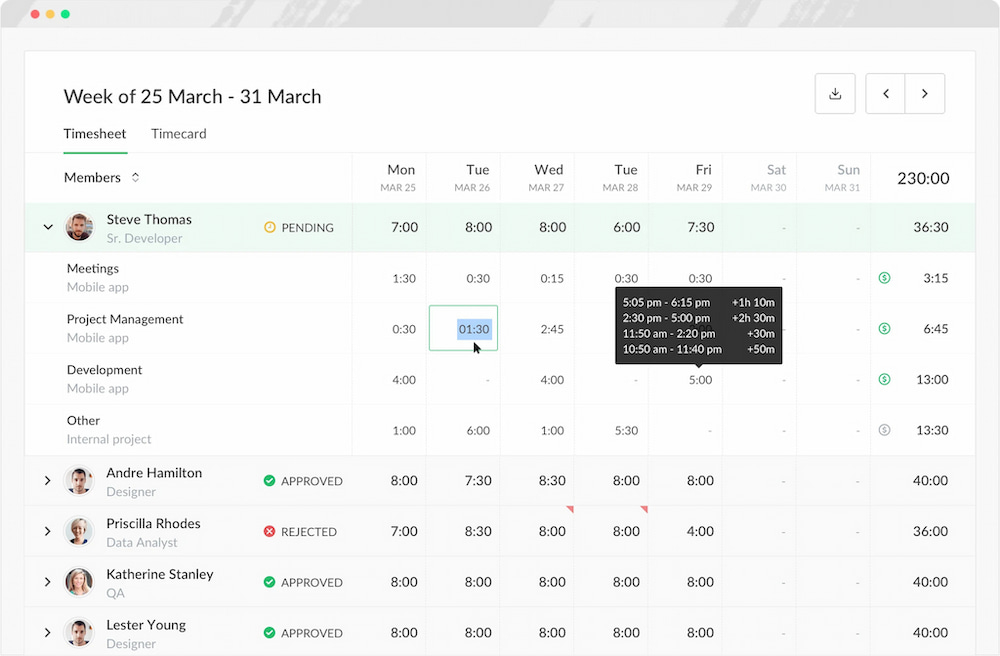
These issues are usually preventable with early payroll planning and accurate pay period tracking. A time tracker like Everhour can also help businesses monitor overtime, employee hours, and labor costs more accurately during irregular payroll years.
FAQ
No. It only applies to companies using a biweekly payroll schedule, and only if their payroll calendar aligns in a specific way.
No. Semi-monthly payroll typically has 24 pay periods per year because it is tied to fixed calendar dates.
Yes. Salaried employees may receive slightly smaller paychecks because salary is distributed across more pay periods.
No. The 27th paycheck is part of regular annual compensation.
Because a calendar year (365 days) does not divide evenly into two-week payroll cycles, which can create an extra pay period in some years.
Conclusion
Some employees may notice 27 paychecks in 2026 instead of the usual 26. A 27-pay-period year may seem minor, but it can create payroll inconsistencies if companies continue operating on standard 26-pay-period assumptions.
Reviewing payroll calendars early helps avoid misalignment and keeps payroll systems consistent throughout the year.
Also, learn how many months are there with five paychecks in 2026.

Maria
A dedicated content enthusiast with extensive experience in international teams and projects of all sizes. Maria thrives on creativity and attention to detail, fueled by a love for fantasy novels, music, classic black-and-white films, and always finding ways to make things better.