


Time Tracking Software for Landscaping: Features, Benefits & Tips
Landscaping businesses rely on coordinated field teams, multiple job sites, and accurate labor tracking to stay profitable. Without a clear system in place, it becomes difficult to track hours worked, manage crews efficiently, or understand the true cost of each project. Time tracking software helps landscaping companies record working hours in real time, assign time to specific jobs, and improve visibility across field operations. It replaces manual timesheets and reduces payroll errors or inaccurate client billing.
In this article, we’ll explore what time tracking software for landscaping is, why it matters, the key features to look for, and how it helps teams improve efficiency and control costs.
What Is Time Tracking Software for Landscaping?
Time tracking software for landscaping helps companies record and manage employee working hours across job sites and projects. It replaces manual timesheets with digital tracking tools that improve accuracy and visibility.
It is a tool that allows landscaping teams to log work hours, assign time to specific jobs, and track productivity in real time.
How it works in landscaping
A typical workflow includes:
- Managers reviewing time records and crew activity through reports or dashboards
- Employees clocking in and out from a mobile app
- Hours being assigned to specific clients, jobs, or locations
How it differs from generic time tracking tools
Landscaping teams have different needs than office-based employees. As a result, landscaping-focused solutions often include:
- GPS verification for job sites
- Mobile-first interfaces for field crews
- Offline tracking capabilities
- Project and location-based reporting
These features help businesses manage mobile workforces more effectively and gain better insight into labor costs across multiple projects.
Key Features to Look For
When choosing time tracking software for landscaping, it’s important to focus on features that support mobile, field-based teams and project-driven work.
GPS-based time tracking
GPS tracking helps confirm where employees are when they clock in and out. This improves accuracy and reduces uncertainty about job site attendance.
Mobile app for field crews
A mobile-friendly app allows workers to track time directly from their phones. This is essential for landscaping teams that move between multiple locations during the day.
Job or project-based time logging
Employees should be able to assign hours to specific jobs or projects. This helps managers understand how much time each client or task requires.
Offline tracking support
Landscaping work often happens in areas with weak or no signal. Offline tracking ensures time is recorded and synced later without data loss.
Timesheet automation
Automated timesheets reduce manual work and help eliminate errors in reporting hours, making payroll preparation faster and more reliable.
Integration with payroll and accounting tools
Integrations with payroll or accounting systems help streamline operations by syncing time data directly into financial workflows.
How Time Tracking Improves Landscaping
For landscaping businesses, labor is often the largest operating expense. Without accurate time records, it can be difficult to understand which jobs generate healthy margins and which consistently exceed estimates.
Time tracking software helps businesses:
- Compare estimated labor hours with actual hours worked
- Identify underpriced maintenance contracts
- Track labor costs by property, client, or service type
- Improve future quotes using historical project data
Over time, these insights help managers make better pricing decisions and focus on the most profitable services.
Challenges Landscaping Teams Face Without Time Tracking
Landscaping businesses often manage multiple crews, recurring maintenance contracts, and dozens of job sites each week. Without accurate time tracking, it becomes difficult to understand where labor hours are being spent and how those hours affect profitability.
Inaccurate manual timesheets
Paper timesheets and manual reporting often lead to forgotten entries, estimated hours, and data entry mistakes. Even small inaccuracies can create payroll issues or distort labor cost calculations across multiple projects.
Difficulty managing multiple crews
A landscaping company may have one crew mowing residential properties, another installing irrigation systems, and a third handling seasonal cleanups. Without reliable time records, managers may struggle to see where employees are working, how long jobs take, or whether labor is being allocated efficiently.
Billing inconsistencies
Many landscaping contracts depend heavily on labor costs. When time is not tracked accurately, businesses risk overbilling clients, underbilling completed work, or losing visibility into the true cost of delivering services.
Limited visibility into profitability
Without job-level labor data, it becomes difficult to answer important questions:
- Which maintenance contracts generate the strongest margins?
- Which projects consistently exceed estimated labor hours?
- Which services consume the most crew time?
- Where can scheduling be improved?
As a result, pricing, staffing, and scheduling decisions are often based on assumptions rather than reliable data.
How Time Tracking Works in Landscaping Operations
Consider a lawn maintenance company managing several crews across multiple properties.
- A crew arrives at the first property and clocks in using a mobile app.
- Time is automatically assigned to the client or project.
- After completing the work, the crew travels to the next location and switches to a different job.
- Throughout the day, managers can see where crews are working and how many hours have been spent on each property.
- At the end of the shift, hours are submitted for payroll and reporting.
Instead of relying on paper timesheets, managers receive accurate labor data for every property, service, and crew.
Best Time Tracking Software for Landscaping
Different landscaping businesses have different needs. Some focus on tracking labor costs and project profitability, while others prioritize crew scheduling, GPS tracking, or payroll integration.
| Software | Best for | Key strength |
|---|---|---|
| Everhour | Job costing and reporting | Time tracking with project budgets and labor insights |
| ClockShark | Field service crews | GPS tracking and employee scheduling |
| Jobber | Landscaping companies | Client management, scheduling, and field operations |
| QuickBooks Time | Payroll-focused businesses | Payroll and accounting integrations |
| Connecteam | Mobile workforces | Employee communication and workforce management |
Everhour — best for time tracking and job costing
Everhour works best for landscaping companies that want strong visibility into labor costs and accurate time tracking.
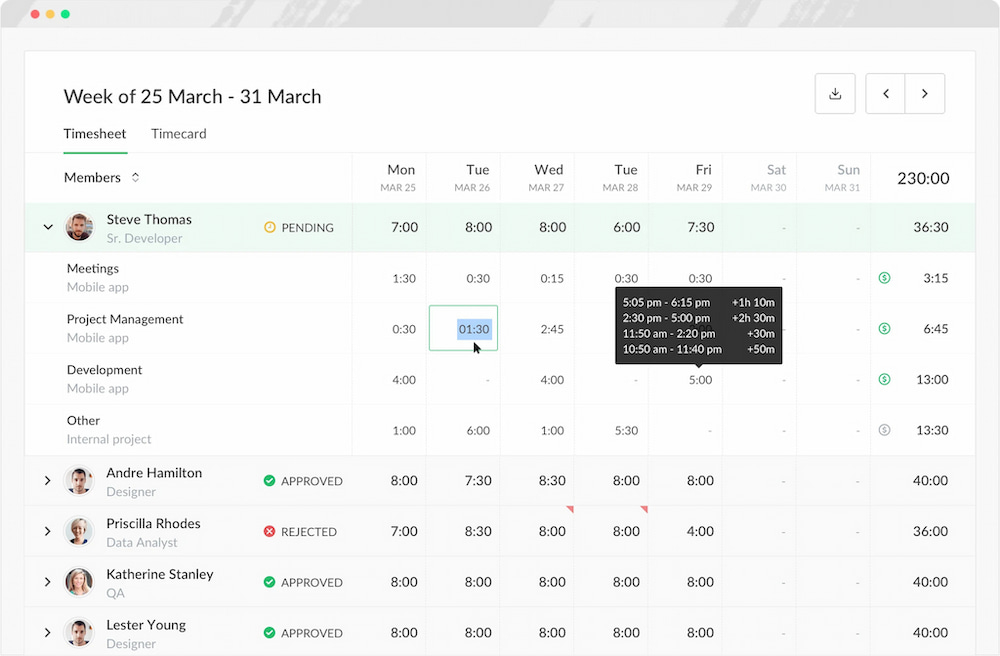
It helps teams:
- Track time by job, client, or service type
- Compare estimated vs actual labor hours
- Monitor project budgets in real time
- Analyze which contracts are profitable
It is a strong fit for companies that already have structured operations and want better financial control rather than basic clock-in tracking.
ClockShark — best for GPS-based field tracking
ClockShark focuses on field teams that move between job sites throughout the day.
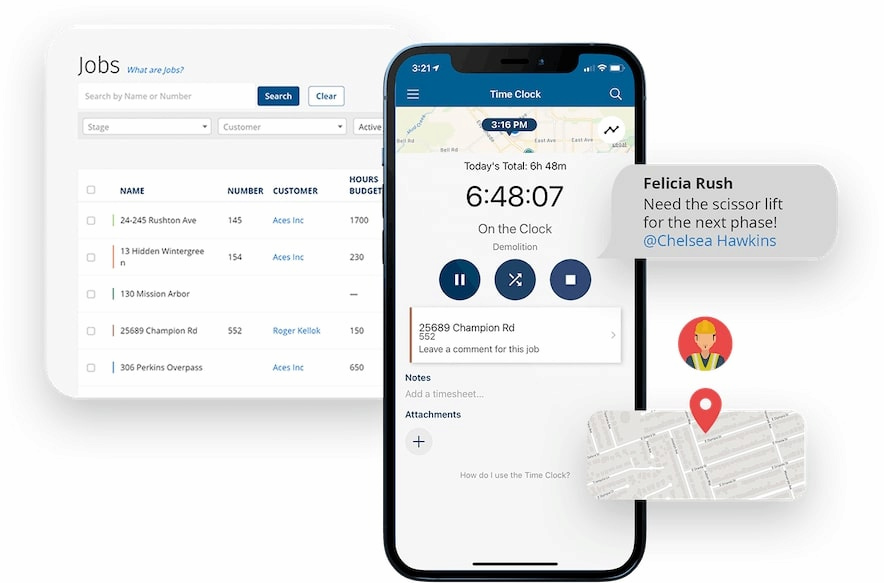
It works well for:
- Crews working across multiple properties daily
- Businesses that need GPS verification for clock-ins
- Managers who want real-time visibility into crew locations
It prioritizes field accountability and scheduling over deeper financial reporting.
Jobber — best all-in-one landscaping operations
Jobber is designed for landscaping businesses that want scheduling, client management, and job tracking in one system.
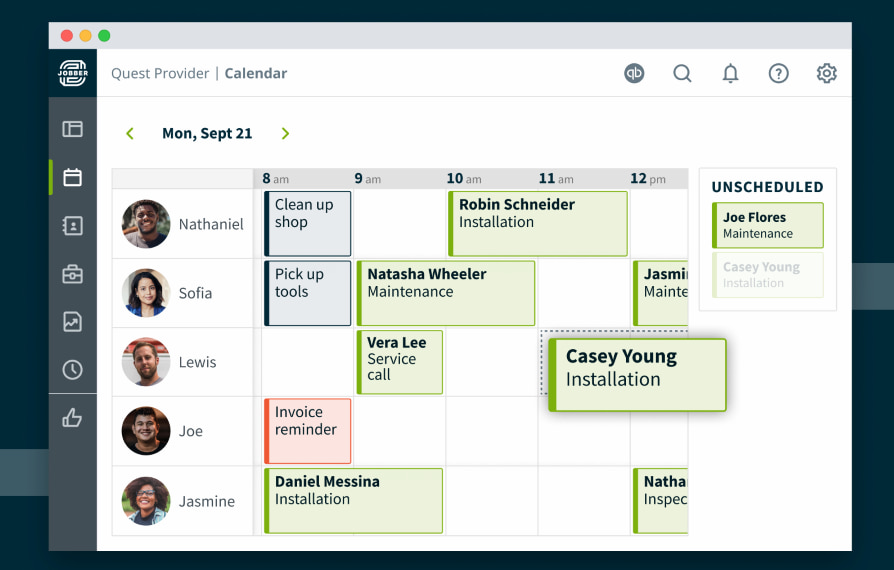
It is best suited for:
- Small to mid-sized service businesses
- Teams that manage quotes, jobs, and invoices in one place
- Companies that want an end-to-end workflow tool
Time tracking is part of a broader operations suite rather than the core focus.
QuickBooks Time — best for payroll integration
QuickBooks Time works best for companies already using QuickBooks for accounting and payroll.
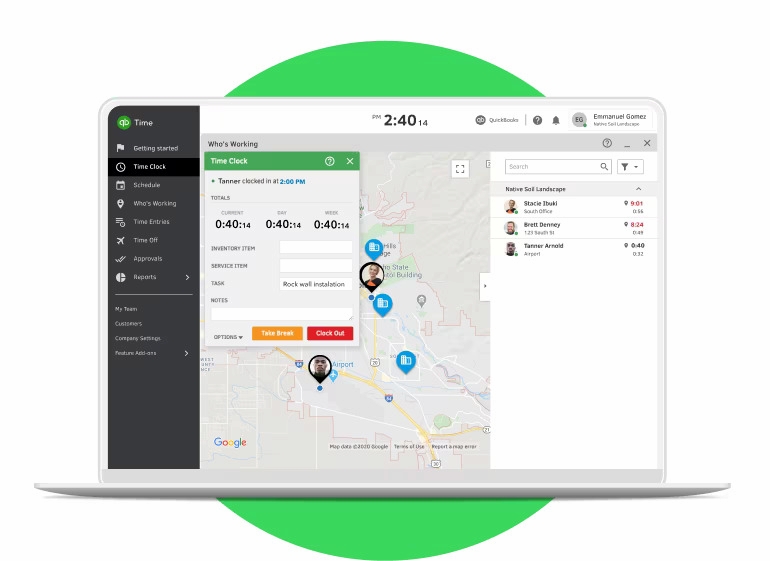
It is particularly useful when:
- Payroll accuracy is a top priority
- Time data needs to flow directly into accounting systems
- Simplicity and reliability matter more than advanced field features
Connecteam — best for communication and mobile workforce management
Connecteam focuses on managing mobile teams beyond just time tracking.
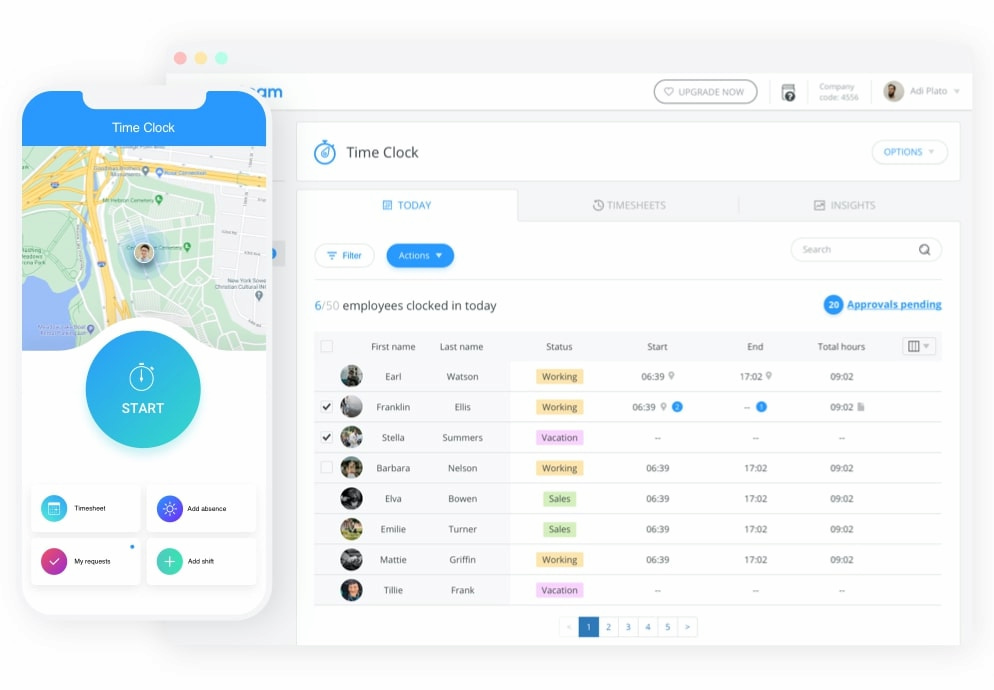
It is a good fit for:
- Larger or distributed landscaping teams
- Companies that need communication + scheduling + tracking in one app
- Businesses managing seasonal or rotating crews
Choosing the right tool
The best software depends on your operational focus:
- Choose Everhour if you want stronger control over time tracking and budgeting
- Choose ClockShark if GPS tracking and field visibility are the priority
- Choose Jobber if you want an all-in-one landscaping operations platform
- Choose QuickBooks Time if payroll integration is most important
- Choose Connecteam if you need broader workforce coordination tools
In most landscaping setups, the right choice comes down to whether your biggest problem is tracking field activity, managing jobs, or understanding profitability.
FAQ: Time Tracking Software for Landscaping
Landscaping crews often work across several properties in a single shift. Time tracking software allows employees to clock in once and then assign time to each job or switch between projects throughout the day. GPS tracking or job-based logging helps ensure that time is recorded accurately for each location.
By tracking labor hours per job, you can compare actual time spent against estimated time and revenue.
Most landscaping time tracking tools allow job or task-based tracking. Employees can assign their hours to specific service types, making it easier to analyze how much time each type of work requires across different clients and properties.
GPS-based clock-ins, mobile apps, and location verification help ensure employees are physically on-site when they start and end work. This reduces the risk of inaccurate reporting or buddy punching between crew members.
Yes. Most time tracking systems support flexible employee groups, allowing you to onboard seasonal workers.
Many landscaping companies use mobile time tracking tools that allow employees to switch between jobs or automatically log travel time. This helps capture the full cost of labor, including time spent moving between properties.
Historical time data allows you to see how long recurring tasks actually take in practice. Over time, this improves estimating accuracy for services like weekly mowing, seasonal cleanups, or irrigation maintenance, leading to more consistent pricing and scheduling.
Conclusion
Time tracking software helps landscaping businesses gain better control over labor costs, improve payroll accuracy, and understand the true profitability of their projects. By replacing manual timesheets with digital tracking, companies can reduce administrative work while giving managers greater visibility into field operations.
The right solution should be easy for crews to use, provide reliable reporting, and support the day-to-day realities of working across multiple job sites. As landscaping businesses grow, accurate time data becomes increasingly valuable for scheduling, budgeting, and long-term planning.
Ultimately, effective time tracking is not just about recording hours — it’s about making better business decisions based on accurate workforce data.

Maria
A dedicated content enthusiast with extensive experience in international teams and projects of all sizes. Maria thrives on creativity and attention to detail, fueled by a love for fantasy novels, music, classic black-and-white films, and always finding ways to make things better.