


Coaching vs. Mentoring: Key Differences and What to Choose

Coaching and mentoring both help employees develop professionally, but they serve different purposes. Coaching typically focuses on improving specific skills or performance, while mentoring offers broader guidance based on professional experience.
Understanding the difference helps organizations choose the right approach for employee development. In this guide, we’ll compare coaching and mentoring, explore their workplace benefits, and explain how to implement both effectively.
What Is Coaching?
Coaching is a structured, goal-oriented process that helps individuals improve specific skills, behaviors, or aspects of their performance. A coach guides the employee through reflection, feedback, and practical exercises to help them identify obstacles and work toward defined goals.
In the workplace, coaching can address a range of development needs, such as:
- Improving communication and presentation skills.
- Developing leadership and delegation abilities.
- Addressing performance gaps.
- Building confidence in decision-making.
- Preparing for new responsibilities.
A coach doesn’t necessarily need to have the same professional background as the employee. Their main role is to facilitate development through questions, feedback, and structured guidance rather than simply provide answers.
For example, a manager might coach an employee who struggles with prioritization by helping them identify time-management issues, evaluate competing tasks, and develop a more effective approach.
What Is Mentoring?
Mentoring is an ongoing developmental relationship in which a more experienced professional shares knowledge, advice, and guidance with someone less experienced. Unlike coaching, which usually targets specific performance goals, mentoring takes a broader view of professional and career development.
A mentor helps employees navigate workplace situations, learn from past experiences, and make informed career decisions. Common applications include:
- Supporting new employees as they adapt to the organization.
- Helping junior professionals plan their career progression.
- Preparing employees for leadership responsibilities.
- Transferring knowledge and expertise between generations of employees.
- Building professional confidence and networks.
For example, an experienced team lead might mentor a junior employee by sharing advice on managing stakeholder relationships, navigating organizational dynamics, and preparing for future leadership roles.
Mentoring can be formal, with assigned pairs and scheduled meetings, or informal, developing naturally through professional relationships. In either case, trust and open communication are essential.
Coaching vs. Mentoring: Key Differences
The main difference between coaching and mentoring is their focus. Coaching helps individuals achieve specific development goals, while mentoring supports broader professional growth through experience and guidance.
| Aspect | Coaching | Mentoring |
|---|---|---|
| Primary focus | Specific skills or performance goals | Broader professional and career development |
| Relationship | Often structured and time-bound | Often longer-term and flexible |
| Expertise | A coach facilitates development and need not share the employee’s professional background | A mentor typically has relevant experience to share |
| Approach | Questions, feedback, exercises, and goal setting | Advice, guidance, experience sharing, and networking |
| Goals | Usually defined around specific outcomes | Often evolve with the mentee’s development |
| Structure | May follow a formal process | Can be formal or informal |
Coaching vs. mentoring examples
Consider an employee preparing for a management role:
- Coaching: A coach helps the employee improve delegation, give constructive feedback, and manage difficult conversations through specific exercises and regular feedback.
- Mentoring: An experienced manager shares insights about leadership responsibilities, navigating organizational changes, and building relationships with other teams.
Both approaches can support the same employee, but they address different aspects of their development.
Benefits of Coaching and Mentoring in the Workplace
Both approaches support employee development, but their benefits differ depending on how they’re used.
Benefits of coaching
- Improves skills and performance: Targeted feedback and practice help employees strengthen specific capabilities and apply them to their work.
- Builds confidence: Coaching gives employees a space to work through challenges, recognize their strengths, and become more confident in their decisions.
- Encourages accountability: Clear goals and regular check-ins help employees take ownership of their development.
- Supports role transitions: Coaching can help employees prepare for new responsibilities, particularly when moving into management positions.
Benefits of mentoring
- Transfers practical knowledge: Employees gain insights from someone who has already faced similar professional challenges.
- Supports career development: Mentors can help mentees explore career options, set long-term career goals, and prepare for future opportunities.
- Strengthens workplace relationships: Mentoring connects employees across teams and experience levels, encouraging collaboration and knowledge sharing.
- Preserves organizational knowledge: Experienced employees can pass on expertise, processes, and lessons that might otherwise be lost when they leave.
When Should You Use Coaching vs. Mentoring?
The right approach depends on what an employee needs to develop.
Choose coaching when an employee needs to:
- Improve a specific skill or aspect of their performance.
- Address a recurring work challenge.
- Develop a particular behavior, such as delegation or communication.
- Prepare for a defined responsibility or role transition.
Choose mentoring when an employee needs to:
- Explore long-term career goals and progression.
- Learn from someone else’s professional experience.
- Understand organizational culture and workplace dynamics.
- Build connections and gain a broader professional perspective.
Organizations can also combine both approaches. For example, a newly promoted manager might receive coaching to improve delegation and feedback skills while being mentored by a senior leader who can share broader leadership experience.
How to Implement Coaching and Mentoring Programs at Work
Successful programs need clear objectives, suitable participants, and enough time for meaningful development. These steps can help organizations put them into practice.
1. Identify employee development needs
Start by understanding what employees want to improve and what capabilities the organization needs. Performance reviews, employee feedback, career discussions, and skills assessments can help identify suitable development opportunities.
2. Define program objectives
Decide what the program should achieve. Coaching might target leadership skills or performance improvement, while mentoring could focus on career progression, onboarding, or knowledge transfer. Clear objectives also help determine how to measure progress.
3. Select suitable coaches and mentors
Look for people with the right experience and interpersonal skills. Coaches should be able to ask useful questions, give constructive feedback, and guide development. Mentors should have relevant professional experience and be willing to share it.
A strong performer isn’t automatically a good coach or mentor; both roles require communication, listening, and a genuine interest in helping others grow.
4. Match participants thoughtfully
Consider employees’ development goals, professional backgrounds, experience levels, and working styles when creating pairs. A good match should give the employee relevant guidance while allowing both participants to communicate openly.
5. Set expectations and provide structure
Agree on responsibilities, meeting frequency, development goals, and confidentiality. Coaching relationships may benefit from a defined schedule and progress milestones, while mentoring arrangements can remain more flexible.
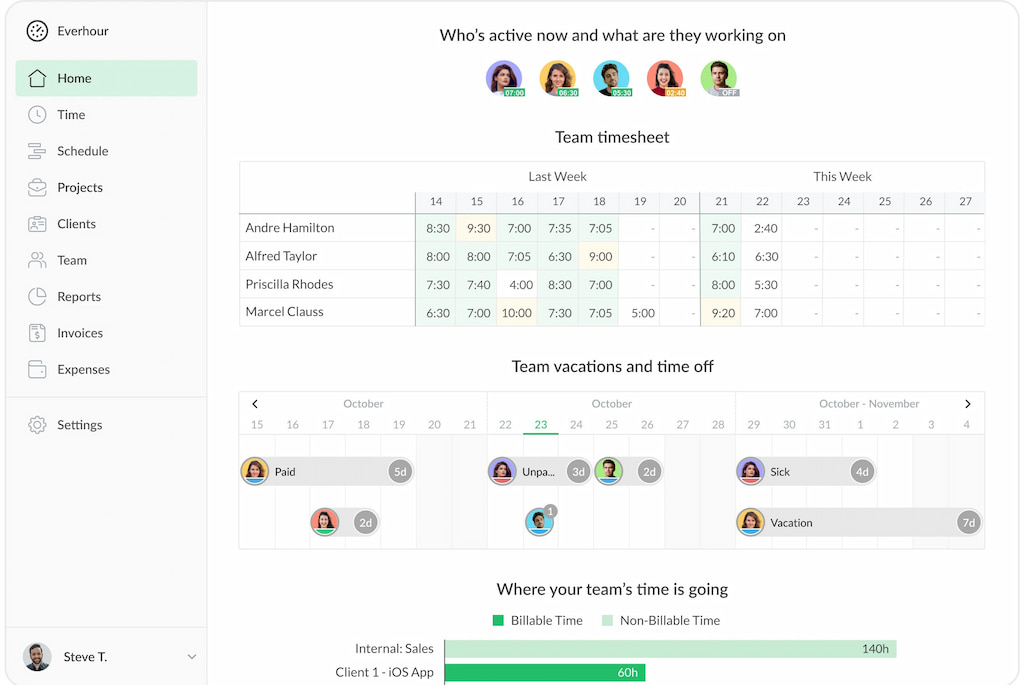
It’s also important to give participants enough time for regular sessions. Managers can use Everhour‘s time tracker to track time spent across projects and tasks, review actual hours against estimates, and better understand team capacity when planning development activities.
6. Evaluate progress
Review whether the program is meeting its objectives through participant feedback, skill assessments, performance changes, and career progression. For mentoring, also consider the quality of knowledge sharing and whether employees feel better supported in their development.
Use the findings to improve participant matching, adjust program structure, and identify where additional support is needed.
FAQ
Neither approach is universally better. Coaching is more suitable for targeted skill development and performance goals, while mentoring is better for broader career guidance and professional growth. The right choice depends on the employee’s needs.
Yes. A manager can coach an employee through specific challenges, such as improving delegation, while also mentoring them by sharing career advice and professional experience. It’s important to make the purpose of each interaction clear.
Coaching helps individuals improve through guided reflection, feedback, and goal setting. Mentoring provides ongoing guidance based on professional experience. Training focuses on teaching specific knowledge or skills through structured instruction and practice.
Coaching often follows a defined schedule tied to specific goals and may last several weeks or months. Mentoring is usually more flexible and can continue for months or years, depending on the participants’ needs.
A good mentor has relevant professional experience, communicates openly, listens carefully, and provides constructive advice. They should also be approachable, reliable, and genuinely interested in supporting another person’s development.

Maria
A dedicated content enthusiast with extensive experience in international teams and projects of all sizes. Maria thrives on creativity and attention to detail, fueled by a love for fantasy novels, music, classic black-and-white films, and always finding ways to make things better.