


Rejection Letter: Templates, Examples & Writing Tips

Rejecting a job applicant is a routine part of recruitment, but how you communicate the decision can shape a candidate’s impression of your company. A clear, respectful rejection letter helps candidates understand the outcome, protects your employer brand, and leaves the door open for future opportunities when appropriate.
Whether you’re rejecting someone after reviewing their application or following an interview, the message should be professional, timely, and considerate. Here’s what to include in a rejection letter, how to write one, and templates you can adapt to different hiring situations.
What Is a Rejection Letter?
A rejection letter is a written message informing a job applicant that they haven’t been selected to move forward in the hiring process or receive a job offer. Employers typically send rejection letters by email, although a more formal letter may be appropriate in some situations.
Rejection letters can be sent at different stages of recruitment:
- After an application review: When an applicant’s experience or qualifications don’t match the role’s requirements closely enough to proceed and finish the candidate screening.
- After an interview: When a candidate completes an interview but isn’t selected for the next stage or the position.
- After the final interview: When the employer decides to offer the role to another candidate.
- For internal applications: When an existing employee applies for a different position but isn’t selected.
Regardless of the stage, the purpose is the same: communicate the decision clearly, acknowledge the candidate’s effort, and close the recruitment process professionally.
What to Include in a Rejection Letter
A good rejection letter doesn’t need to be long. It should communicate the outcome directly while treating the candidate with respect.
Include these essential elements:
- A personalized greeting: Address the candidate by name.
- A thank-you: Acknowledge their application, time, or participation in the interview process.
- A clear decision: State that they won’t be moving forward or haven’t been selected for the position.
- A brief explanation: When appropriate, provide a concise, job-related reason for the decision.
- A professional closing: Wish the candidate well and, if genuinely appropriate, encourage them to apply for future opportunities.
You don’t need to provide detailed feedback in every rejection letter. For candidates who haven’t interviewed, a short message is often sufficient. Candidates who have invested significant time in multiple interviews may appreciate a more personalized response.
Keep the wording factual and consistent with the company’s hiring policies. Avoid promises about future roles or explanations that you can’t substantiate.
How to Write a Rejection Letter
A good rejection letter communicates the decision clearly while treating the candidate with respect. Follow these steps to write a professional message.
1. Choose the right communication channel
Email is usually sufficient for rejecting applicants after an initial review. For candidates who have completed several interview rounds, consider a personalized email or a phone call followed by written confirmation.
2. Address the candidate personally
Use the candidate’s name and mention the position they applied for. For candidates who reached the interview stage, acknowledge their time and, where appropriate, refer to something specific from the conversation.
3. Thank them for their time
Recognize the effort involved in applying, completing an assessment, or attending an interview. Keep the acknowledgment sincere and proportionate to their involvement in the process.
4. Communicate the decision clearly
State that the candidate won’t be moving forward or hasn’t been selected for the position. Avoid vague phrases such as “we’ll be in touch” that leave the outcome unclear.
5. Provide a brief, factual explanation
When appropriate, explain the decision in terms of the role’s requirements. For example, you might mention that another candidate has more experience with a specific technology. Avoid subjective criticism, unsupported claims, or unnecessary comparisons.
6. Close professionally
Wish the candidate well and encourage them to apply for future opportunities if there’s a genuine possibility of a good match. Don’t promise future interviews or imply that another position is guaranteed.
7. Send the message promptly and consistently
Notify candidates once the hiring decision is confirmed. Establish a consistent process for communicating outcomes at each recruitment stage so applicants aren’t left waiting or overlooked.
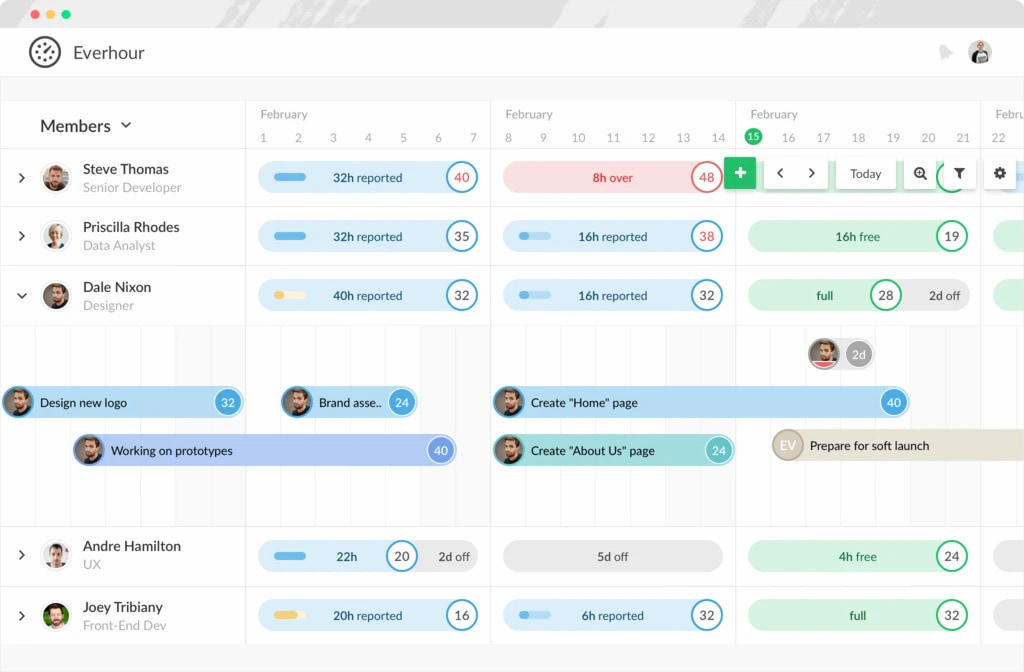
Recruitment tracking tools can help teams coordinate interviews, follow-ups, and hiring responsibilities. For example, Everhour‘s time tracker helps teams track time spent on recruitment activities and understand how much effort different stages require, making it easier to review workloads and improve the efficiency of the hiring process.
8. Protect candidate confidentiality
Send each message to the intended recipient and avoid disclosing information about other applicants. Follow your organization’s policies for storing candidate information and complying with applicable privacy requirements.
Rejection Letter Templates and Examples
The right wording depends on how far the candidate progressed in the hiring process. Use the following templates as starting points and adapt them to the circumstances.
1. Rejection letter after reviewing an application
Use this template when a candidate’s application doesn’t progress to the interview stage.
Subject: Update on Your Application for [Job Title]
Dear [Candidate Name],
Thank you for applying for the [Job Title] position at [Company Name] and for your interest in joining our team.
After reviewing your application, we’ve decided to move forward with other candidates whose qualifications more closely match our current requirements.
We appreciate the time you took to apply and wish you every success in your job search.
Best regards,
[Your Name]
[Your Job Title]
[Company Name]
2. Rejection letter after an interview
Candidates who have spent time preparing for and attending an interview deserve a more personalized response. Acknowledge their participation and, where appropriate, mention a relevant strength or contribution.
Subject: Update on Your Interview for [Job Title]
Dear [Candidate Name],
Thank you for taking the time to interview for the [Job Title] position at [Company Name]. We enjoyed learning more about your experience and discussing your approach to [relevant topic].
After careful consideration, we’ve decided to move forward with another candidate whose experience more closely aligns with our current needs.
We appreciate your interest in our team and the time you invested in the process. We wish you all the best in your career.
Best regards,
[Your Name]
[Your Job Title]
[Company Name]
3. Rejection letter when choosing another candidate
This version is useful when several qualified candidates reach the final stages of recruitment and the decision comes down to a closer match for the role.
Subject: Update on Your Application for [Job Title]
Dear [Candidate Name],
Thank you for meeting with our team and for your continued interest in the [Job Title] position.
We were impressed by your [relevant skill or experience]. However, we’ve decided to offer the position to another candidate whose background more closely matches the specific requirements of the role at this time.
We appreciate the opportunity to learn more about your experience and wish you success in your next career move.
Best regards,
[Your Name]
[Your Job Title]
[Company Name]
4. Rejection letter for an internal candidate
When an existing employee isn’t selected for an internal position, the message should recognize their interest in growing within the company while keeping the decision clear.
Subject: Update on Your Application for [Internal Job Title]
Hi [Employee Name],
Thank you for applying for the [Job Title] position and for your interest in developing your career at [Company Name].
After reviewing the candidates, we’ve decided to move forward with another applicant whose experience more closely matches the requirements of this role.
We appreciate your initiative and the contributions you continue to make to the team. I’d be happy to discuss feedback on your application and explore development opportunities that align with your career goals.
Thank you again for putting yourself forward.
Best,
[Your Name]
5. Rejection letter that leaves the door open for future opportunities
Use this template when the candidate has relevant strengths but isn’t the right match for the current opening. Only include an invitation to apply again if it’s genuine.
Subject: Update on Your Application for [Job Title]
Dear [Candidate Name],
Thank you for your interest in the [Job Title] position at [Company Name] and for the time you spent speaking with our team.
Although we’ve decided to move forward with another candidate for this role, we were impressed by your experience in [relevant area].
We encourage you to keep an eye on our careers page for future opportunities that may better match your skills and interests.
Thank you again for considering [Company Name]. We wish you the best in your job search.
Best regards,
[Your Name]
[Your Job Title]
[Company Name]
Common Rejection Letter Mistakes
Even a short rejection message can create a poor candidate experience if it’s unclear, impersonal, or misleading. Avoid these common mistakes:
- Being vague about the decision. Phrases such as “we’ll keep your application on file” don’t tell candidates whether they’ve been rejected. State the outcome explicitly.
- Sending a generic message after multiple interviews. A brief template may be appropriate after an initial application review, but later-stage candidates often benefit from a more personal acknowledgment.
- Providing misleading feedback. Don’t invent reasons to soften the decision or promise that the candidate was a close second if that isn’t accurate.
- Offering unnecessary criticism. Feedback should be constructive, relevant to the role, and supported by the hiring process.
- Leaving candidates without an update. Failing to close the loop can damage trust and reflect poorly on the employer.
- Making promises about future roles. Encourage future applications only when appropriate, rather than implying that another opportunity is guaranteed.
FAQs
Address the candidate by name, thank them for applying or interviewing, state the decision clearly, and close respectfully. Add a brief, job-related explanation when appropriate.
Be direct without being harsh. Acknowledge the candidate’s time and effort, communicate the decision without ambiguity, and avoid unnecessary criticism or false promises.
Not always. A brief explanation can be helpful, especially after an interview, but it should be factual and relevant to the role. Follow your organization’s policies and applicable legal requirements when providing feedback.
Send it as soon as the decision is confirmed and any necessary internal steps are complete. Communicate promptly at each stage so candidates aren’t left waiting without an update.
Yes, it’s generally good practice to inform interviewed candidates when they won’t be progressing. For candidates who completed several interview rounds, a personalized email or phone call followed by written confirmation may be more appropriate.
Yes, if their skills may fit another opening. You can encourage them to apply for future positions, but avoid promising a future opportunity and follow your organization’s candidate data retention policies.
Conclusion
A professional rejection letter communicates a hiring decision clearly while respecting the candidate’s time and effort. Keep messages timely, factual, and appropriately personalized, with more thoughtful communication for candidates who have progressed further through the process.
Using consistent templates and a clear follow-up process helps hiring teams communicate efficiently without making rejection messages feel impersonal. The goal is to close the current application respectfully and leave candidates with an accurate, professional impression of your company.

Maria
A dedicated content enthusiast with extensive experience in international teams and projects of all sizes. Maria thrives on creativity and attention to detail, fueled by a love for fantasy novels, music, classic black-and-white films, and always finding ways to make things better.