


Exempt vs Non-Exempt Employee: What’s the Difference?

Employee classification affects pay, overtime eligibility, time tracking, and labor law compliance. One of the most important distinctions employers need to understand is the difference between exempt and non-exempt employees.
While many people assume the classification depends on whether someone is salaried or hourly, the rules are often more complex. Job duties, compensation structure, and employment laws all play a role in determining employee status.
In this article, we’ll explain the difference between exempt and non-exempt employees, how you classify them, and why it matters for both employers and employees.
What Is an Exempt Employee?
An exempt employee is a worker who is exempt from overtime pay requirements under applicable labor laws. In most cases, exempt employees do not receive additional compensation for working beyond standard working hours.
Exempt employees are typically paid on a salary basis and often work in executive, administrative, professional, or specialized roles. Common examples include:
- Managers and department heads
- HR directors and senior HR professionals
- Accountants and financial professionals
- Software engineers and other technical specialists (where applicable)
Because exempt employees are generally not eligible for overtime pay, employers often focus on job responsibilities and results rather than the number of hours worked.
However, salary alone does not automatically make an employee exempt. Employee classification is usually based on a combination of factors, including compensation structure, job duties, and applicable labor laws. An employee may be salaried and still qualify as non-exempt if their role does not meet the required criteria.
For employers, understanding the distinction is important because misclassifying employees can lead to payroll errors, compliance issues, and potential legal penalties.
What Is a Non-Exempt Employee?
A non-exempt employee is a worker who is entitled to overtime protections under applicable labor laws. When eligible employees work beyond standard hours, employers are generally required to provide additional compensation based on local overtime rules.
Non-exempt employees are often paid hourly, but hourly pay is not a requirement. In some cases, salaried employees may also be classified as non-exempt and remain eligible for overtime pay.
Common characteristics of non-exempt employees include:
- Eligibility for overtime compensation
- More detailed tracking of working hours
- Pay that is directly tied to hours worked
- Greater protection under wage and hour regulations
Examples of non-exempt roles often include:
- Customer support representatives
- Administrative assistants
- Retail employees
- Manufacturing and production workers
Because overtime eligibility depends on accurate records, non-exempt employees are typically required to track their working hours, breaks, and attendance. This helps employers calculate wages correctly and maintain compliance with labor laws.
For employers, properly classifying non-exempt employees is essential.
Misclassification can result in unpaid overtime claims, payroll corrections, and regulatory penalties, making accurate time tracking and workforce management particularly important for non-exempt teams.
Exempt vs. Non-Exempt Employees: Key Differences
| Factor | Exempt employee | Non-exempt employee |
|---|---|---|
| Overtime pay | Generally not eligible | Eligible when applicable |
| Pay structure | Usually salaried | Often hourly, but can be salaried |
| Hours tracking | Often not required | Typically required |
| Primary focus | Job responsibilities and results | Hours worked and time records |
| Common roles | Managers, professionals, executives | Support, administrative, retail, and operational roles |
How Employee Classification Is Determined
Employee classification is based on several factors, and the process is often more complex than many employers realize. Whether an employee is classified as exempt or non-exempt depends on their role, compensation structure, and applicable labor laws.
Job duties matter most
In many cases, an employee’s actual responsibilities are more important than their job title. Calling someone a manager, coordinator, or specialist does not automatically determine their classification. Employers typically need to evaluate what the employee actually does on a day-to-day basis.
Compensation method
Pay structure is also considered. Exempt employees are often paid a salary, while non-exempt employees are commonly paid hourly. However, compensation method alone does not determine status.
Salary thresholds
Some labor laws use salary thresholds as part of the classification process. Employees generally must meet certain compensation requirements before they can qualify for exempt status. The specific thresholds vary by jurisdiction and may change over time.
Legal requirements
Classification rules are ultimately determined by local employment laws. Employers must consider all applicable requirements when deciding whether a role is exempt or non-exempt.
A common misconception
One of the most frequent mistakes is assuming that paying an employee a salary automatically makes them exempt. In reality, employers typically need to consider job duties, compensation requirements, and legal criteria together before assigning a classification.
Overtime Rules for Exempt and Non-Exempt Employees
Overtime eligibility is one of the main factors that separates exempt and non-exempt employees.
| Category | Exempt employees | Non-exempt employees |
|---|---|---|
| Overtime eligibility | Generally not eligible for overtime pay | Typically eligible for overtime pay |
| Compensation | Usually receive the same pay regardless of hours worked | Compensation may increase when overtime applies |
| Time tracking | Often not required for payroll purposes | Usually required to support wage and overtime calculations |
| Employer obligations | Focused on salary administration and role requirements | Requires accurate tracking of hours worked and overtime pay |
For employers, these differences have a direct impact on payroll costs, workforce and resource planning, and compliance obligations. For employees, classification affects earnings, compensation expectations, and workplace protections.
Why Accurate Classification Matters for Employers
Employee classification affects far more than payroll. It influences compliance, workforce management, and employee relations across the organization.
Compliance
Accurate classification helps employers comply with wage and hour regulations. Incorrectly classifying employees can lead to labor law violations, audits, penalties, and costly legal disputes. Regularly reviewing classifications helps reduce compliance risks and ensures policies align with current regulations.
Payroll accuracy
Classification directly determines how employees are paid and whether overtime rules apply. Proper classification supports accurate wage calculations, overtime payments, and recordkeeping practices. This reduces payroll errors and helps employers avoid costly corrections later.
Workforce planning
Understanding which employees are exempt and non-exempt also supports better operational planning. Managers can make more informed decisions about staffing levels, overtime budgets, scheduling, and workload distribution when employee classifications are clearly defined.
Employee trust
Clear and consistent classification practices help build transparency and fairness in the workplace. Employees are more likely to trust payroll processes when they understand how compensation is calculated and why certain overtime rules apply to their role.
Ultimately, accurate classification protects both employers and employees. It supports compliance, improves payroll accuracy, strengthens workforce planning, and helps create a more transparent workplace environment.
Time Tracking and Employee Classification
Non-exempt employees
For non-exempt employees, accurate time tracking is often a business necessity. Employers typically need reliable records to:
- Calculate overtime correctly
- Track attendance and working hours
- Maintain compliance with wage and hour regulations
- Resolve payroll questions or disputes
Without accurate records, employers may struggle to demonstrate compliance or verify compensation calculations.
Exempt employees
Although exempt employees are generally not eligible for overtime, time tracking can still provide value. Many organizations track time to support:
- Project management
- Resource allocation
- Capacity planning
- Budgeting and forecasting
Tracking time can also help managers understand workload distribution and identify potential burnout risks across teams.
Using time tracking tools
Time tracking tools like Everhour’s time tracker help organizations maintain accurate records, monitor workloads, and manage overtime while providing visibility into how time is spent across teams.
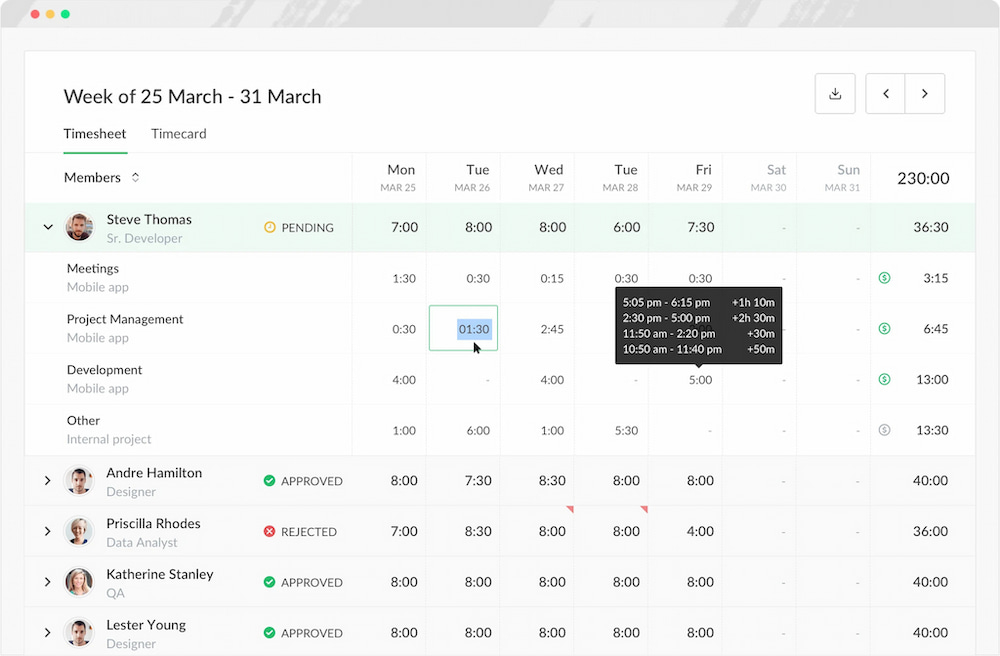
Whether employees are exempt or non-exempt, having clear time data can improve planning, support payroll processes, and help managers make more informed staffing and resource decisions.
FAQ
What is the difference between exempt and non-exempt employees?
Exempt employees are not eligible for overtime pay under labor laws, while non-exempt employees must be paid overtime when they work beyond standard working hours.
Can a salaried employee be non-exempt?
Yes. Salary alone does not determine exemption status. Some salaried employees are still entitled to overtime pay if they do not meet the legal criteria for exempt roles.
Who qualifies as an exempt employee?
Exempt employees typically work in executive, administrative, professional, or specialized roles and meet specific job duty and salary requirements defined by local labor laws.
How is overtime calculated for non-exempt employees?
Overtime rules vary by jurisdiction, but non-exempt employees are generally entitled to additional pay when they exceed standard working hours set by law or company policy.
Why do employee classifications matter?
Classification affects payroll, overtime eligibility, legal compliance, and workforce planning. Incorrect classification can lead to back pay, penalties, and legal disputes.
Can employers change an employee’s classification?
Yes, but changes must align with job duties and legal requirements. Employers should ensure any reclassification is properly documented and compliant with labor laws.
Conclusion
Exempt and non-exempt employee classifications affect how employers pay workers, calculate overtime, and apply labor law protections. Employers generally do not pay overtime to exempt employees, while non-exempt employees typically earn additional compensation when they work beyond standard hours.
The distinction is not based on salary alone, but on job duties, compensation structure, and legal criteria that vary across jurisdictions. Because of this, classification rules can differ significantly between employers and locations.
For organizations, getting classification right is essential for compliance, accurate payroll, and fair workforce management. Clear policies and consistent application help reduce legal risk and improve transparency across teams.

Maria
A dedicated content enthusiast with extensive experience in international teams and projects of all sizes. Maria thrives on creativity and attention to detail, fueled by a love for fantasy novels, music, classic black-and-white films, and always finding ways to make things better.