


Double Time vs Overtime: Key Differences Explained

Overtime and double time are often used interchangeably, but they are not the same thing. Both involve extra pay for additional work hours, but they apply under different conditions.
In most cases, overtime pay means employees earn 1.5 times their regular hourly rate after working beyond standard hour limits. Double time goes further, typically paying 2 times the regular rate under specific circumstances like extremely long shifts, holidays, or certain labor agreements. Incorrect calculations can create payroll errors, compliance risks, and unexpected labor costs.
In this article, we’ll break down the differences between double time vs overtime, when each applies, how they are calculated, and the most common payroll errors you should avoid.
Key Insights
- Overtime and double time are different pay rates and usually apply under different working conditions.
- Overtime pay is typically calculated at 1.5× an employee’s regular hourly rate, while double time pays 2× the regular rate.
- Double time often applies only after employees work beyond certain daily or weekly hour thresholds, or during holidays and special shifts.
- Under U.S. federal law, overtime pay is generally required for eligible employees, but double time rules are usually determined by state labor laws, company policies, or union agreements.
- Accurate time tracking and scheduling is important because overtime and double time errors can quickly create payroll disputes, compliance risks, and unexpected labor costs.
What Is Overtime Pay?
Overtime pay is additional compensation employees receive for working beyond standard working hours. In many cases, overtime applies after an employee works more than 40 hours in a workweek, although some states and employers also use daily overtime rules.
The most common overtime rate is time-and-a-half, meaning employees earn 1.5 times their normal hourly rate for overtime hours worked.
For example:
- an employee earning $20 per hour would earn $30 per overtime hour
- an employee earning $30 per hour would earn $45 per overtime hour
In the U.S., overtime rules are primarily regulated by the Fair Labor Standards Act (FLSA), although eligibility depends on factors like job classification, salary structure, and exemptions.
What Is Double Time Pay?
Double time pay means employees earn twice their regular hourly rate for certain hours worked. Unlike overtime, double time is not universally required under U.S. federal law and often depends on state regulations, union agreements, or employer policies.
For example:
- an employee earning $20 per hour would earn $40 per double time hour
- an employee earning $30 per hour would earn $60 per double time hour
Double time commonly applies in situations such as:
- very long shifts that exceed daily hour thresholds
- working many consecutive days without a break
- holidays or special scheduled workdays
- union contracts with enhanced pay rules
Double Time vs Overtime: Main Differences
While both overtime and double time increase employee pay for extra work, they apply under different conditions and use different pay rates.
| Overtime | Double time |
|---|---|
| Usually pays 1.5× the employee’s regular hourly rate | Usually pays 2× the employee’s regular hourly rate |
| Commonly required under labor laws like the Fair Labor Standards Act | Often depends on state laws, union agreements, or employer policies |
| Typically begins after standard overtime thresholds, such as 40 hours per week | Usually applies only after longer shifts, excessive overtime, or holiday work |
| More common across industries and payroll systems | Less common and more situational |
| Primarily designed to compensate employees for extra working hours | Often intended to compensate employees for unusually demanding schedules or special work conditions |
For example, an employee may receive overtime pay after working more than 40 hours in a week, but double time might only begin after working 12 hours in a single day or during a holiday shift, depending on local regulations and company policy.
When Employees Receive Overtime vs Double Time
There are several common situations where each type of pay typically applies:
| Situation | Common pay rate |
|---|---|
| Working more than 40 hours in a workweek | Overtime (1.5× pay) |
| Working very long daily shifts | Overtime first, then double time after higher hour thresholds |
| Working consecutive days without enough rest | May trigger overtime or double time depending on state law |
| Working holidays or special scheduled days | Often paid at double time or premium rates |
| Union-regulated schedules | Rules may include custom overtime and double time structures |
Daily vs weekly overtime
In many workplaces, overtime is calculated weekly. For example, employees may begin receiving overtime pay after exceeding 40 hours during a single workweek.
Some states, however, also apply daily overtime rules. In California, for example, employees may qualify for overtime after working more than 8 hours in a day and double time after working beyond 12 hours in a single day.
Holiday and weekend work
Holiday pay rules vary significantly between employers. Some companies offer double time for employees working during major holidays, overnight shifts, or weekends, even when labor laws do not specifically require it.
State-specific differences
Overtime rules are generally regulated under federal law, but double time rules are much less standardized. Some states have detailed daily overtime requirements, while others rely almost entirely on employer policies or union contracts.
How Overtime And Double Time Are Calculated
Both overtime and double time are calculated using an employee’s regular hourly rate:
- overtime pay usually equals 1.5× the regular hourly rate
- double time usually equals 2× the regular hourly rate
For example, an employee earning $20 per hour would typically earn:
- $30/hour during overtime
- $40/hour during double time
The difference becomes more noticeable when multiple pay rates apply within the same workweek.
Combined example
A payroll calculation may include regular hours, overtime hours, and double time hours together.
Example:
- 40 regular hours at $20/hour
- 5 overtime hours at 1.5× pay
- 2 double time hours at 2× pay
The calculation would look like this:
In this example, total weekly pay would equal $1,030 before taxes and deductions.
Common Payroll Mistakes
Overtime and double time calculations can become complicated quickly, especially when businesses manage multiple schedules, locations, or labor rules. Some of the most common payroll mistakes include:
- misclassifying overtime hours
- applying incorrect overtime or double time rates
- overlooking state-specific labor requirements
- calculating holiday pay incorrectly
- lacking visibility into actual hours worked
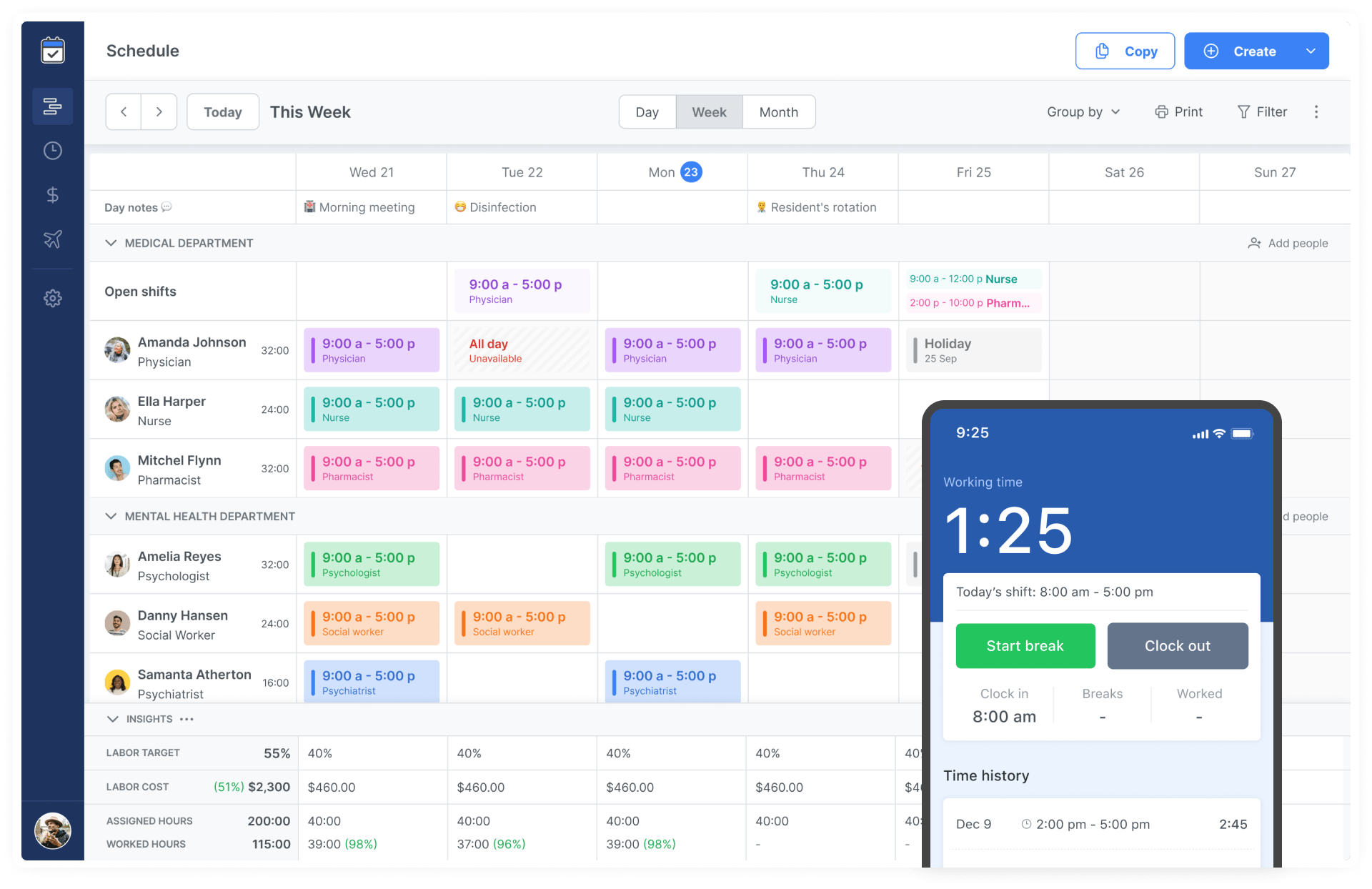
These issues often happen when employee schedules, shifts, and worked hours are tracked manually or across disconnected systems. Tools like Shifts by Everhour help businesses manage schedules, monitor worked hours, and maintain clearer visibility into overtime across teams and shifts.
FAQ
No. Overtime usually pays 1.5× the regular hourly rate, while double time typically pays 2×.
Overtime is more common and usually starts after standard hour limits. Double time typically applies under stricter conditions like long shifts, holidays, or consecutive workdays.
Not always. Federal law generally requires overtime pay, but double time rules often depend on state law, employer policy, or union agreements.
This varies by employer and location. In some states, double time may begin after employees work more than a certain number of hours in a single day.
Overtime pay is usually calculated at 1.5× the employee’s regular hourly rate.
Some salaried employees qualify for overtime depending on their exemption status, while others do not.
Sometimes. Some employers offer double time for holiday work, but it is often based on company policy rather than legal requirement.
Conclusion
Overtime and double time are closely related, but they serve different purposes and apply under different working conditions. Overtime is far more common, while double time is usually reserved for longer shifts, holidays, or special labor agreements.
Because overtime and double time rules vary by state and employer, accurate time tracking and scheduling and clear payroll policies are critical for avoiding calculation errors and compliance issues.

Maria
A dedicated content enthusiast with extensive experience in international teams and projects of all sizes. Maria thrives on creativity and attention to detail, fueled by a love for fantasy novels, music, classic black-and-white films, and always finding ways to make things better.