


When to Hire Your First Employee: Key Signs to Look For

Hiring your first employee is one of the biggest transitions in a business. Up to that point, most work depends entirely on the founder — every task, decision, and problem flows through one person.
The challenge is figuring out when hiring actually makes sense. Hire too early, and payroll becomes a financial strain. Hire too late, and workload, delays, and burnout start limiting growth.
In most cases, the right time to hire has less to do with company size and more to do with operational pressure. When work becomes consistently difficult to manage alone, bringing in support stops being a growth idea and becomes a business necessity.
Signs It May Be Time To Hire Your First Employee
The clearest sign that it’s time to hire is usually not rapid growth, but operational strain. When the business depends too heavily on one person, even small increases in workload start creating delays, missed opportunities, and inconsistent execution.
You’re consistently overloaded
Every business goes through busy periods, but constant overload is different. If work regularly exceeds the time available to complete it, the founder eventually becomes the bottleneck for the entire business. This often shows up as:
- growing backlogs
- delayed responses
- missed opportunities because there is no capacity left to take on more work

At that point, hiring becomes less about expansion and more about restoring operational stability.
Revenue has become stable
Hiring is much safer when income is predictable. A business that generates consistent monthly revenue is in a much stronger position than one relying on occasional spikes or short-term wins. Stability matters because payroll becomes an ongoing responsibility, not a one-time expense.
The key question is not whether the business had a good month, but whether it can reliably support another person over time.
You spend too much time on low-value work
Many founders delay hiring because they assume they should handle everything themselves. In reality, spending most of the day on repetitive or administrative work often slows growth.
Tasks like:
- scheduling
- inbox management
- manual reporting
- routine customer support
can consume time that would otherwise go toward sales, strategy, or business development.
Customer experience is starting to suffer
Workload problems eventually become visible to customers. Slower delivery, missed deadlines, inconsistent communication, or declining quality usually indicate that the business has reached its operational limit. Hiring support at this stage can help stabilize delivery before reputation starts suffering.
Growth has stalled because of capacity limits
Sometimes demand exists, but the business cannot realistically handle more work.
This often looks like:
- turning down projects
- delaying onboarding
- having no time left for sales or improvement
When growth stops because there simply aren’t enough hours available, hiring can remove the constraint that is limiting the business.
Signs You May Not Be Ready Yet
Hiring too early can create as many problems as hiring too late. In some cases, workload pressure comes from poor structure or temporary spikes rather than a real need for another employee.
Revenue is still unpredictable
Occasional high-income months are not the same as stability. If revenue changes dramatically from month to month, taking on payroll can quickly become stressful.
Processes are not documented
When everything exists only in the founder’s head, new hires struggle to become productive. Basic workflows, expectations, and recurring tasks should be documented before bringing someone in.

You don’t know what role you actually need
A vague hiring decision usually leads to vague results. If the business cannot clearly define:
- what work needs help
- which responsibilities should be delegated
- what success in the role looks like
then the problem may not be staffing yet. Sometimes the real issue is unclear priorities or disorganized operations.
The workload problem is temporary
Not every busy period requires a permanent hire. Seasonal demand, short-term projects, or temporary growth spikes may be better handled through contractors, freelancers, or temporary support instead of adding full-time overhead too early.
Choosing Your First Hire
A first hire works best when it solves a specific operational problem, not just a general feeling of being overwhelmed.
Define the role clearly
Before hiring, identify the actual work that needs support. Focus less on job titles and more on tasks, responsibilities, and recurring problems you want someone else to own.
This also helps answer an important question: do you really need a full-time employee, or would a contractor, freelancer, or part-time role solve the problem more effectively?
Understand the real cost
Salary is only part of the expense. Hiring also adds costs related to:
- taxes and benefits
- software and equipment
- onboarding and training time
- management and communication overhead
New employees rarely create immediate efficiency. In the beginning, they usually require additional guidance before becoming fully productive. Having a structured [employee onboarding] process helps reduce confusion and shortens the ramp-up period.
Check whether hiring is the right solution
Not every workload problem requires a permanent employee.
Sometimes the better solution is:
- automating repetitive work with software
- outsourcing specialized tasks
- using freelancers during busy periods
Hiring makes the most sense when the workload is consistent, long-term, and central to the business.
Choose the right type of first hire
The best first employee usually depends on where the biggest bottleneck sits.
- Administrative support helps remove repetitive operational work like scheduling, inbox management, reporting, and coordination.
- Operations or customer support improves delivery consistency and keeps projects and client communication organized.
- Sales or marketing help makes sense when growth is limited by lead generation or outreach rather than execution capacity.
In early-stage businesses, generalists are often more effective than specialists because they can adapt across multiple areas as priorities change.
It’s also worth preparing interview questions for new hires in advance so you can evaluate how candidates think, communicate, and handle real work situations instead of relying only on resumes or first impressions. A clear new hire checklist also helps employees understand expectations and responsibilities from day one.
Common Mistakes First-Time Employers Make
First-time hiring decisions often go wrong not because of the person hired, but because of unclear expectations, timing, and structure around the role.
Hiring too late
Many founders wait until they are already overwhelmed before hiring. By that point, the pressure leads to rushed decisions, unclear roles, and unrealistic expectations for the new employee.
Employing friends without structure
Hiring someone you know can feel easier, but without clear responsibilities, boundaries, and accountability, personal relationships can complicate performance and feedback.
Hiring without enough work
A hire only works when there is consistent, ongoing workload. Without that, either the employee is underused or the founder starts creating unnecessary tasks just to justify the role.
Expecting immediate productivity
New hires need time to learn systems, context, and expectations. Assuming full productivity from day one usually leads to frustration on both sides.
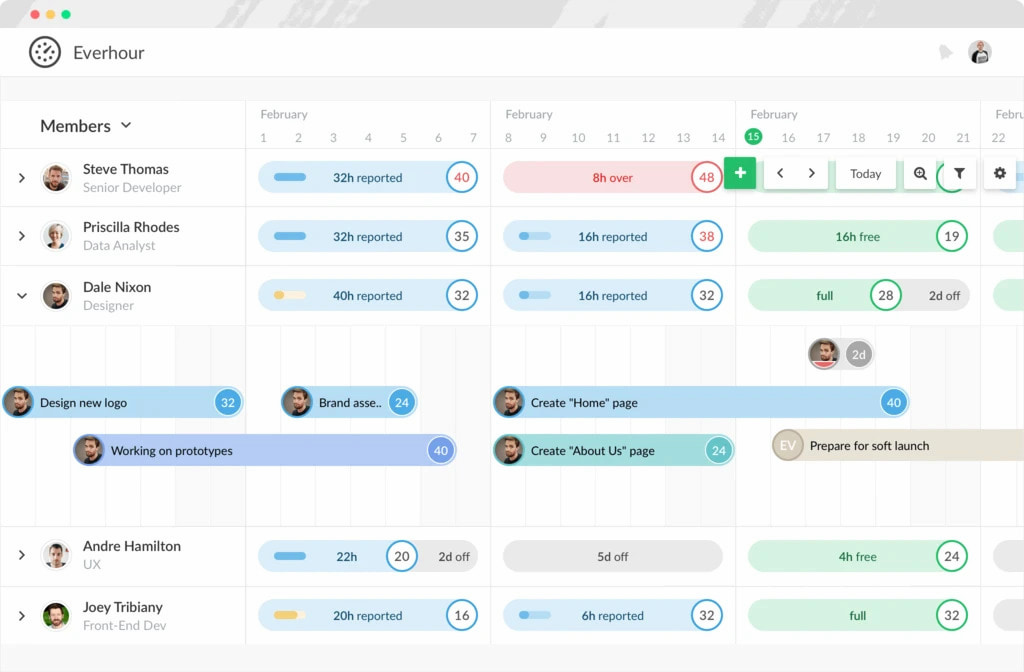
Using a time tracker like Everhour during onboarding can also help managers understand how work is distributed and where new employees may need additional support or training while they ramp up.
Trying to clone yourself instead of filling gaps
Founders often look for someone who “does everything they do.” In practice, effective hiring is about covering specific gaps in the business, not replicating the founder’s entire role.
Conclusion
Hiring your first employee is not just a growth milestone — it’s a shift from doing the work yourself to building a system that can run beyond you. The right time to hire comes when workload becomes consistently unmanageable, not when growth feels exciting or pressure peaks temporarily.
A good first hire removes real bottlenecks, improves delivery stability, and frees up time for higher-value work. A bad one adds cost without solving the underlying problem.
In the end, successful hiring depends less on timing alone and more on clarity: knowing exactly what problem you are solving, what work needs to be delegated, and whether your business is ready to support it sustainably.
Learn how you can transition from a freelancer to an agency avoiding common mistakes and using the best tools!

Maria
A dedicated content enthusiast with extensive experience in international teams and projects of all sizes. Maria thrives on creativity and attention to detail, fueled by a love for fantasy novels, music, classic black-and-white films, and always finding ways to make things better.