


Is a Digital Marketing Agency Profitable in 2026? Reality Check

Starting a digital marketing agency is relatively easy. Demand is high, and the upfront costs are low. But that doesn’t mean it’s profitable.
Many agencies bring in revenue quickly, yet struggle to maintain healthy margins. Work expands, clients ask for more, and profits shrink without clear control over pricing and scope. Profitability depends less on the services you offer and more on how you run the business.
This article breaks down how digital marketing agencies make money, what affects their margins, and what makes them profitable.
What “Profitable” Means For A Digital Marketing Agency
High revenue does not automatically mean a profitable agency.
Many agencies bring in large amounts of client work but still operate on thin margins once salaries, contractors, software, and operational costs are accounted for. Because agency work is labor-heavy, profitability depends less on total revenue and more on how efficiently that work is delivered.
This is why margins matter so much. Two agencies can generate the same revenue while producing completely different levels of profit depending on pricing, project scope control, and operational efficiency.
Cash flow also plays a major role. Agencies often deal with delayed payments, uneven project income, and ongoing delivery costs, which means even profitable work can create financial pressure if revenue and expenses are poorly aligned.

How Digital Marketing Agencies Make Money
Digital marketing agencies usually rely on a few core pricing models, often combining them depending on the client and service type.
Retainer-based services
In a retainer-based model, clients pay a fixed monthly fee for ongoing work. Retainers create more predictable cash flow, but only stay profitable when scope remains controlled over time.
Project-based work
The agency charges a one-time fee for a defined deliverable, such as a website launch or campaign setup. This works well for clear, time-bound scopes but can fluctuate in income.
Performance-based pricing
Payment depends on results, such as leads, conversions, or sales. It can be highly profitable but also higher risk if outcomes are inconsistent or hard to control.
Hybrid models
Many agencies combine approaches, for example a base retainer plus performance bonuses or project fees on top of ongoing work.
Key Factors That Affect Profitability
Profitability in a digital marketing agency usually comes down to a few decisions that compound over time. Pricing, clients, and delivery structure matter more than any single tactic.
Pricing strategy
Underpricing creates a hidden problem: work scales faster than revenue. Value-based pricing improves margins, but it only works when the agency can clearly define outcomes and consistently deliver them.
Client quality
The biggest clients are not always the most profitable ones. High-maintenance clients increase communication, revisions, and switching costs. Higher-value clients tend to be more predictable and easier to retain.
Service scope
Scope has a direct impact on efficiency.
Full-service agencies often take on more complexity than they can optimize for. Narrower focus usually leads to faster delivery and fewer operational inefficiencies.
Team structure
How work is delivered affects cost stability. Freelancers reduce fixed costs but can introduce variability in quality and availability. In-house teams increase overhead but improve consistency and control over output.
Operational efficiency
This is where profit is often gained or lost without being visible. Marketing agency time tracking, structured processes, and consistent delivery standards determine how much of billed work actually converts into margin.
Biggest Costs In A Digital Marketing Agency
Most agency costs don’t come from one area. They spread across people, tools, and the effort required to keep work and clients moving.
- Salaries and contractor fees
This is usually the largest cost. Delivery depends directly on people, so every project scales cost through internal teams or freelancers. Utilization and workload balance have a direct impact on profitability. - Tools and software
Agencies rely on multiple platforms for project management, analytics, communication, design, and reporting. Each tool may seem small on its own, but together they create a consistent fixed monthly cost. - Sales and client acquisition
Winning new clients requires ongoing investment. This includes marketing, sales tools, proposal work, and time spent in the sales process. Costs here fluctuate depending on growth goals. - Management overhead
As teams grow, coordination becomes a cost in itself. Planning, internal communication, reviews, and alignment work don’t always appear as direct expenses, but they reduce overall efficiency and profitability.
Common Reasons Agencies Struggle To Be Profitable
Most profitability issues don’t come from a lack of demand, but from how work is scoped, priced, and managed in practice.
- Scope creep and under-scoped projects
Work expands beyond what was originally agreed, while pricing stays fixed. This quietly erodes margins over time. - Poor time tracking and hidden work
When time isn’t tracked properly, agencies lose visibility into how long work actually takes, which makes it hard to understand real costs or profitability.

- Over-servicing clients
Agencies often deliver extra work to “keep clients happy,” but this adds cost without additional revenue. - Inconsistent pricing
Similar work gets priced differently depending on the client or situation, which makes margins unpredictable and hard to manage. - High client churn
Losing clients frequently forces agencies to constantly replace revenue, increasing pressure on sales and reducing overall stability.
How To Increase Profitability
Improving profit margin in a marketing agency is mostly about tightening how work is priced, delivered, and measured. Small inefficiencies in these areas compound quickly and reduce margins over time.
Standardize what you sell
Profitability improves when services are clearly defined. Standard packages reduce custom work, make pricing more consistent, and prevent teams from reinventing delivery for every client.
Make time visible
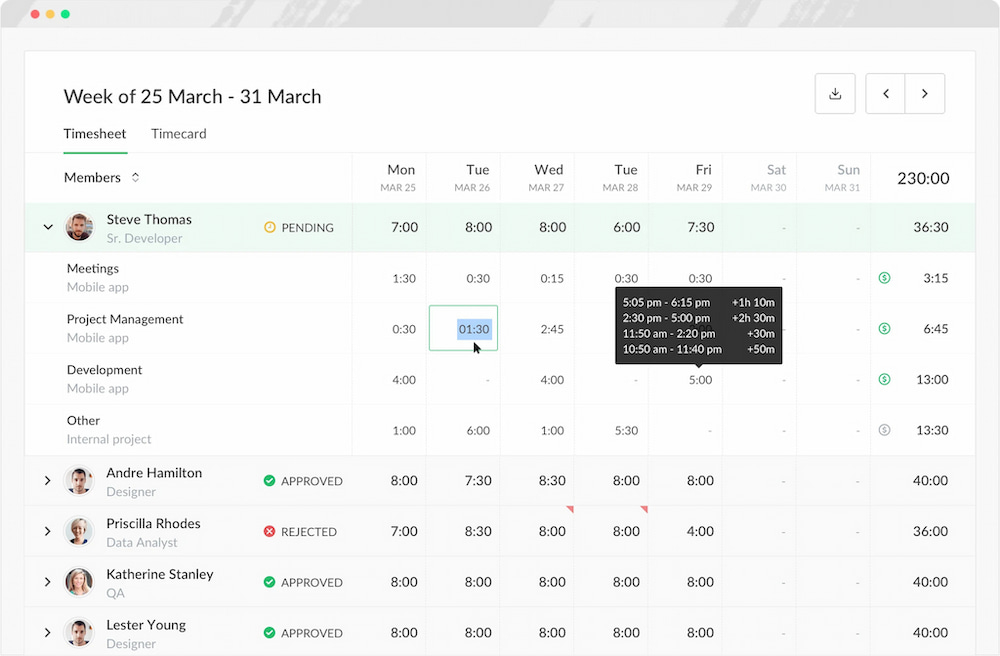
Many agencies lose money without realizing it because they don’t see where effort actually goes. Tracking time and understanding real costs helps reveal low-margin work and prevents scope creep from going unnoticed. A time tracker like Everhour connects time spent to specific clients and projects, making this visibility practical in day-to-day work.
Shift toward retainers
Retainers improve predictability. Instead of constantly replacing project revenue, agencies can plan capacity and focus on execution. This stability makes margins easier to control.
Be selective with clients
Not every client is equally profitable. The best clients are not always the biggest ones, but the ones that require less unnecessary coordination and align better with how the agency works.
Improve how capacity is used
Even well-priced work becomes inefficient if teams are poorly utilized. Profitability improves when workloads are balanced, bottlenecks are reduced, and delivery stays consistent without overloading people.
Conclusion
Starting a digital marketing agency is still attractive because demand is high and getting started is relatively easy. But that same accessibility is also what makes the space competitive and often misunderstood.
Digital marketing agencies can be profitable, but only when pricing, scope, and delivery are tightly controlled and the business is run as a structured system rather than a collection of individual projects.
Profitability doesn’t come from the services themselves, but from how the agency is structured and run in practice. Pricing needs to reflect real effort, scope needs to be controlled, and operations need to stay consistent as work scales. Without that, even high revenue doesn’t translate into stable profit.
In the end, success in this space depends less on marketing skill alone and more on building a system that keeps work, costs, and client expectations aligned over time.

Maria
A dedicated content enthusiast with extensive experience in international teams and projects of all sizes. Maria thrives on creativity and attention to detail, fueled by a love for fantasy novels, music, classic black-and-white films, and always finding ways to make things better.