


Understaffing: Causes, Signs, Effects & Solutions

Understaffing occurs when a team has fewer employees than it needs to handle its workload effectively. When staffing levels consistently fall short of demand, employees may have to take on too much work, work overtime, or leave lower-priority tasks unfinished.
Understaffing can happen because of hiring difficulties, employee turnover, unexpected increases in demand, or poor workforce planning. If it continues for too long, it can contribute to employee burnout, missed deadlines, lower-quality work, and higher turnover.
In this guide, we’ll explain what understaffing is, what causes it, how to recognize the signs, and what businesses can do to address and prevent it.
What Is Understaffing?
Understaffing means that an organization does not have enough employees or available capacity to handle its required workload within a reasonable amount of time.
The issue isn’t necessarily the number of employees alone. A team can be adequately staffed for one workload and understaffed after demand increases, a key employee leaves, or new responsibilities are added.
For example, a customer support team may have enough employees to handle its normal volume of requests. If the number of incoming requests suddenly increases but staffing stays the same, employees may struggle to keep up. Response times increase, employees work longer hours, and some requests may be delayed.
Understaffing vs. a busy period
Being busy doesn’t automatically mean a team is understaffed. Short periods of higher demand can be normal, particularly around product launches, seasonal peaks, or major deadlines.
Understaffing becomes a problem when the available capacity consistently falls short of the workload. If employees regularly struggle to complete their work during normal working hours, the organization may need to reassess its staffing levels and workload.
What Causes Understaffing?
Understaffing can result from several different factors, including:
- Hiring constraints: Budget limitations or difficulty finding qualified candidates can leave positions unfilled.
- Employee turnover: When employees leave faster than replacements can be hired and trained, the remaining team has to absorb the additional workload.
- Unexpected demand: A sudden increase in customers, projects, or orders can create more work than the existing team can handle.
- Poor workforce planning: Staffing decisions may not account for changes in workload, business growth, or future demand.
- Absences: Extended leave, illness, or other unexpected absences can temporarily reduce a team’s available capacity.
- Business growth: A team that was appropriately staffed when the business was smaller may become understaffed as its workload grows.
What Are the Signs of Understaffing?
Understaffing can be difficult to identify if managers only look at headcount. The more useful question is whether the team has enough capacity to handle its workload.
Common signs include:
- Regular overtime: Employees frequently work beyond their normal hours to keep up.
- Missed deadlines: Tasks and projects take longer because there isn’t enough capacity to complete them on time.
- Increasing workloads: Employees consistently take on additional responsibilities without removing other work.
- Declining quality: Mistakes, rework, and overlooked details become more common as employees try to handle too much at once.
- Longer response times: Customers, clients, or internal teams have to wait longer for support or deliverables.
- Employee burnout: People feel consistently overwhelmed and have little time to recover between periods of heavy work.
- Work falling through the cracks: Lower-priority tasks are repeatedly postponed or left unfinished.
- Difficulty taking time off: Employees may feel that they can’t take vacation or sick leave because there isn’t enough coverage.
No single sign necessarily means a team is understaffed. However, several of these patterns occurring consistently can indicate that workload is exceeding available capacity.
What Are the Effects of Understaffing?
When understaffing continues over time, it can affect both employees and the business.
Effects on employees
Employees who regularly have more work than they can reasonably complete may experience:
- Higher stress and workload
- Longer working hours
- Lower morale and engagement
- Less time for training or professional development
- Increased risk of burnout
- Greater likelihood of leaving the organization
Effects on the business
For the organization, understaffing can lead to:
- Missed deadlines and slower delivery
- Lower-quality work and more rework
- Declining customer service
- Increased overtime costs
- Higher employee turnover
- Less time for strategic or improvement work
These effects can also reinforce each other. For example, an overloaded team may experience higher turnover, which leaves even fewer employees to handle the workload and makes the original staffing problem worse.
How to Fix Understaffing
Fixing understaffing starts with understanding whether the problem is actually a lack of employees, a temporary workload increase, or inefficient allocation of existing capacity.
Measure workload and capacity
Compare the amount of work your team needs to complete with the time and people available to complete it. Looking at workload over several weeks or months can help identify persistent capacity gaps rather than temporary spikes.
Prioritize the workload
If hiring isn’t an immediate option, review what the team is actually expected to accomplish. Remove or postpone lower-priority work so employees can focus on the tasks that matter most.
Redistribute work
Some teams may have uneven workloads even when total staffing is adequate. Review how work is distributed and move tasks between employees or teams where possible.
Hire additional staff
If the workload is consistently higher than the team’s available capacity, adding employees may be necessary. Permanent increases in workload generally require a permanent increase in capacity.
Use temporary capacity when appropriate
Contractors, temporary employees, or other forms of external support can help during seasonal peaks or short-term increases in demand without permanently increasing headcount.
Improve workforce planning
Use historical workload, staffing, turnover, and demand data to anticipate future staffing requirements. Planning ahead can help organizations hire before a capacity shortage becomes a problem.
How to Prevent Understaffing
Preventing understaffing requires ongoing workforce planning rather than relying on headcount alone.
Businesses can:
- Monitor workload and employee capacity regularly
- Forecast seasonal and expected changes in demand
- Track turnover and employee absences
- Review staffing levels as the business grows
- Maintain a pipeline of potential candidates
- Identify teams that consistently rely on overtime
- Reassess workloads when responsibilities change
The goal isn’t necessarily to maximize the number of employees. It’s to maintain enough capacity to handle expected work without consistently overloading the people doing it.
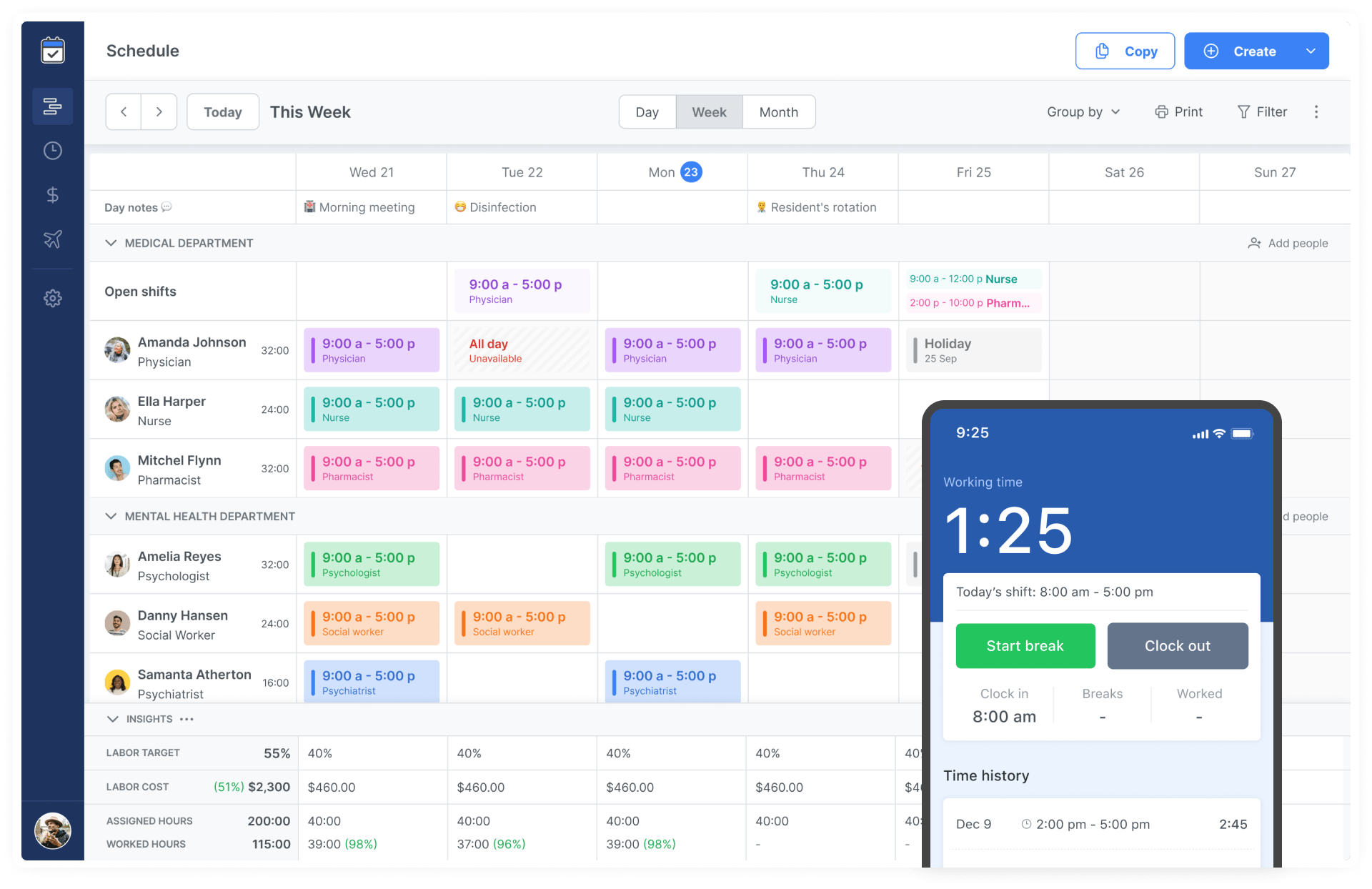
For teams that rely on shift-based work, scheduling software can also help prevent understaffing by making staffing coverage easier to plan. Shifts by Everhour lets managers create schedules, manage time off, and see scheduled versus actual hours, making it easier to identify coverage gaps and adjust staffing as demand changes.
Understaffing vs. Overstaffing
Understaffing and overstaffing are opposite workforce planning problems. Understaffing means there isn’t enough capacity to handle the workload, while overstaffing means the organization has more employees than it currently needs.
| Understaffing | Overstaffing | |
|---|---|---|
| Workload | Too much work for available staff | Not enough work for available staff |
| Employees | Frequently overloaded | May have excess capacity |
| Common costs | Overtime, turnover, missed deadlines | Higher payroll costs |
| Main risks | Burnout, lower quality, poor service | Lower utilization, unnecessary labor costs |
The goal of workforce planning is not simply to avoid understaffing or overstaffing. It’s to maintain enough capacity to handle expected demand efficiently while allowing some flexibility when workloads change.
Frequently Asked Questions
Understaffing occurs when a team does not have enough employees or available capacity to handle its workload effectively. It can result in excessive workloads, overtime, delays, and declining work quality.
Common signs include regular overtime, missed deadlines, increasing workloads, declining work quality, longer response times, employee burnout, and work that is repeatedly postponed or left unfinished.
Understaffing can be caused by hiring constraints, employee turnover, unexpected increases in demand, poor workforce planning, extended absences, or business growth that outpaces staffing.
Understaffing can increase workload and stress, lead to longer working hours, reduce morale, and increase the risk of burnout and employee turnover.
Companies can address understaffing by measuring workload and capacity, prioritizing work, redistributing tasks, hiring additional employees, using temporary staff during demand spikes, and improving workforce planning.
Conclusion
Understaffing occurs when a team’s available capacity consistently falls short of the work it needs to complete. While short-term increases in workload are normal, persistent understaffing can affect employee well-being, work quality, deadlines, and business performance.
The most effective way to address it is to look beyond headcount and understand the relationship between workload and capacity. By monitoring workloads, planning for changes in demand, and adjusting staffing when necessary, organizations can reduce the risk of keeping employees overloaded for too long.

Maria
A dedicated content enthusiast with extensive experience in international teams and projects of all sizes. Maria thrives on creativity and attention to detail, fueled by a love for fantasy novels, music, classic black-and-white films, and always finding ways to make things better.