


Marketing Agency Profit Margins Explained (Benchmarks + Key Drivers)

Many marketing agencies appear successful on the surface — growing revenue, more clients, and expanding teams — but profitability often tells a different story. Agency profit margins are frequently pressured by labor costs, inefficient delivery, scope creep, and pricing models that don’t reflect the real cost of execution. As agencies scale, complexity increases, and margins can shrink even when revenue grows. Healthy margins create room for hiring, investment, and stable operations without constant pressure on delivery teams.
In this article, we’ll look at typical agency profit margins, what drives them up or down, and how agencies can improve long-term profitability.
Key Insights
- Most marketing agencies operate on lower profit margins than expected
- High revenue does not automatically translate into high profitability
- Labor costs are typically the largest expense in agency operations
- Retainers tend to produce more stable and predictable margins than project-based work
- Visibility into time usage and team utilization strongly impacts overall profitability
What Is A Marketing Agency Profit Margin?
A marketing agency profit margin measures how much revenue the agency keeps after expenses are deducted. Agencies usually track two main types of profit margin:
| Margin type | What it measures |
|---|---|
| Gross profit margin | Revenue remaining after direct delivery costs like salaries, contractors, and production work |
| Net profit margin | Revenue remaining after all business expenses, including operations, software, payroll, rent, and taxes |
Tracking both is important because they measure different parts of agency performance. Gross margin helps evaluate delivery efficiency, while net margin shows whether the business itself is financially sustainable.
Average Marketing Agency Profit Margins
Marketing agency profit margins vary widely depending on pricing structure, service type, team size, and workflow. However, most agencies tend to fall within a few common ranges.
| Margin type | Typical range |
|---|---|
| Gross profit margin | 50%–70% |
| Net profit margin | 10%–30% |
Net margins below 10% often leave agencies vulnerable to hiring pressure, client churn, or delivery overruns.
Smaller agencies often operate on lower margins because founders handle both delivery and operations, while overhead costs consume a larger share of revenue. More mature agencies usually improve margins through standardized services, retainers, and better work systems.
Margin potential changes dramatically depending on the service being sold. Strategy, consulting, and retainers often produce higher margins, while highly labor-intensive services like custom creative production or large-scale content work typically generate lower profitability.
Factors That Affect Agency Profitability
Agency profit margins depend on much more than revenue alone. Pricing structure, team composition, client quality, and efficiency all influence how profitable an agency actually becomes.
Pricing model
Different pricing models create very different margin structures.
- Hourly billing is simple to manage but often limits scalability and revenue growth
- Retainers usually create more stable margins and predictable cash flow
- Project pricing can be profitable when scope is tightly controlled
- Performance-based pricing may increase upside, but also introduces delivery and revenue risk
Team structure
How an agency builds its team directly affects labor costs and delivery efficiency.
- Employee-heavy teams create stable delivery capacity but increase fixed overhead
- Contractor-based agencies stay more flexible but often face less predictable availability and costs
- Senior-heavy teams improve quality but reduce margins if pricing does not support higher labor costs
- Frequent freelance overflow can quietly erode profitability during busy periods
Service mix
Service type has a major impact on agency margins.
| Higher-margin services | Lower-margin services |
|---|---|
| Strategy and consulting | Creative production |
| SEO retainers | Custom design work |
| Paid media management | Large-scale content production |
| Analytics and reporting | Revision-heavy deliverables |
Client quality
Not all revenue contributes equally to profitability. Common margin-draining issues include:
- uncontrolled scope creep
- excessive revision cycles
- low-budget or high-maintenance clients
- slow payments and delayed approvals
Operational efficiency
Operational inefficiencies often reduce margins more than pricing problems. The biggest profitability drivers usually include:
- team utilization rates
- workload visibility
- communication overhead
- project management complexity
- time spent outside billable delivery
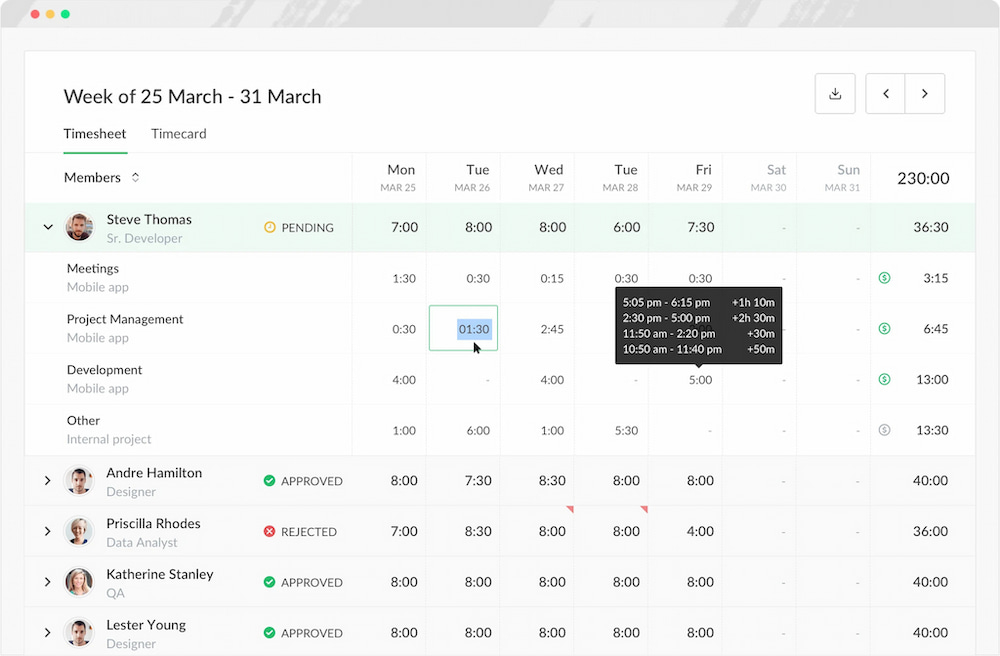
This is why many agencies rely on time tracking and workload management tools and a time tracker like Everhour to better understand capacity, labor costs, and project profitability across the team.
Gross Margin vs Net Margin For Agencies
Marketing agencies usually track both gross margin and net margin, but they measure very different things. Gross margin focuses on delivery profitability, while net margin reflects the overall financial health of the agency.
| Gross margin | Net margin |
|---|---|
| Revenue remaining after direct delivery costs | Revenue remaining after all business expenses |
| Focuses on service profitability | Focuses on overall business health |
| Usually a higher percentage | Usually significantly lower |
| Helps evaluate delivery efficiency | Helps evaluate long-term sustainability |
An agency may have strong gross margins while still struggling with low net profit because of operational overhead, inefficient management, or excessive internal costs.
How To Improve Marketing Agency Profit Margins
Many agencies increase revenue as they grow, but profitability still suffers because delivery becomes more complex, workloads become uneven, and projects take longer than expected.
Most margin problems fall into a few common areas:
| Common issue | Impact on profitability | How agencies improve it |
|---|---|---|
| Too much custom work | Slower delivery and inconsistent workflows | Standardize services and productize offers |
| Low utilization | Paid time is lost between projects or tasks | Balance workloads and improve resource planning |
| Scope creep | More work is delivered than originally priced | Define deliverables clearly and formalize change requests |
| Unprofitable clients | Revenue increases while profitability stays flat | Track profitability by client and remove low-margin accounts |
| Poor operational visibility | Teams cannot accurately track labor costs or delivery efficiency | Use time tracking and workload management tools |
As agencies scale, operational visibility becomes increasingly important. Many teams use tools like Everhour to monitor utilization, labor costs, project profitability, and workload distribution across the agency more accurately.
Most Profitable Types Of Marketing Agencies
Not all agency models operate on the same margins. Agencies with more standardized delivery and recurring revenue structures generally achieve stronger long-term profitability.
| Agency type | Why margins are often higher |
|---|---|
| Niche agencies | More specialized positioning allows for higher pricing and more repeatable delivery |
| Retainer-focused agencies | Predictable recurring revenue improves utilization and cash flow stability |
| Productized service agencies | Standardized workflows reduce delivery complexity and operational overhead |
| Agencies with recurring revenue models | Long-term client relationships reduce sales pressure and revenue volatility |
Custom one-off project work tends to reduce profitability because delivery becomes harder to standardize and resource planning becomes less predictable.
Warning Signs Your Agency Margins Are Too Low
Many agencies continue growing revenue while profitability quietly declines underneath the surface. Some of the most common warning signs include:
- revenue increases but cash flow remains weak
- team utilization fluctuates heavily between projects
- founders still handle most client delivery themselves
- profitability depends on overtime or overwork
- projects regularly exceed estimated hours
- margins shrink as the team grows instead of improving
These issues usually indicate operational inefficiencies, pricing problems, or a lack of visibility into real delivery costs.
FAQ
Most healthy marketing agencies target net profit margins between 15% and 30%, although margins vary by agency size, service type, and pricing model.
Many agencies operate with net margins closer to 10%–20%, especially during early growth stages or periods of rapid scaling.
Common causes include underpricing, scope creep, inefficient delivery processes, inconsistent utilization, and excessive labor costs.
In many cases, yes. Retainers usually create more predictable revenue, better resource planning, and stronger long-term utilization.
Most agencies improve margins by standardizing services, controlling scope, improving utilization, and tracking project profitability more accurately.
Not always. Larger agencies may benefit from scale, but operational complexity and overhead can also reduce profitability if systems are inefficient.
Conclusion
Marketing agency profitability depends on much more than revenue growth alone. Agencies with healthy margins usually combine strong pricing with efficient delivery systems, controlled scope, balanced utilization, and clear visibility.
As agencies scale, profitability increasingly depends on understanding where time, labor, and delivery costs are actually going. Sustainable agencies optimize systems, workload management, and operational efficiency — not just sales volume.

Maria
A dedicated content enthusiast with extensive experience in international teams and projects of all sizes. Maria thrives on creativity and attention to detail, fueled by a love for fantasy novels, music, classic black-and-white films, and always finding ways to make things better.